


A comprehensive overview of neuropsychiatric symptoms in adolescents with 22q11.2 deletion syndrome
- PMID: 39438700
- PMCID: PMC11735868
- DOI: 10.1111/jir.13196
A comprehensive overview of neuropsychiatric symptoms in adolescents with 22q11.2 deletion syndrome
Abstract
Background: The 22q11.2 deletion syndrome (22q11DS) is associated with a variety of neuropsychiatric outcomes that vary across deletion carriers. We adopted a dimensional approach to provide a comprehensive overview of neuropsychiatric symptom expression in adolescents with 22q11DS and further our understanding of the observed phenotypical heterogeneity.
Methods: Participants were 208 adolescents with 22q11DS between 10 and 19 years old. Semi-structured clinical interviews and IQ tests were used to quantify symptom expression on multiple symptom dimensions, some reflecting DSM-IV diagnostic domains. We investigated symptom expression in those with and without a formal DSM-IV classification and examined between and within symptom dimensions. We used correlation analyses to explore associations between different symptom dimensions.
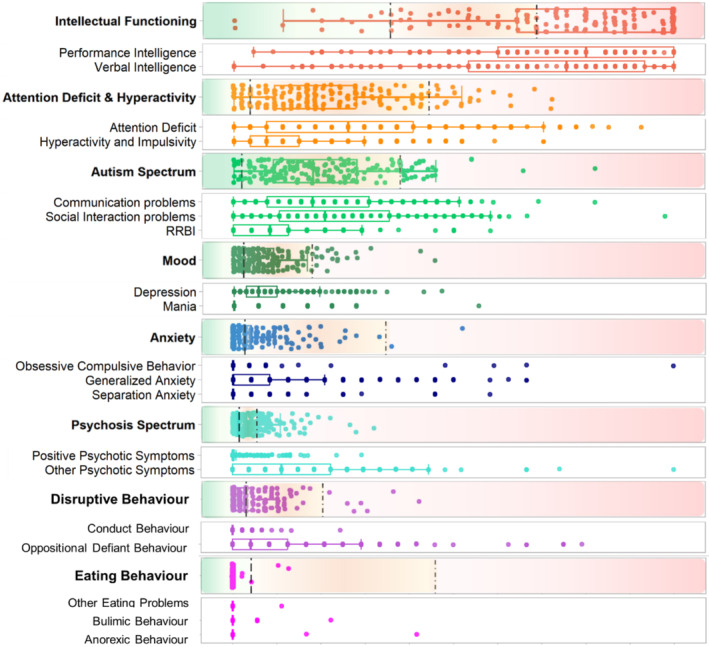
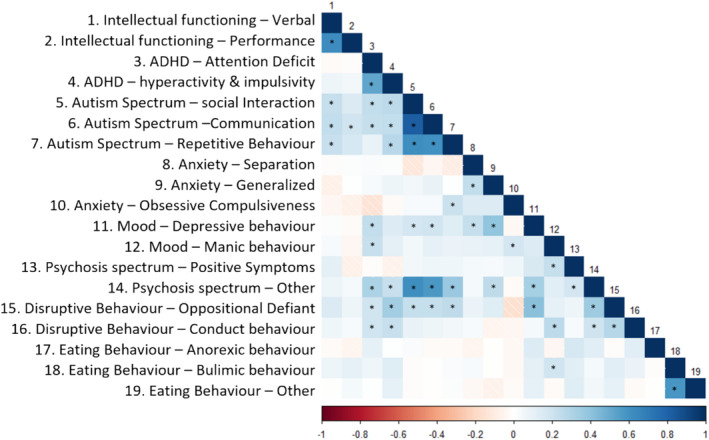
Results: We demonstrated inter-individual differences in symptom expression, both between and within neuropsychiatric symptom dimensions. On most symptom dimensions, more than 50% of adolescents expressed at least one clinically relevant symptom. In addition, a significant proportion of youth without a formal DSM-IV diagnosis reported clinically relevant symptoms (e.g. >85% of those without an ADHD diagnosis reported ADHD symptoms). The exploratory correlation analysis indicated mostly positive correlations between symptom dimensions.
Conclusions: The finding that most adolescents with 22q11DS express neuropsychiatric symptoms, even in the absence of a DSM-IV classification, has substantial ramifications for guiding adequate support. Findings may spur further research into the dimensional structure of neuropsychiatric symptoms in 22q11DS and aid in uncovering mechanisms that contribute to symptom expression. Ultimately, this provides leads to improve clinical care for 22q11DS and to understand phenotypical variation in other high-risk genetic variants.
Keywords: 22q11DS; dimensions; neurodevelopment; psychiatry; symptom expression.
© 2024 The Author(s). Journal of Intellectual Disability Research published by John Wiley & Sons and MENCAP.
Conflict of interest statement
Jacob Vorstman has served as a consultant for NoBias Therapeutics Inc and received speaker fees from Henry Stewart Talks Ltd (both unrelated to the content of this manuscript). All other authors declare that there are no competing interests in relation to the subject of this study.
Figures
References
-
- Ambrosini P. J. (2000) Historical development and present status of the schedule for affective disorders and schizophrenia for school‐age children (K‐SADS). Journal of the American Academy of Child and Adolescent Psychiatry 39, 49–58. - PubMed
-
- American Psychiatric Association . (2000) Diagnostic and statistical manual of mental disorders (4th ed.).
-
- American Psychiatric Association . (2013) Diagnostic and statistical manual of mental disorders (5th ed.).
-
- Baker K. & Vorstman J. A. S. (2012) Is there a core neuropsychiatric phenotype in 22q11.2 deletion syndrome? Current Opinion in Neurology 25, 131–137. - PubMed
Publication types
MeSH terms
Grants and funding
LinkOut - more resources
Full Text Sources
