


Increased pathogen exposure of a marine apex predator over three decades
- PMID: 39441768
- PMCID: PMC11498681
- DOI: 10.1371/journal.pone.0310973
Increased pathogen exposure of a marine apex predator over three decades
Abstract
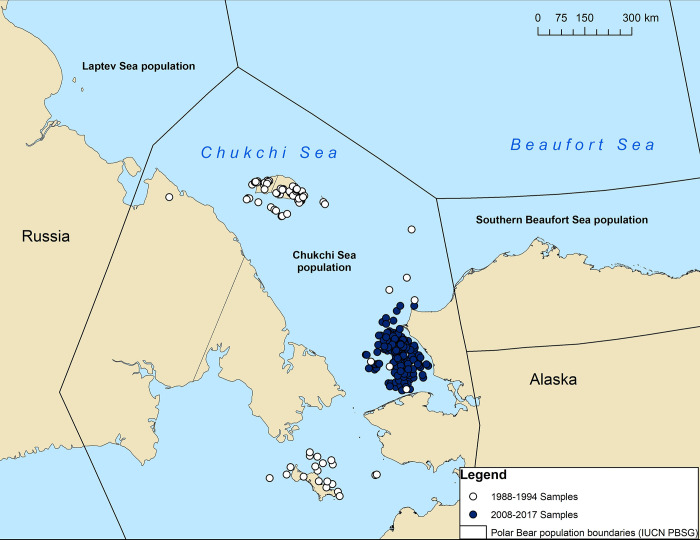
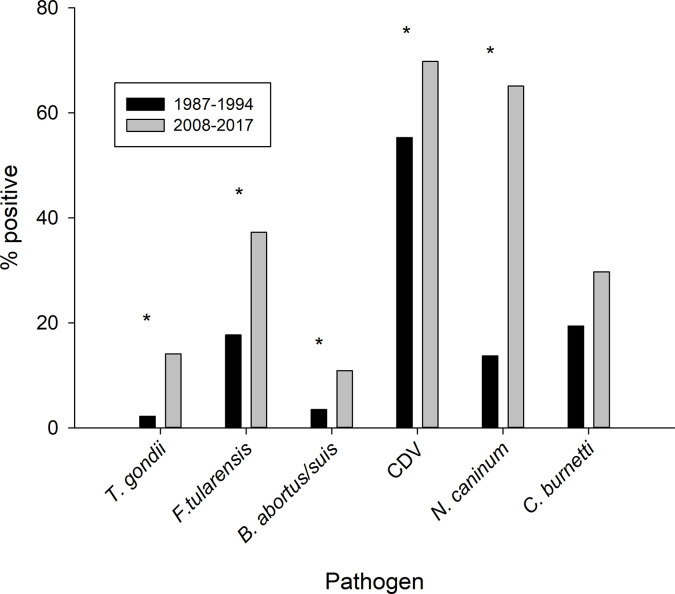
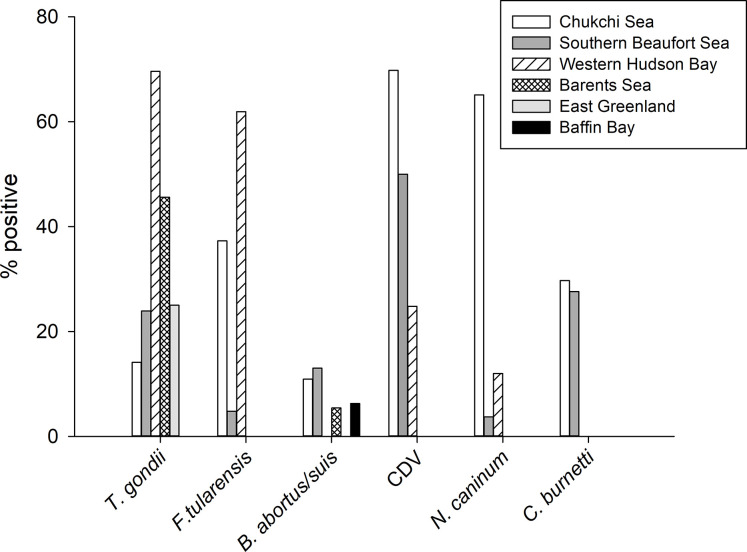
Environmental changes associated with global warming create new opportunities for pathogen and parasite transmission in Arctic wildlife. As an apex predator ranging over large, remote areas, changes in pathogens and parasites in polar bears are a useful indicator of changing transmission dynamics in Arctic ecosystems. We examined prevalence and risk factors associated with exposure to parasites and viral and bacterial pathogens in Chukchi Sea polar bears. Serum antibodies to six pathogens were detected and prevalence increased between 1987-1994 and 2008-2017 for five: Toxoplasma gondii, Neospora caninum, Francisella tularensis, Brucella abortus/suis, and canine distemper virus. Although bears have increased summer land use, this behavior was not associated with increased exposure. Higher prevalence of F. tularensis, Coxiella burnetii, and B. abortus/suis antibodies in females compared to males, however, could be associated with terrestrial denning. Exposure was related to diet for several pathogens indicating increased exposure in the food web. Elevated white blood cell counts suggest a possible immune response to some pathogens. Given that polar bears face multiple stressors in association with climate change and are a subsistence food, further work is warranted to screen for signs of disease.
Copyright: This is an open access article, free of all copyright, and may be freely reproduced, distributed, transmitted, modified, built upon, or otherwise used by anyone for any lawful purpose. The work is made available under the Creative Commons CC0 public domain dedication.
Conflict of interest statement
The authors have declared that no competing interests exist.
Figures
References
MeSH terms
Substances
LinkOut - more resources
Full Text Sources
Research Materials
Miscellaneous
