


Chromosomal alteration patterns in PitNETs: massive losses in aggressive tumors
- PMID: 39441837
- PMCID: PMC11729050
- DOI: 10.1530/ERC-24-0070
Chromosomal alteration patterns in PitNETs: massive losses in aggressive tumors
Abstract
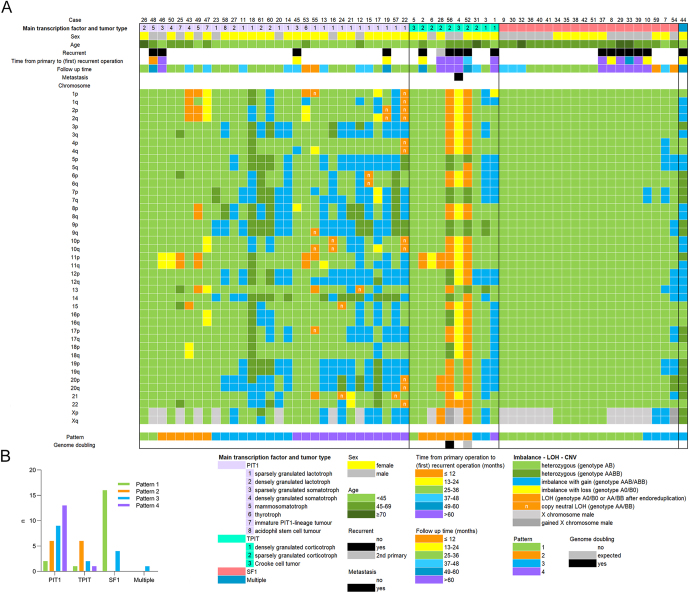
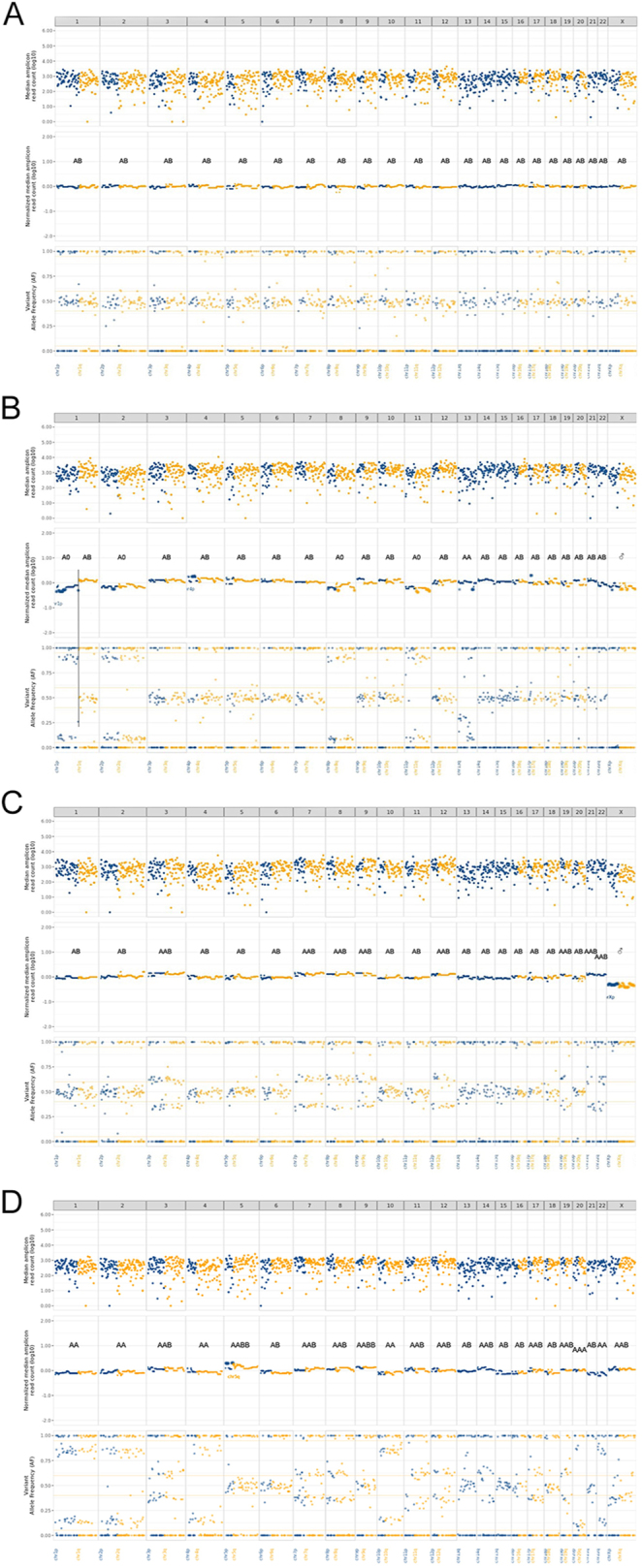
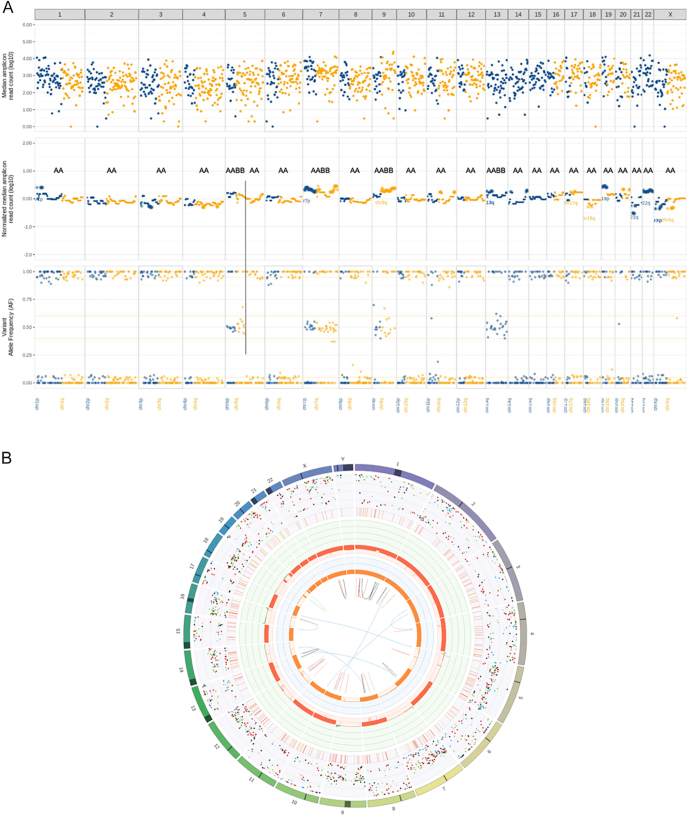
The molecular biology of pituitary neuroendocrine tumors (PitNETs) revealed few recurrent mutations and extensive chromosomal alterations, with the latter being the driving force in a subset of these lesions. Addressing the need for an easily applicable diagnostic tool, we conducted a retrospective study of 61 PitNETs operated at a tertiary care center. All cases were subtyped according to the 2022 WHO Classification of Endocrine Tumors. A genome-wide next-generation sequencing panel targeting 1500 single nucleotide polymorphisms (SNPs) was used to classify chromosomal imbalances, loss of heterozygosity, and copy number variations in DNA from formalin-fixed paraffin-embedded tissues. We identified four distinct chromosomal patterns, with varying distribution among different tumor lineages. Forty-two of 61 (69%) PitNETs showed chromosomal alterations. Gonadotroph PitNETs showed mostly quiet genomes. The majority of lactotroph PitNETs (19/20, 95%) were altered, exhibiting a gained genome and a remarkably low recurrence rate. Nine of ten (90%) corticotroph PitNETs harbored chromosomal alterations, of which two aggressive corticotroph tumors and one metastatic corticotroph PitNET showed massive chromosomal losses, leading to near-haploid/near-homozygous genomes. The comparison of the molecular profile of primary and recurrent PitNETs of five patients showed no significant accumulation of alterations over time. A simple genome-wide 1500-SNP test can be used in the identification of outspoken aggressive subsets of PitNETs by the occurrence of a near-haploid/near-homozygous genome. Furthermore, the presence of neoplastic tissue in the resected material can be potentially confirmed for non-gonadotroph PitNETs under suboptimal histological assessment conditions.
Keywords: CNV; LOH; PitNET; PitNETs; SNP analysis; chromosome alterations; cnLOH; copy number alterations; endocrine pathology; endoreduplication; genome doubling; genome haploidization; loss of heterozygosity; molecular diagnostics; near-haploid genome; near-haploidization; near-homozygous genome; pituitary tumor; prolactinoma.
Conflict of interest statement
The authors declare that there is no conflict of interest that could be perceived as prejudicing the impartiality of this work.
Figures
References
MeSH terms
LinkOut - more resources
Full Text Sources
Medical
