Review
. 2024 Dec;20(12):1261-1281.
doi: 10.1038/s44320-024-00067-0. Epub 2024 Oct 23.

Bacterial live therapeutics for human diseases

Affiliations
Review

Bacterial live therapeutics for human diseases

Elisabet Frutos-Grilo et al. Mol Syst Biol. 2024 Dec.

Abstract

The genomic revolution has fueled rapid progress in synthetic and systems biology, opening up new possibilities for using live biotherapeutic products (LBP) to treat, attenuate or prevent human diseases. Among LBP, bacteria-based therapies are particularly promising due to their ability to colonize diverse human tissues, modulate the immune system and secrete or deliver complex biological products. These bacterial LBP include engineered pathogenic species designed to target specific diseases, and microbiota species that promote microbial balance and immune system homeostasis, either through local administration or the gut-body axes. This review focuses on recent advancements in preclinical and clinical trials of bacteria-based LBP, highlighting both on-site and long-reaching strategies.

Keywords: Gut-Body Axis; Live Therapeutic Products; Microbiota; On-Site Delivery; Pathogenic Bacteria.


Conflict of interest statement

Disclosure and competing interests statement. The authors declare no competing interests. Luis Serrano is a member of the Advisory Editorial Board of Molecular Systems Biology. This has no bearing on the editorial consideration of this article for publication.

Figures

Figure 1
Figure 1. Schematic overview of the widely used genetic engineering tools for bacteria modification.
(A) Lambda red recombinase system encompasses internalization of dsDNA recombination cassette, which contains the homology sequences (HS1 and HS2) and resistance (R), and recombination during replication. (B) MAGE consists of the repeated delivery of ssDNA that increases the penetrance of mutations allowing multiplex genome edition. (C) SCRIBE based on recombination after retron cassette internalization and retrotranscription. (D) CRISPR is characterized by its main components, the gRNA, protospacer-associated motif, and Cas protein. Different set up of this system can be used alone or in combination with other available methods to accomplish site-directed mutations at different scales, in multiplex fashion and with high efficiency. These techniques include: enabled trackable genome engineering (CREATE), dual base editors (DBE), enviromental transformation sequencing (ET-Seq), and insertion of transposable elements by guide RNA-assisted targeting (INTEGRATE).
Figure 2
Figure 2. Bacteria-based LBP used for on-target treatment.
LBP based on pathogenic bacteria (left), or microbiota (right) are shown. Stage of development is indicated in colors: preclinical (purple), clinical (green) and approved (orange). Immune checkpoint inhibitor (ICI), nicotinamide mononucleotide (NM), fecal microbiota transplantation (FMT), arginyl-glycyl-aspartic acid peptide motif (RGDPM), photothermal therapy (PTT), near-infrared light (NIR), mannose-sensitive-hemagglutinin (MSHA), 6-N-hydroxyaminopurine (6-NHAP), tumor-associated antigen (TAA), prostate-specific antigen (PSA), heparin-poloxamer thermo-responsive hydrogel (HPTRH), heparin sulfatase 1 (HS1), RNA-binding motif protein 5 (RBM5), heparin sulfatase 1 (HS1), listeriolysin-O (LLO), Phe transporter (PheP) and phenylalanine ammonia-lyase (PAL), oxalyl‐CoA synthetase gene (ScaaE3), oxalate/formate antiporter (OxlT), oxalyl‐CoA decarboxylase (OxdC), formyl‐CoA transferase (Frc) and ultrasound (US).
Figure 3
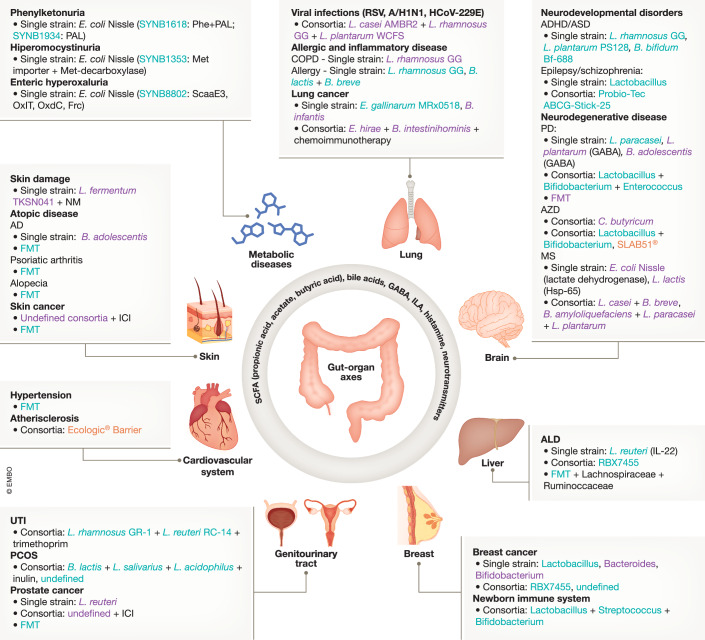
Figure 3. Gut-body axes: an indirect therapeutic approach for LBP administration.
Stage of development is indicated in colors: preclinical (purple), clinical (green) and approved (orange). Bacterial metabolites related to the therapeutic effect are described. Immune checkpoint inhibitor (ICI), nicotinamide mononucleotide (NM), fecal microbiota transplantation (FMT), respiratory syncytial virus (RSV), chronic obstructive pulmonary disease (COPD), atopic dermatitis (AD), attention deficit hyperactivity disorder (ADHD) or autism spectrum disorder (ASD), Alzheimer’s disease (AZD), multiple sclerosis (MS), Parkinson’s disease (PD), and polycystic ovary syndrome (PCOS).

References

    1. Adolfsen KJ, Callihan I, Monahan CE, Greisen P, Spoonamore J, Momin M, Fitch LE, Castillo MJ, Weng L, Renaud L et al (2021) Improvement of a synthetic live bacterial therapeutic for phenylketonuria with biosensor-enabled enzyme engineering. Nat Commun 12:6215 - PMC - PubMed
    1. Akbaba M, Gökmen GG, Kışla D, Nalbantsoy A (2023) In vivo investigation of supportive immunotherapeutic combination of Bifidobacterium infantis 35624 and doxorubicin in murine breast cancer. Probiotics Antimicrob Proteins 15:880–888 - PubMed
    1. al-Ramadi BK, Fernandez-Cabezudo MJ, El-Hasasna H, Al-Salam S, Bashir G, Chouaib S (2009) Potent anti-tumor activity of systemically-administered IL2-expressing Salmonella correlates with decreased angiogenesis and enhanced tumor apoptosis. Clin Immunol 130:89–97 - PubMed
    1. Altieri C, Speranza B, Corbo MR, Sinigaglia M, Bevilacqua A (2023) Gut-microbiota, and multiple sclerosis: background, evidence, and perspectives. Nutrients 15:942 - PMC - PubMed
    1. Anker JF, Naseem AF, Mok H, Schaeffer AJ, Abdulkadir SA, Thumbikat P (2018) Multi-faceted immunomodulatory and tissue-tropic clinical bacterial isolate potentiates prostate cancer immunotherapy. Nat Commun 9:1591 - PMC - PubMed

LinkOut - more resources