


Physiotherapy in acute geriatrics wards: What (de)motivates patients? A qualitative study based on self-determination theory
- PMID: 39443854
- PMCID: PMC11515552
- DOI: 10.1186/s12877-024-05474-4
Physiotherapy in acute geriatrics wards: What (de)motivates patients? A qualitative study based on self-determination theory
Abstract
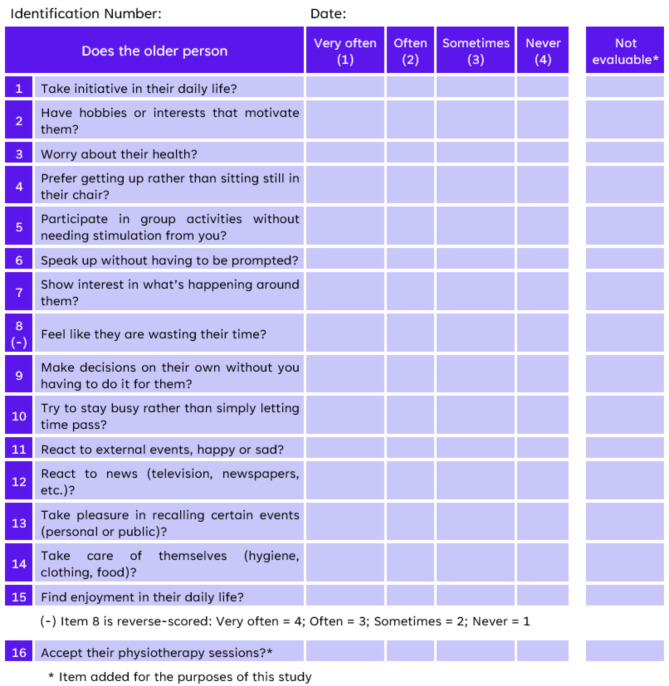
Background: While the benefits of physiotherapy for hospitalized older patients (HOPs) are well established, these patients are often considered demotivated by healthcare team members (HTMs), which is perceived as a hindrance to their rehabilitation. The quantitative data currently available on the lack of involvement of HOPs are mainly measures of mobility. Motivation as such has, to our knowledge, never been measured. Therefore, this study aims to quantify for the first time the motivation levels of HOPs in their participation in activities of daily living (ADLs) and physiotherapy, and to explore the motivating factors behind their participation in physiotherapy.
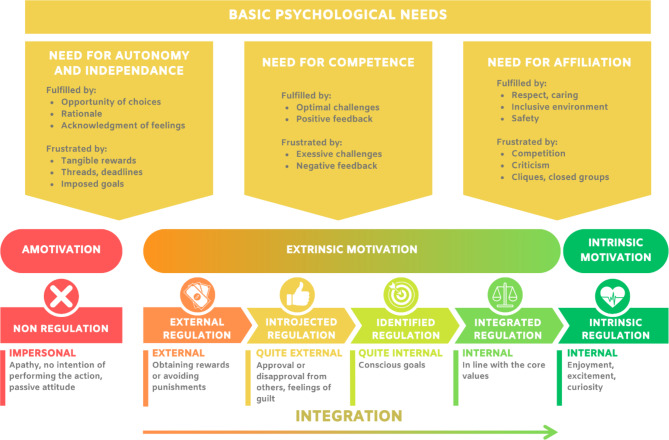
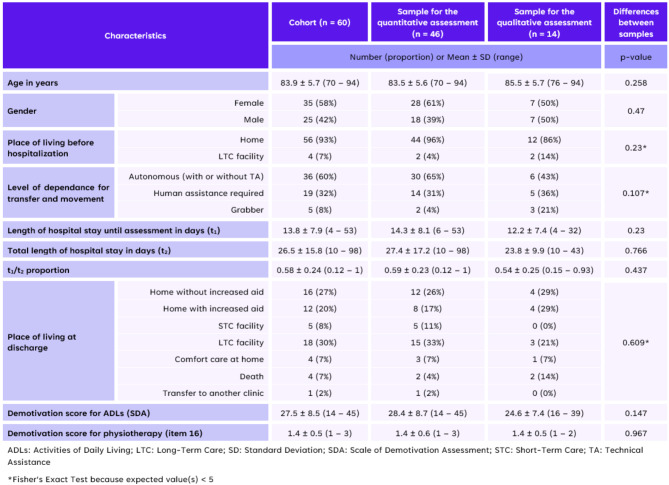
Methods: The motivation of 60 older patients hospitalized in an acute geriatrics ward was quantified using the Scale of Demotivation Assessment (SDA). Out of these participants, 14 were interrogated through individual semi-structured face-to-face interviews. After transcription, data were analyzed according to Self-Determination Theory, which has been proven effective in the understanding of motivational mechanisms.
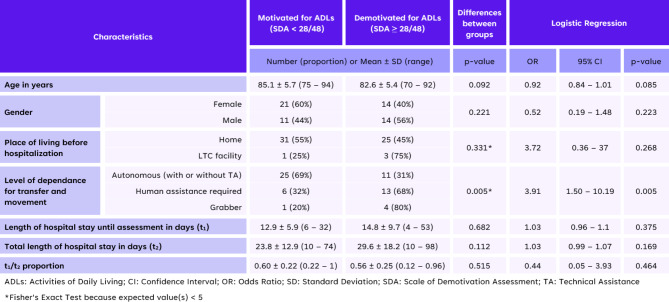
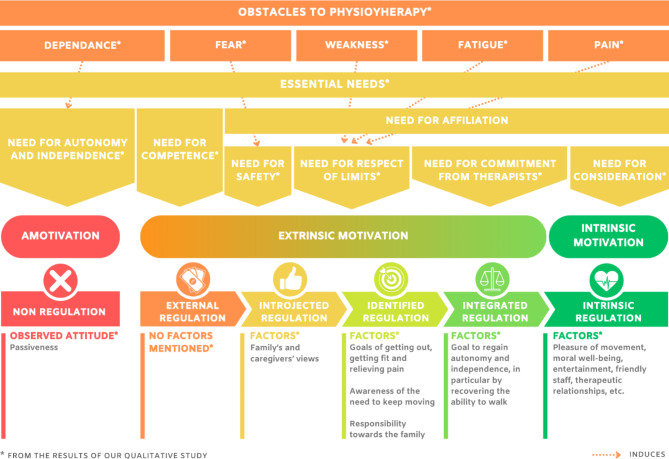
Results: The prevalence of demotivation was 47% (95% CI: [0.34;0.6]) for ADLs and 35% (95% CI: [0.23;0.48]) for physiotherapy. The main demotivating factors were the feeling of external control (lack of autonomy) and dependance experienced by HOPs, as well as the limited availability of staff during hospitalization. Conversely, feelings of competence, security, respect for limits, and commitment from the HTMs were important motivating factors.
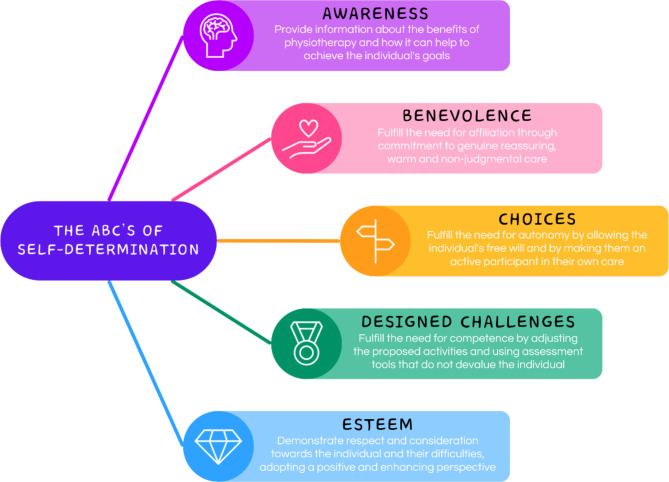
Conclusion: A large number of relational factors have an impact on the motivation of HOPs regarding their participation in ADLs and in physiotherapy sessions. Appropriate time and space organizing and the provision of suitable equipment, combined with a genuine caring and respectful attitude from the HTMs, could considerably encourage the expression of intrinsic motivation and thus the involvement of HOPs in their own care program.
Keywords: Acute geriatrics ward; Demotivation; Motivation; Older; Physical therapy; Physiotherapy; SDT; Self-determination; Self-determination theory.
© 2024. The Author(s).
Conflict of interest statement
The authors declare no competing interests.
Figures
References
-
- United Nations. World demographic trends – report of the Secretary-General (E/CN.9/2022/5). Economic and Social Council; 2022.
-
- Statbel [Internet]. be.STAT – Population par sexe et groupe d’âges pour la Belgique, 2012–2022. 2022 [cited 2022 Nov 8]; https://bestat.statbel.fgov.be/bestat/crosstable.xhtml?view=c1649c18-ea6...
-
- De Blauwe T. La gériatrie, essor d’une jeune spécialité. Louvain Med. 2020;139(01):32–9.
-
- Arrêté royal du 29. janvier 2007 fixant, d’une part, les normes auxquelles le programme de soins pour le patient gériatrique doit répondre pour être agréé et, d’autre part, des normes complémentaires spéciales pour l’agrément d’hôpitaux et de services hospitaliers. M.B., 07/03/2007, art. 3.
MeSH terms
LinkOut - more resources
Full Text Sources
