


Outcomes of the Endoscopic Endonasal Approach for the Treatment of Clival Chordomas: A Single-Center Experience
- PMID: 39444761
- PMCID: PMC11495903
- DOI: 10.1055/a-2198-9169
Outcomes of the Endoscopic Endonasal Approach for the Treatment of Clival Chordomas: A Single-Center Experience
Abstract
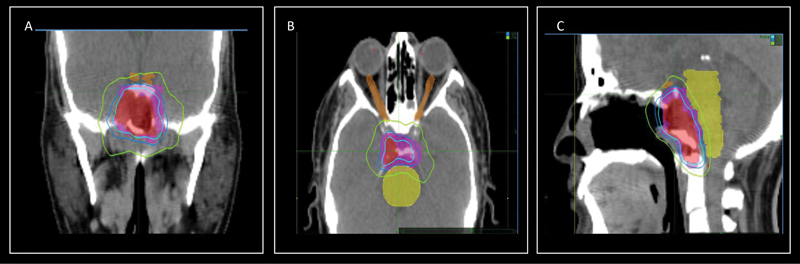
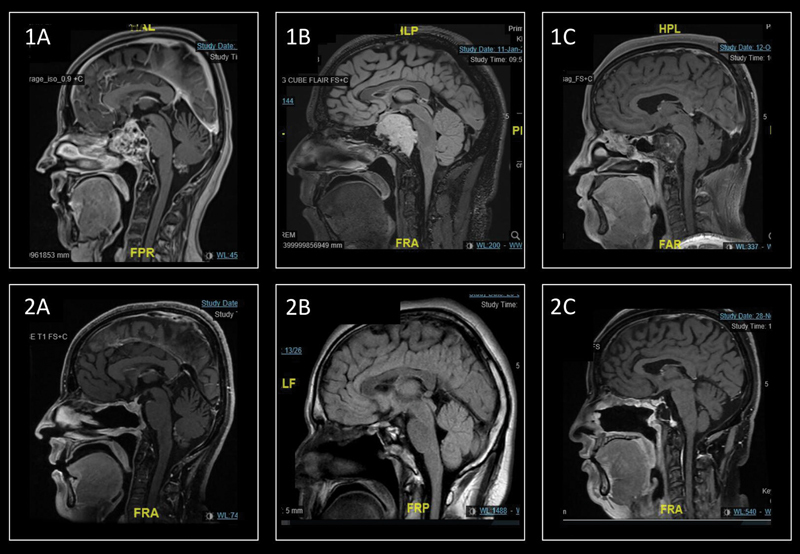
Objective Chordoma is a low-grade malignant tumor that originates from the remnant tissue of the embryonic notochord. Postoperative or definitive radiotherapy (RT) has been used to enhance local control. This study aims to assess the outcomes of the expanded endoscopic endonasal approach (EEA) for maximal removal of clival chordomas followed by RT for visualized residual or tumor recurrence. Materials and Methods A retrospective review was performed on consecutive patients with clival chordoma who underwent endoscopic endonasal resection in the otorhinolaryngology and neurosurgery departments, between 2016 and 2021. We included all patients with pathologically confirmed clival chordoma who were treated using the EEA. Patients who underwent combined external and endoscopic approaches or transcranial surgery were excluded. Results Seventeen patients were included in this study. Most of them had tumors located in the middle clivus. Regarding RT, the majority of patients underwent postoperative RT. Almost half of them underwent CyberKnife (CK) RT. None of them had severe toxicities (grade 3 or higher). Three patients died, resulting in a mortality rate of 17.6% none of them related to radiation side effect. The 2-year overall survival was 82.4% (mean standard error [SE] = 1.765, 95% confidence interval [CI] = 1.505-2.024), and the progression-free survival (PFS) was 76.5% (mean SE = 3.403, 95% CI = 2.791-4.016). No distal metastasis was reported in our series. Conclusion This series demonstrates that expanded endoscopic endonasal approach (EEA) for the resection of skull base chordomas, followed by CyberKnife radiosurgery, presents a viable alternative to proton beam therapy; however, further research is necessary to directly compare these modalities.
Keywords: chordoma; clivus; endoscopic endonasal approach; radiotherapy; skull base.
Thieme. All rights reserved.
Conflict of interest statement
Conflict of Interest None declared.
Figures
References
-
- Wang L, Wu Z, Tian K et al. Clinical features and surgical outcomes of patients with skull base chordoma: a retrospective analysis of 238 patients. J Neurosurg. 2017;127(06):1257–1267. - PubMed
LinkOut - more resources
Full Text Sources
Research Materials
