


Neural effects of multisensory dance training in Parkinson's disease: evidence from a longitudinal neuroimaging single case study
- PMID: 39444804
- PMCID: PMC11496053
- DOI: 10.3389/fnagi.2024.1398871
Neural effects of multisensory dance training in Parkinson's disease: evidence from a longitudinal neuroimaging single case study
Abstract
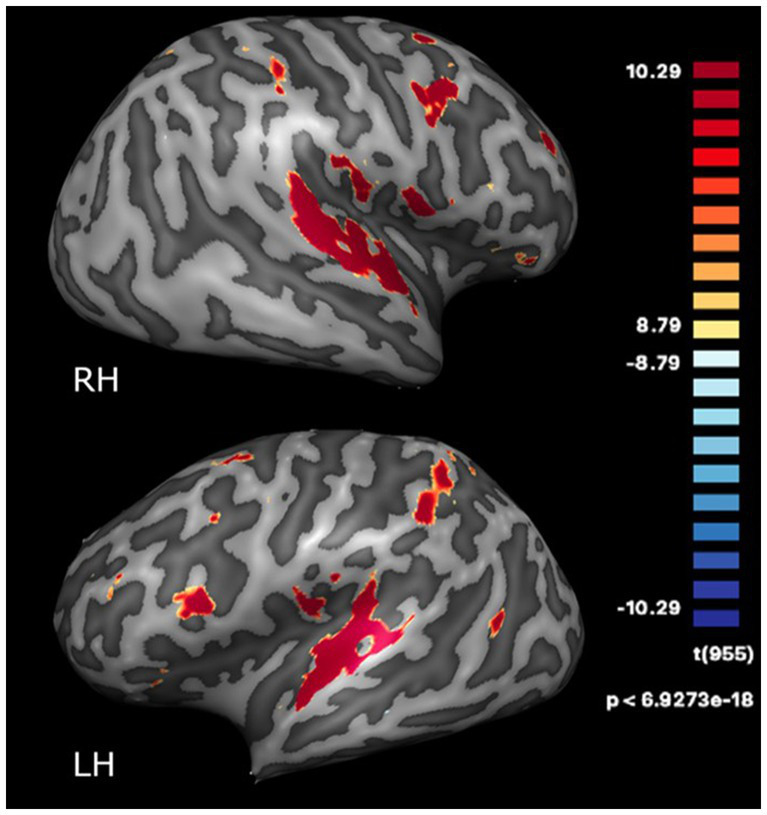
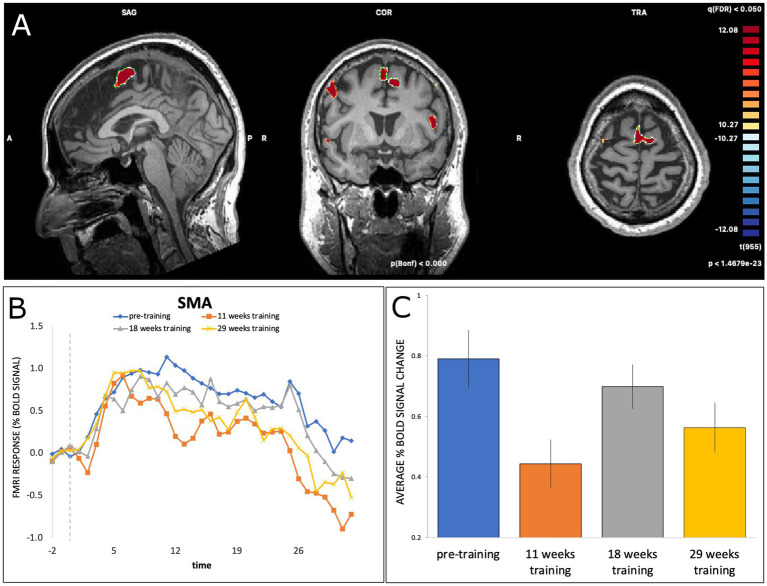
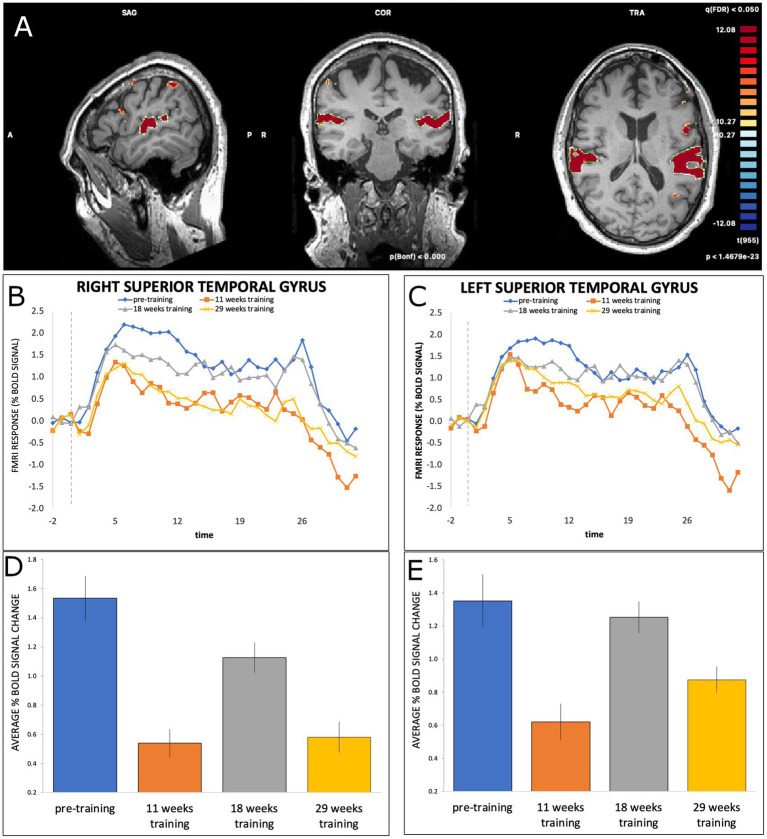
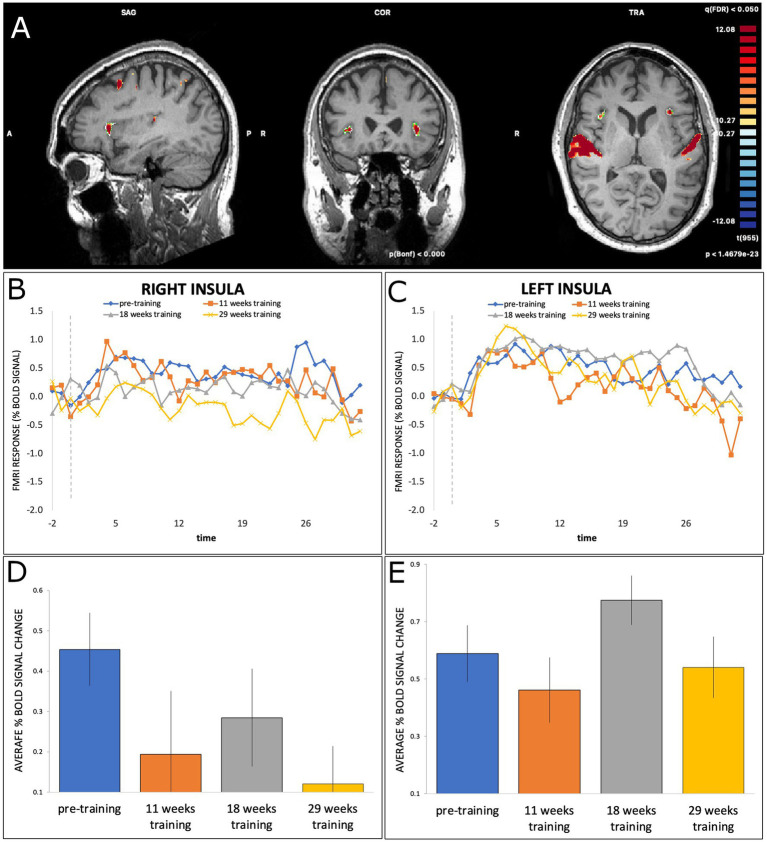
Dance is associated with beneficial outcomes in motor and non-motor domains in Parkinson's disease (PD) and regular participation may help delay symptom progression in mild PD. However, little is known about the neurobiological mechanisms of dance interventions for PD. The present case study explored potential neuroplastic changes in a 69-year-old male with mild PD participating in regular dance classes over 29 weeks. Functional MRI was performed at four timepoints (pre-training, 11 weeks, 18 weeks, 29 weeks), where the individual imagined a dance choreography while listening to the corresponding music. Neural activity was compared between dance-imagery and fixation blocks at each timepoint. Analysis of functionally defined regions revealed significant blood-oxygen-level-dependent (BOLD) signal activation in the supplementary motor area, right and left superior temporal gyri and left and right insula, with modulation of these regions observed over the training period except for the left insula. The results suggest the potential for dance to induce neuroplastic changes in people with PD in regions associated with motor planning and learning, auditory processing, rhythm, emotion, and multisensory integration. The findings are consistent with dance being a multimodal therapeutic activity that could provide long-term benefits for people with PD.
Keywords: Parkinson’s disease; dance; fMRI; learning; motor imagery; neuroplasticity; neurorehabilitation.
Copyright © 2024 Simon, Bek, Ghanai, Bearss, Barnstaple, Bar and DeSouza.
Conflict of interest statement
The authors declare that the research was conducted in the absence of any commercial or financial relationships that could be construed as a potential conflict of interest. The author(s) declared that they were an editorial board member of Frontiers, at the time of submission. This had no impact on the peer review process and the final decision.
Figures
References
-
- Balazova Z., Marecek R., Novakova L., Nemcova-Elfmarkova N., Kropacova S., Brabenec L., et al. (2021). Dance intervention impact on brain plasticity: a randomized 6-month fMRI study in non-expert older adults. Front. Aging Neurosci. 13:724064. doi: 10.3389/fnagi.2021.724064, PMID: - DOI - PMC - PubMed
-
- Batson G., Migliarese S. J., Soriano C., Burdette J. H., Laurienti P. J. (2014). Effects of improvisational dance on balance in Parkinson’s disease: a two-phase fMRI case study. Phys. Occup. Ther. Geriatr. 32, 188–197. doi: 10.3109/02703181.2014.927946 - DOI
LinkOut - more resources
Full Text Sources
Miscellaneous
