


Shoulder-assist exoskeleton effects on balance and muscle activity during a block-laying task on a simulated mast climber
- PMID: 39449710
- PMCID: PMC11497863
- DOI: 10.1016/j.ergon.2024.103652
Shoulder-assist exoskeleton effects on balance and muscle activity during a block-laying task on a simulated mast climber
Abstract
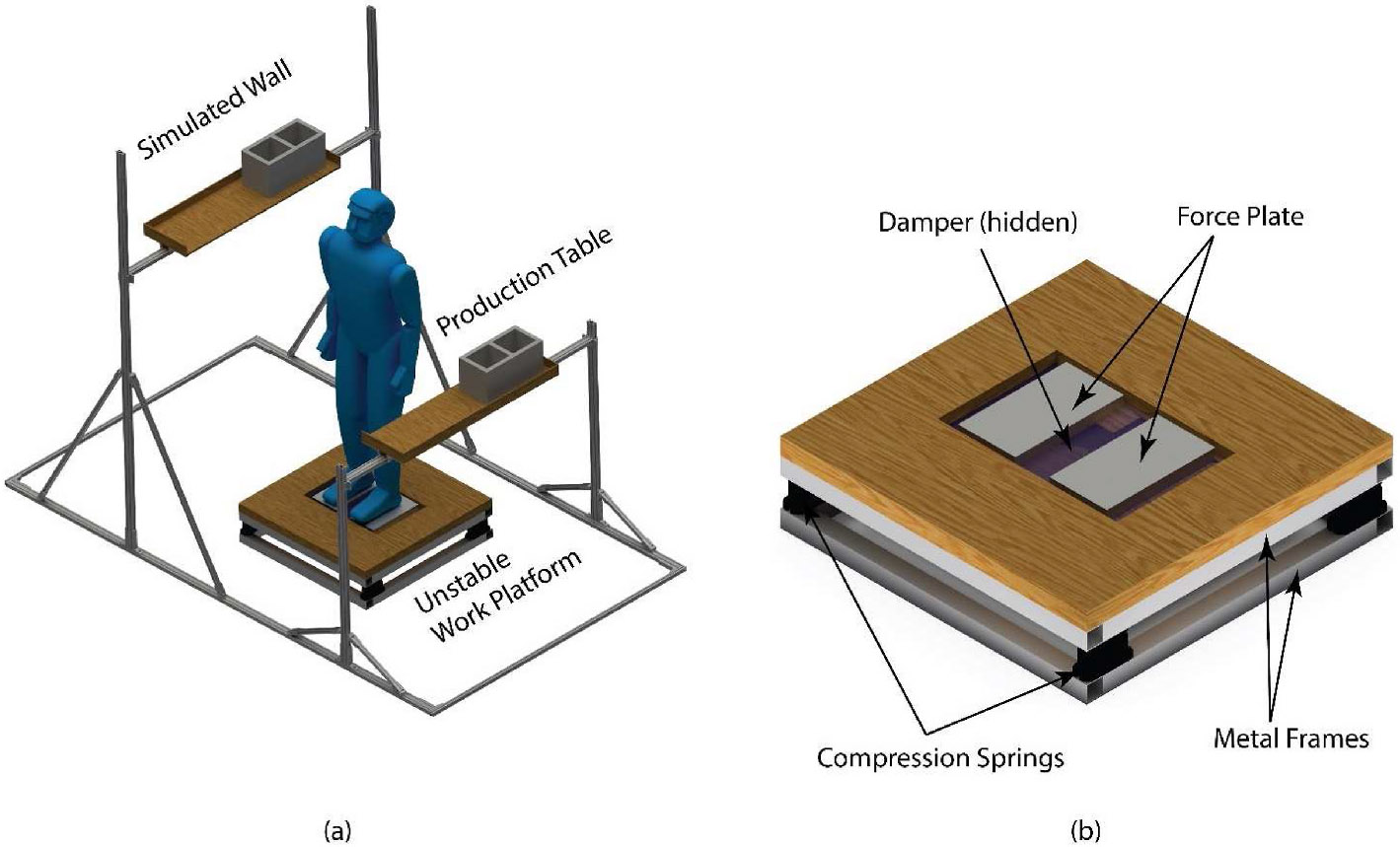
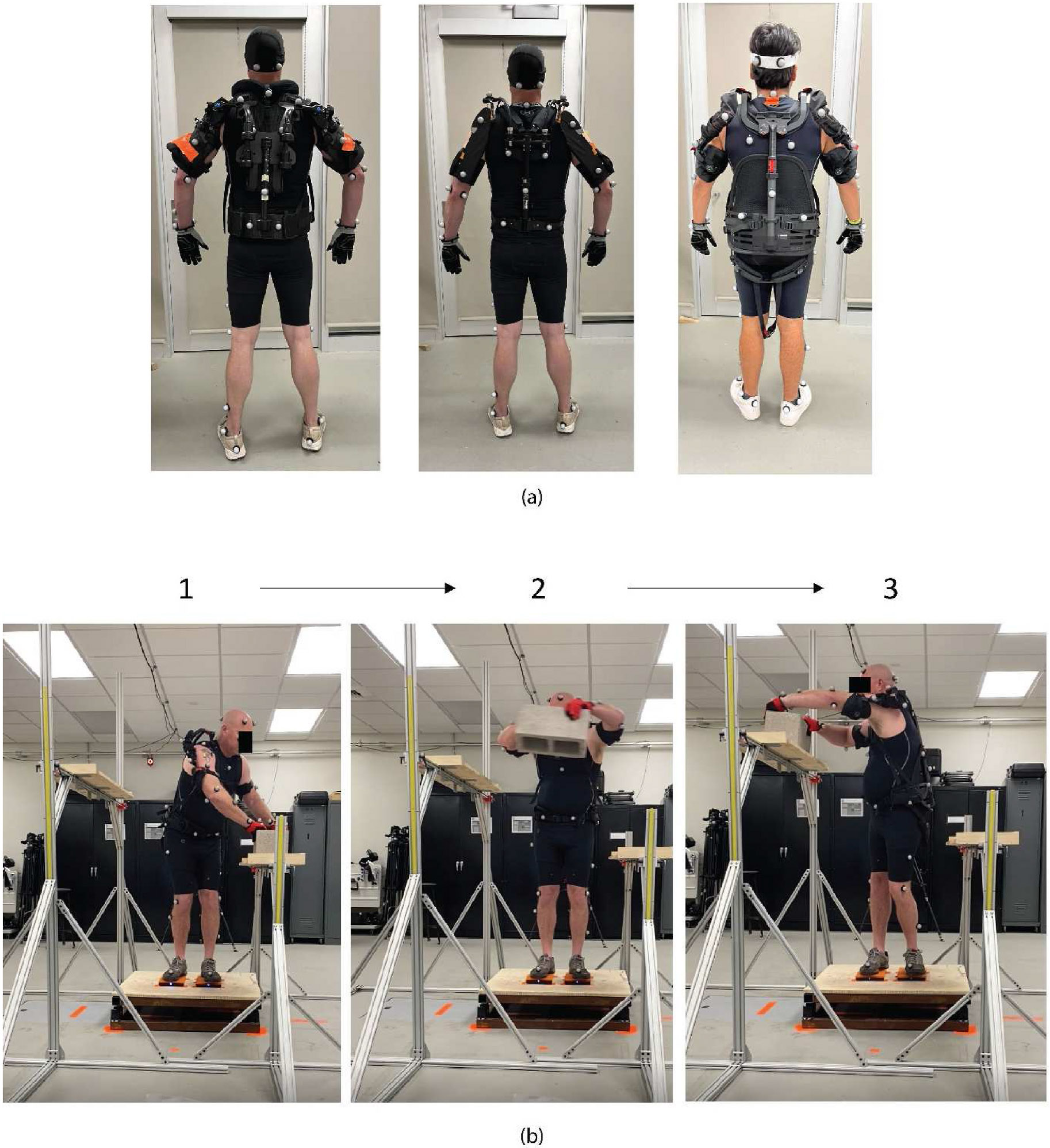
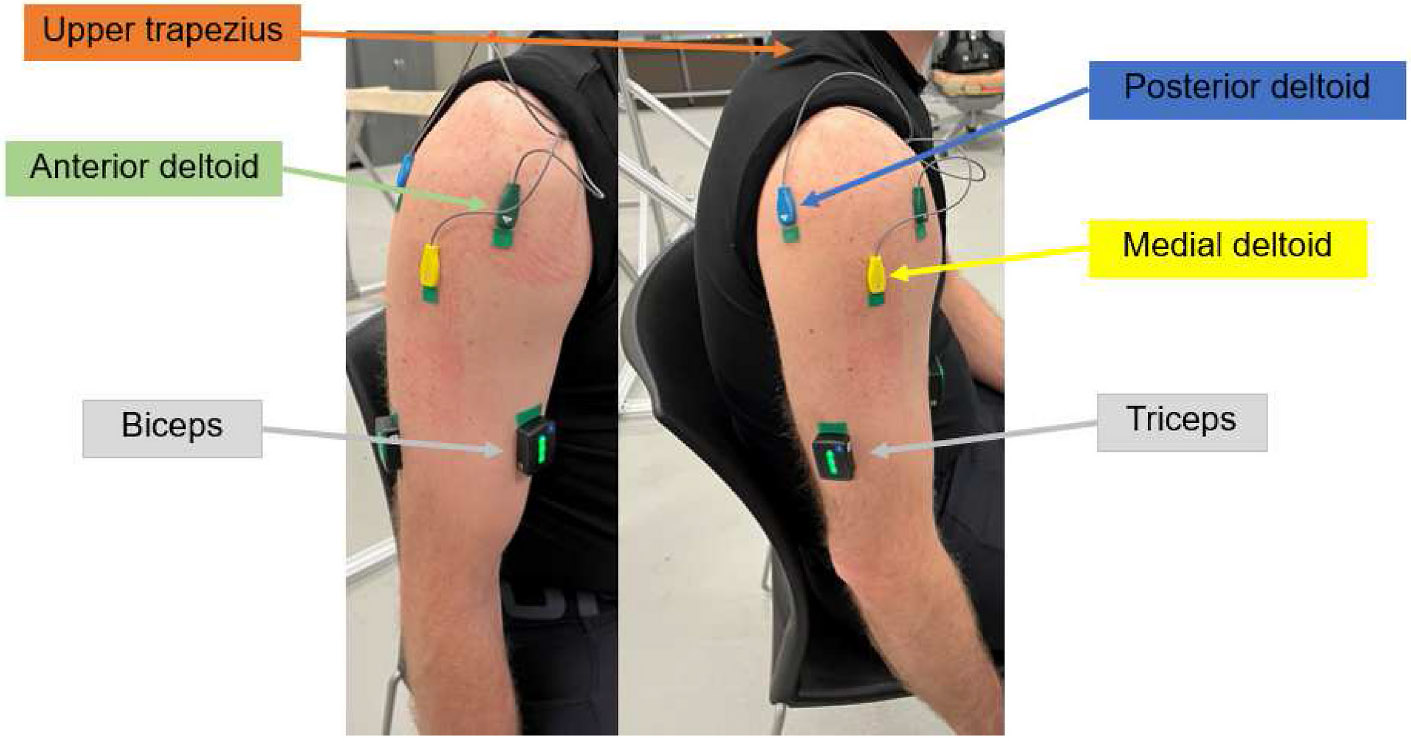
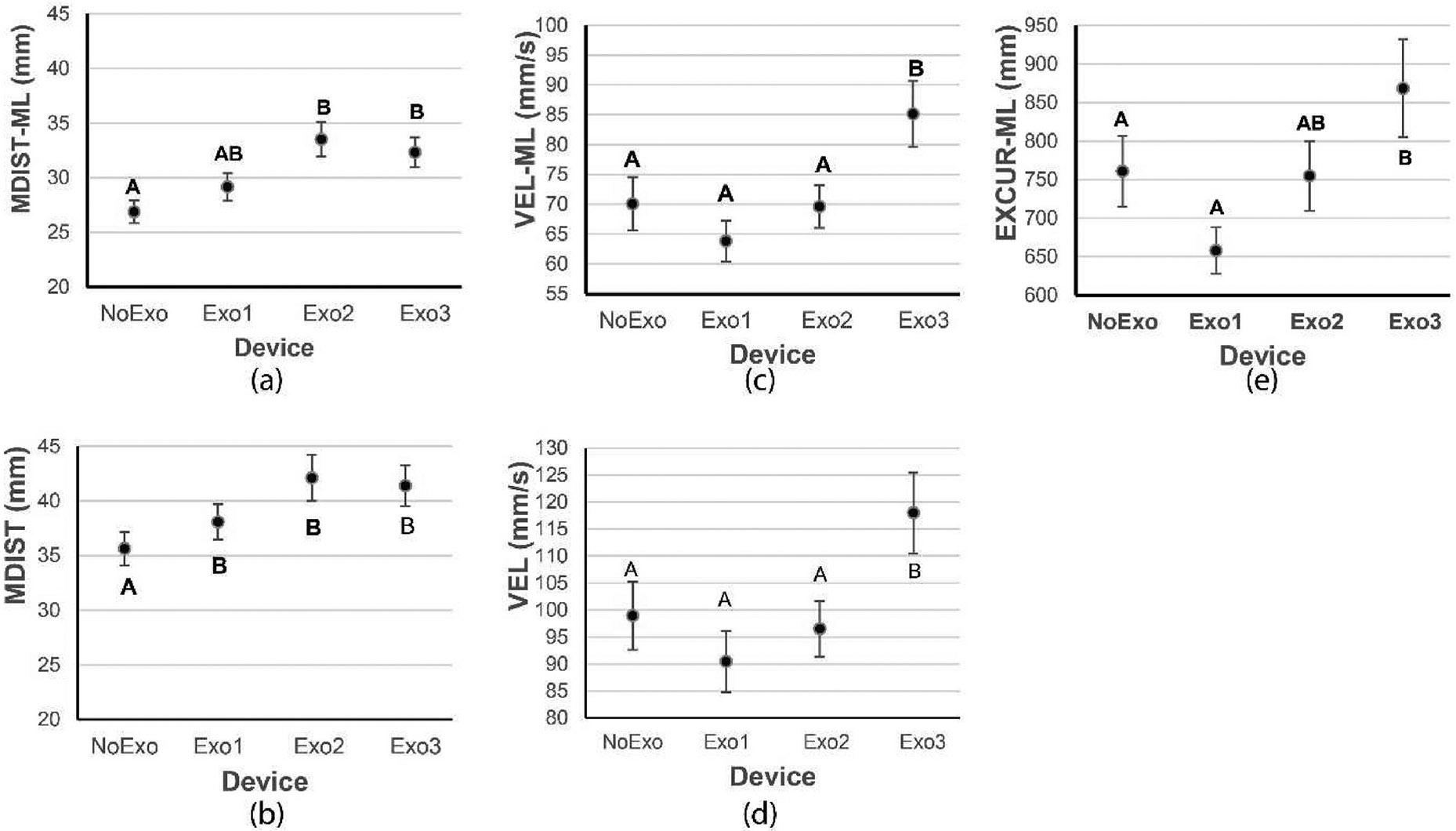
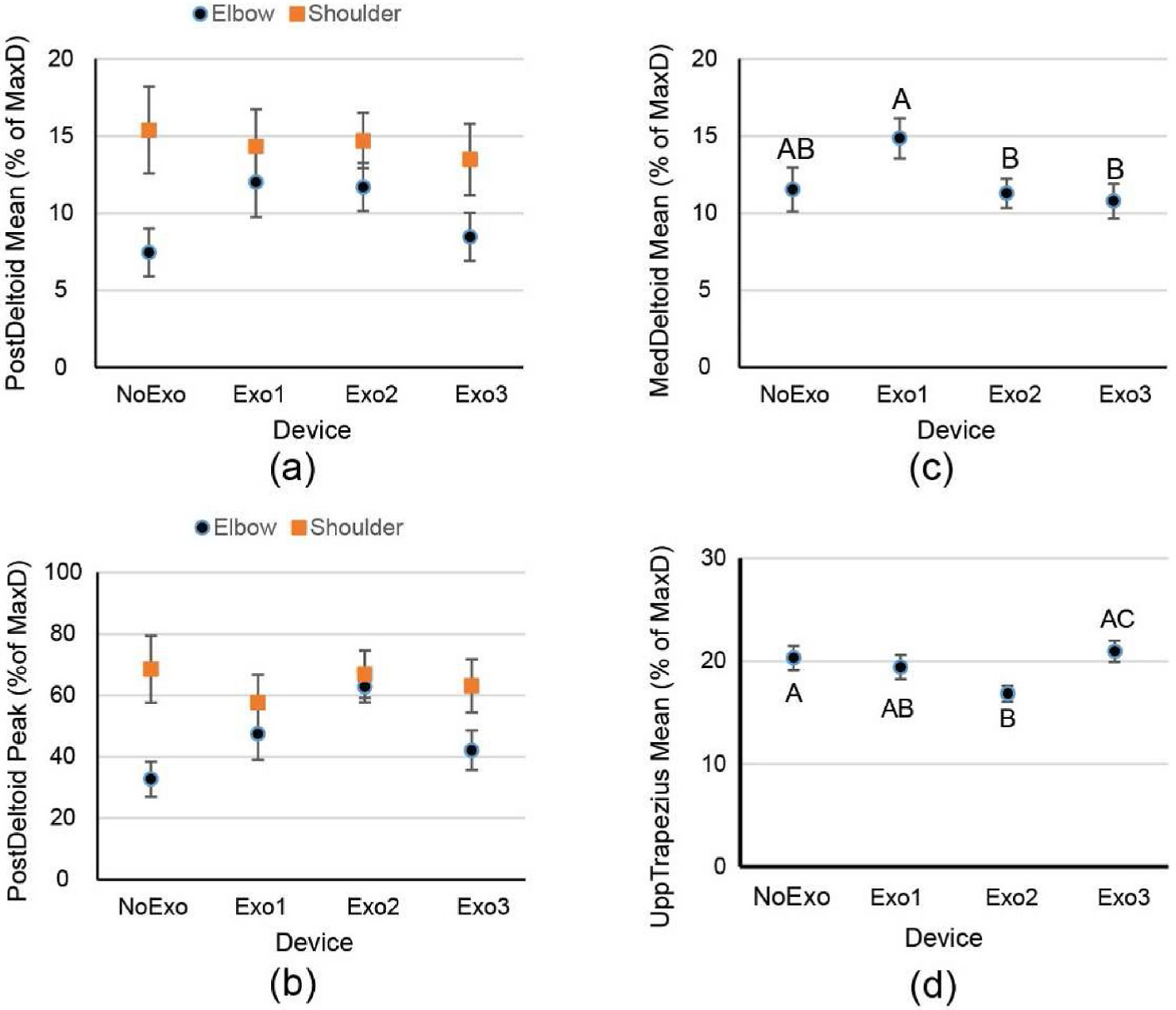
Interest in utilizing exoskeletons to mitigate the risks of musculoskeletal disorders (MSDs) among construction workers is growing, spurred by encouraging results in other industries. However, it is crucial to carefully examine their impact on workers' stability and balance before implementation. In this study, seven male participants lifted a 35-lb cinder block from a production table to a simulated wall at two heights-elbow and shoulder levels-using three different exoskeleton models on an unstable platform, where their balance and shoulder muscle activity were assessed. Balance-related parameters, included mean distance (MDIST), total excursion (EXCUR), and mean velocity (VEL) of the center of pressure, were derived from force plate data. Muscle activity in six shoulder and upper arm muscles was estimated using electromyography (EMG) data. The results indicated that wearing two of the exoskeletons significantly increased both total and medio-lateral (ML) MDIST compared to not wearing an exoskeleton. Wearing one of the exoskeletons significantly increased total and ML VEL and ML EXCUR. Although lifting level did not have a significant impact on the balance parameters, it did affect the muscle activity in most of the measured muscles. Moreover, only one exoskeleton significantly reduced the activity in a particular shoulder muscle compared to no exoskeleton use. In conclusion, the evaluated shoulder-assist exoskeletons showed limited benefits for preventing upper extremity MSDs and may negatively affect whole-body balance during a block-laying task on an unstable platform. These findings underscore the importance of comprehensive evaluations of balance and effectiveness prior to adopting exoskeletons in construction.
Keywords: Construction; Masonry worker; Mast climber; Musculoskeletal disorders; Postural instability; Shoulder-assist exoskeletons; Whole-body balance.
Figures
References
-
- Ahrnsbrak R, Bose J, Hedden S, Lipari R, Park-Lee E, 2017. Key Substance Use and Mental Health Indicators in the United States: Results from the 2016 National Survey on Drug Use and Health. HHS Publication, Rockville, MD.
-
- Anton D, Bray M, Hess JA, Weeks DL, Kincl LD, Vaughan A, 2020. Prevalence of work-related musculoskeletal pain in masonry apprentices. Ergonomics 63, 1194–1202. - PubMed
-
- Antwi-Afari MF, Li H, Chan AHS, Seo J, Anwer S, Mi H-Y, Wu Z, Wong AYL, 2023. A science mapping-based review of work-related musculoskeletal disorders among construction workers. J. Saf. Res 85, 114–128. - PubMed
-
- Armstrong TJ, Buckle P, Fine LJ, Hagberg M, Jonsson B, Kilbom A, Kuorinka IA, Silverstein BA, Sjogaard G, Viikari-Juntura ER, 1993. A conceptual model for work-related neck and upper-limb musculoskeletal disorders. Scand. J. Work. Environ. Health 19, 73–84. - PubMed
-
- Bär M, Steinhilber B, Rieger MA, Luger T, 2021. The influence of using exoskeletons during occupational tasks on acute physical stress and strain compared to no exoskeleton - a systematic review and meta-analysis. Appl. Ergon 94, 103385. - PubMed
Grants and funding
LinkOut - more resources
Full Text Sources