


Towards harmonized laboratory methodologies in veterinary clinical bacteriology: outcomes of a European survey
- PMID: 39450288
- PMCID: PMC11499178
- DOI: 10.3389/fmicb.2024.1443755
Towards harmonized laboratory methodologies in veterinary clinical bacteriology: outcomes of a European survey
Abstract
Introduction: Veterinary clinical microbiology laboratories play a key role in antimicrobial stewardship, surveillance of antimicrobial resistance and prevention of healthcare associated-infections. However, there is a shortage of international harmonized guidelines covering all steps of veterinary bacterial culture from sample receipt to reporting.
Methods: In order to gain insights, the European Network for Optimization of Veterinary Antimicrobial Treatment (ENOVAT) designed an online survey focused on the practices and interpretive criteria used for bacterial culture and identification (C&ID), and antimicrobial susceptibility testing (AST) of animal bacterial pathogens.
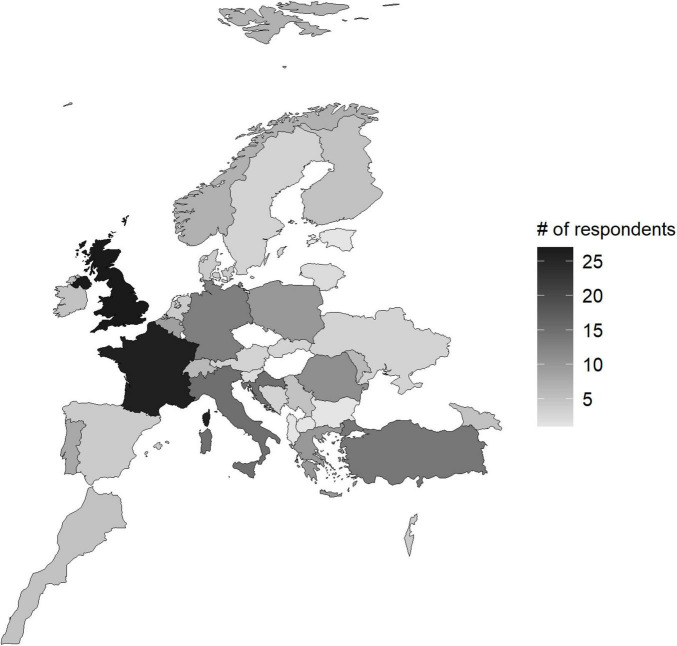
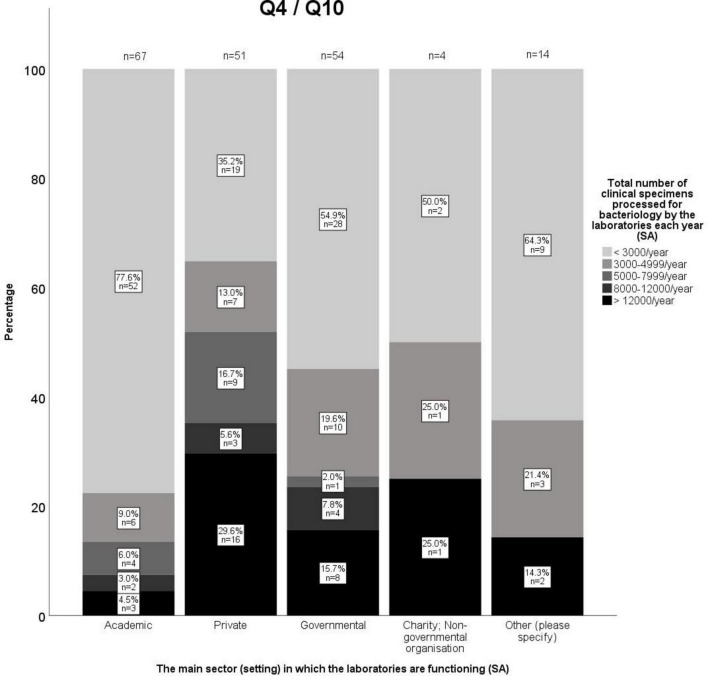
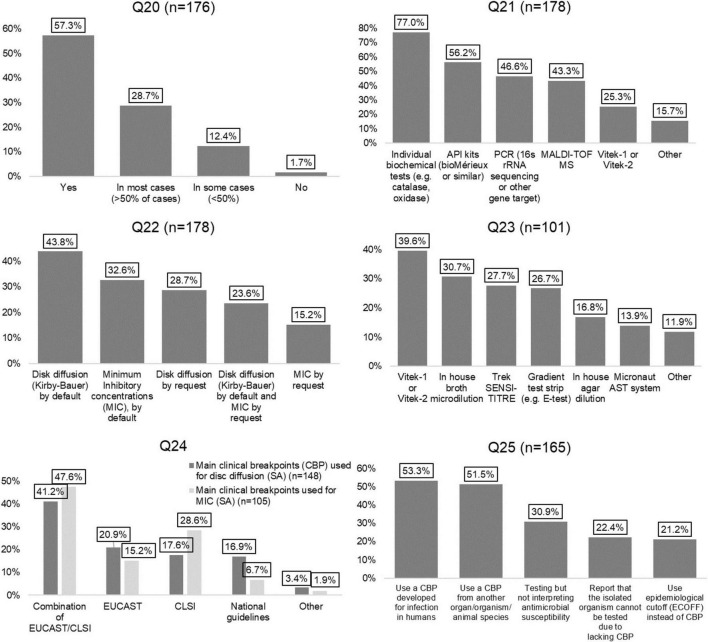
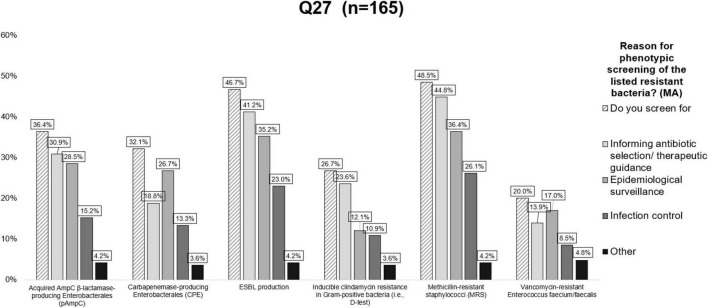
Results: A total of 241 microbiology laboratories in 34 European countries completed the survey, representing a mixture of academic (37.6%), governmental (27.4%), and private (26.5%) laboratories. The C&ID turnaround varied from 1 to 2 days (77.8%) to 3-5 days (20%), and 6- 8 days (1.6%), with similar timeframes for AST. Individual biochemical tests and analytical profile index (API) biochemical test kits or similar were the most frequent tools used for bacterial identification (77% and 56.2%, respectively), followed by PCR (46.6%) and MALDI-TOF MS (43.3%). For AST, Kirby-Bauer disk diffusion (DD) and minimum inhibitory concentration (MIC) determination were conducted by 43.8% and 32.6% of laboratories, respectively, with a combination of EUCAST and CLSI clinical breakpoints (CBPs) preferred for interpretation of the DD (41.2%) and MIC (47.6%) results. In the absence of specific CBPs, laboratories used human CBPs (53.3%) or veterinary CBPs representing another body site, organism or animal species (51.5%). Importantly, most laboratories (47.9%) only report the qualitative interpretation of the result (S, R, and I). As regards testing for AMR mechanisms, 48.5% and 46.7% of laboratories routinely screened isolates for methicillin resistance and ESBL production, respectively. Notably, selective reporting of AST results (i.e. excluding highest priority critically important antimicrobials from AST reports) was adopted by 39.5% of laboratories despite a similar proportion not taking any approach (37.6%) to guide clinicians towards narrower-spectrum or first-line antibiotics.
Discussion: In conclusion, we identified a broad variety of methodologies and interpretative criteria used for C&ID and AST in European veterinary microbiological diagnostic laboratories. The observed gaps in veterinary microbiology practices emphasize a need to improve and harmonize professional training, innovation, bacterial culture methods and interpretation, AMR surveillance and reporting strategies.
Keywords: ENOVAT; antimicrobial susceptibility testing; bacterial culture; bacterial identification; harmonization; methodologies; veterinary clinical bacteriology.
Copyright © 2024 Koritnik, Cvetkovikj, Zendri, Blum, Chaintoutis, Kopp, Hare, Štritof, Kittl, Gonçalves, Zdovc, Paulshus, Laconi, Singleton, Allerton, Broens, Damborg and Timofte.
Conflict of interest statement
The authors declare that the research was conducted in the absence of any commercial or financial relationships that could be construed as a potential conflict of interest.
Figures
References
-
- Allaire J. (2012). RStudio: Integrated development environment for R, Vol. 770. Boston, MA: RStudio, 165–171.
-
- Allerton F., Nuttall T. (2021). Antimicrobial use: Importance of bacterial culture and susceptibility testing. Practice 43 500–510. 10.1002/inpr.139 - DOI
-
- CDC (2020). Key activities and roles for microbiology laboratory staff in antibiotic stewardship programs updated: August 2020. Atlanta, GA: CDC.
LinkOut - more resources
Full Text Sources
Research Materials
