Patient and Caregiver Perspectives on Gender Disparity in CKD: An Interview Study
- PMID: 39451005
- PMCID: PMC11882245
- DOI: 10.34067/KID.0000000594
Patient and Caregiver Perspectives on Gender Disparity in CKD: An Interview Study
Abstract
Key Points:
Women felt vulnerable and felt that their housework obligations may interfere with CKD treatment, especially dialysis.
Women felt they were good at protecting their health, whereas men might expect help from others and live in denial when confronted with advanced CKD.
Background: CKD affects more women than men worldwide; however, men comprise most patients who receive KRT. We aimed to describe the perspectives of patients and their caregivers regarding gender disparities in CKD.
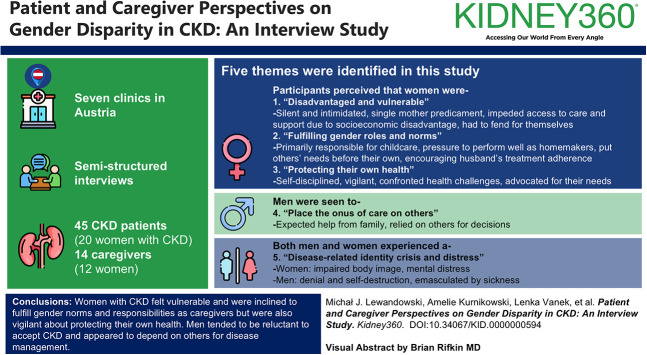
Methods: Semi-structured interviews were conducted with 45 patients with CKD (20 women) and 14 caregivers (12 women) from seven clinics in Austria. The interviews were analyzed thematically.
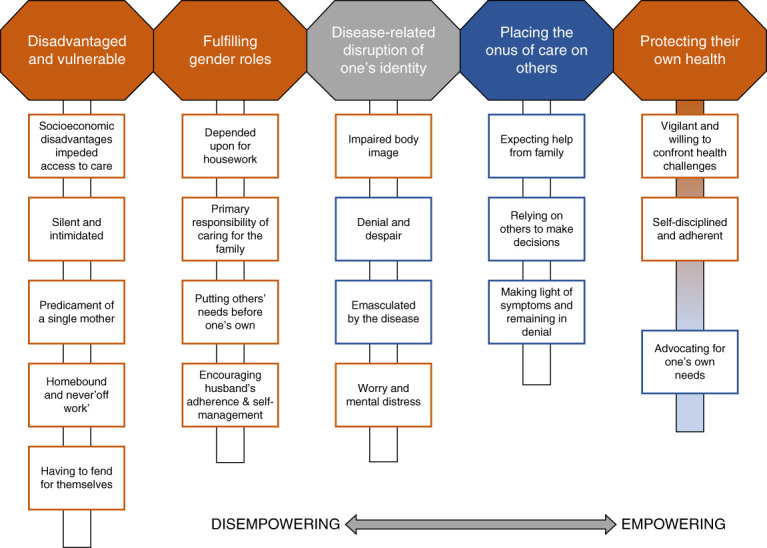
Results: Five themes were identified in this study. Participants perceived that women were disadvantaged and vulnerable (silent and intimidated, single mother predicament, impeded access to care and support because of socioeconomic disadvantage, had to fend for themselves); fulfilling gender roles and norms (primarily responsible for childcare, pressure to perform well as homemakers, put others' needs before their own, encouraging husband's treatment adherence); and protecting their own health (self-disciplined, vigilant, confronted health challenges, advocated for their needs). Men were seen to place the onus of care on others (expected help from family, relied on others for decisions). Both men and women experienced a disease-related identity crisis and distress (women: impaired body image, mental distress; men: denial and self-destruction, emasculated by sickness).
Conclusions: Women with CKD felt vulnerable and were inclined to fulfill gender norms and responsibilities as caregivers, but were also vigilant about protecting their own health. Men tended to be reluctant to accept CKD and appeared to depend on others for disease management. Better awareness and addressing these concerns can inform strategies to minimize gender disparities in access to care and outcomes in CKD.
Conflict of interest statement
Disclosure forms, as provided by each author, are available with the online version of the article at
Figures
References
Grants and funding
LinkOut - more resources
Full Text Sources
Research Materials