


Early-Life Respiratory Syncytial Virus (RSV) Infection Triggers Immunological Changes in Gut-Associated Lymphoid Tissues in a Sex-Dependent Manner in Adulthood
- PMID: 39451246
- PMCID: PMC11506009
- DOI: 10.3390/cells13201728
Early-Life Respiratory Syncytial Virus (RSV) Infection Triggers Immunological Changes in Gut-Associated Lymphoid Tissues in a Sex-Dependent Manner in Adulthood
Abstract
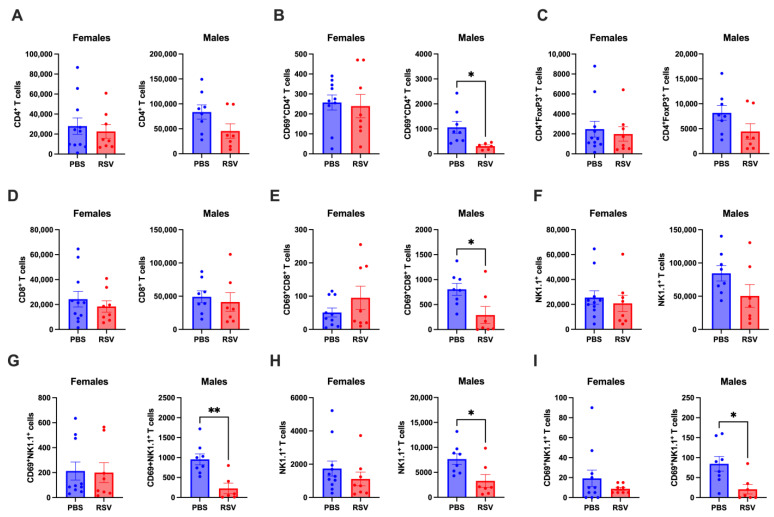
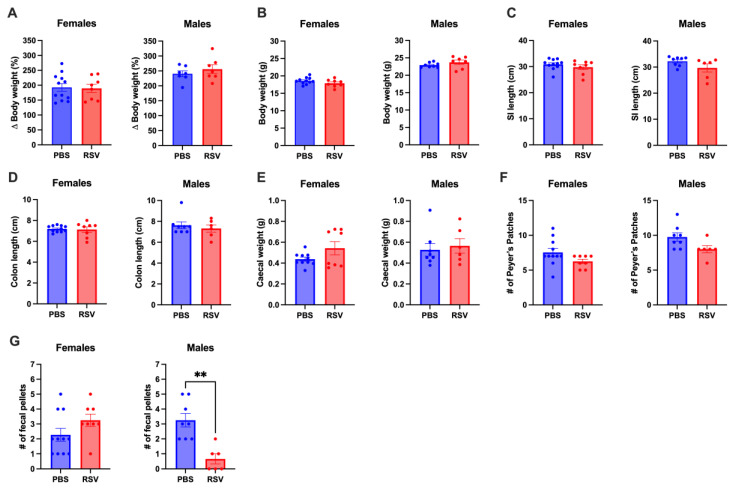
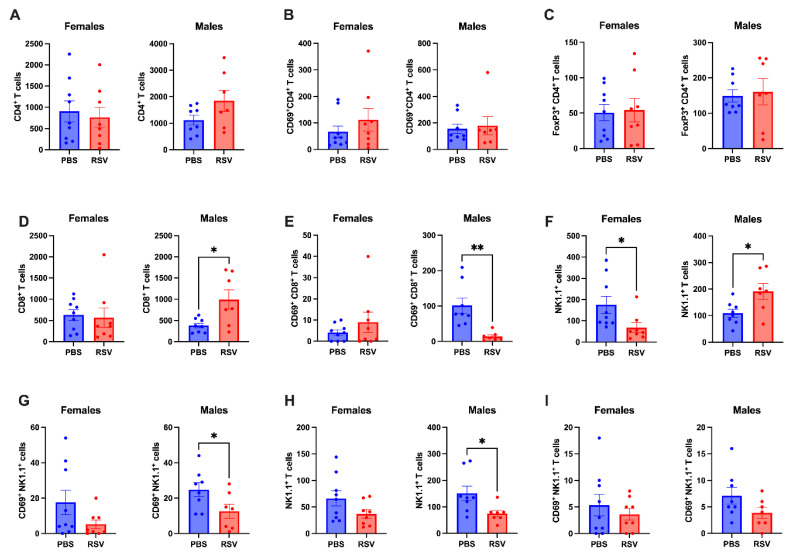
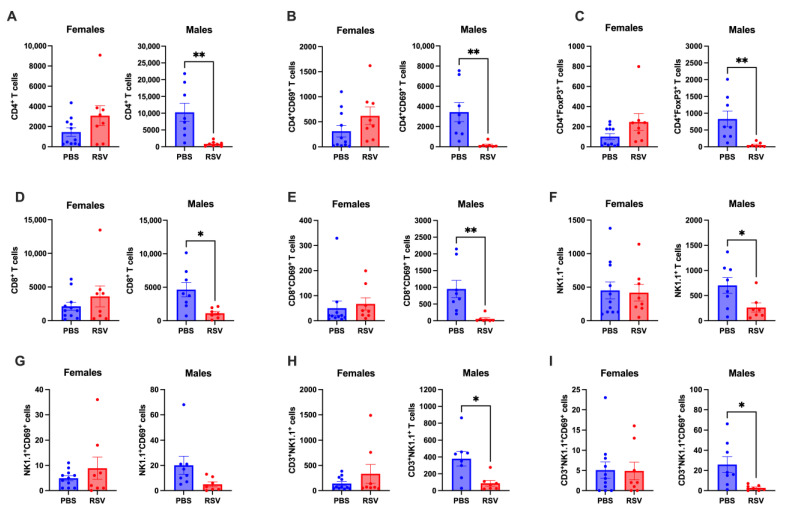
Severe respiratory syncytial virus (RSV) infection during early life has been linked to gut dysbiosis, which correlates with increased disease severity and a higher risk of developing asthma later in life. However, the impact of such early-life RSV infections on intestinal immunity in adulthood remains unclear. Herein, we show that RSV infection in 3-week-old mice induced persistent differential natural killer (NK) and T cell profiles within the lungs and gastrointestinal (GI) lymphoid tissues (GALT) in adulthood. Notably, male mice exhibited more pronounced RSV-induced changes in immune cell populations in both the lungs and GALT, while female mice displayed greater resilience. Importantly, early-life RSV infection was associated with the chronic downregulation of CD69-expressing T lymphocytes, particularly T regulatory cells in Peyer's patches, which could have a significant impact on T cell functionality and immune tolerance. We propose that RSV infection in early life is a trigger for the breakdown in immune tolerance at mucosal surfaces, with potential implications for airways allergic disease, food allergies, and other GI inflammatory diseases.
Keywords: Peyer’s patch; T cells; cecal patch; inflammation; respiratory syncytial virus.
Conflict of interest statement
The authors declare no conflict of interest.
Figures
References
Publication types
MeSH terms
Substances
Grants and funding
LinkOut - more resources
Full Text Sources
Medical
