


Language Experience Influences Sociolinguistic Development: The Role of Speaker Race and Language Attitudes on Bilingual and Monolingual Adults' Accent Processing
- PMID: 39452040
- PMCID: PMC11506646
- DOI: 10.3390/brainsci14101028
Language Experience Influences Sociolinguistic Development: The Role of Speaker Race and Language Attitudes on Bilingual and Monolingual Adults' Accent Processing
Abstract
Background/objectives: Speaker race and the listener's language experience (i.e., monolinguals vs. bilinguals) have both been shown to influence accent intelligibility independently. Speaker race specifically is thought to be informed by learned experiences (exemplar model) or individual biases and attitudes (bias-based model). The current study investigates speaker race and the listener's language experience simultaneously as well as listeners' attitudes toward non-native speakers and their ability to identify the accent.
Methods: Overall, 140 White English monolinguals and 140 English/Norwegian bilinguals transcribed 60 Mandarin-accented English sentences presented in noise in the context of a White or East Asian face. Following sentence transcription, participants were asked to rate the strength of the accent heard and completed a short questionnaire that assessed their accent identification ability and their language usage, proficiency, familiarity, and attitudes.
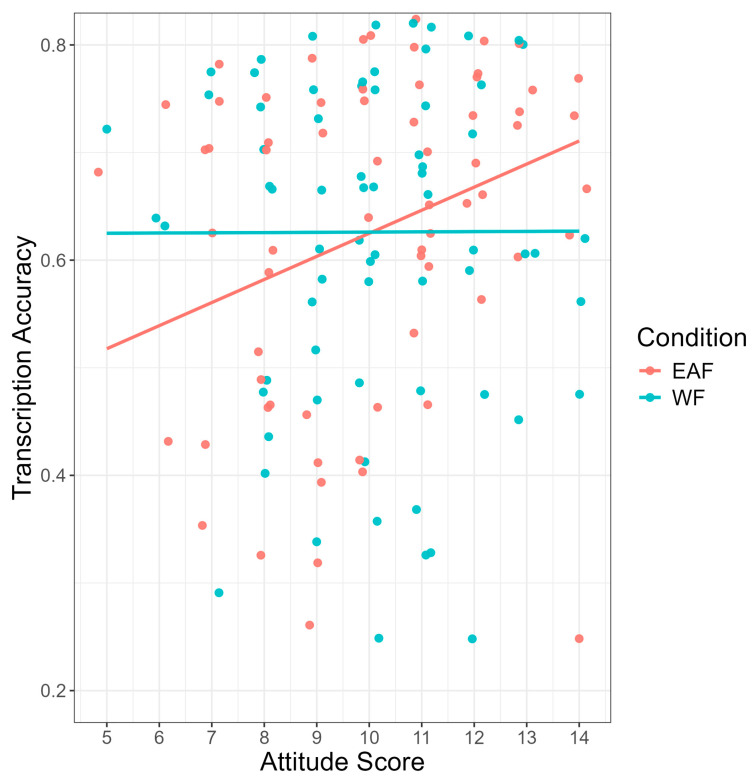
Results: Results show that a listeners' ability to identify an accent and their attitudes toward non-native speakers had a significant impact on accent intelligibility and accentedness ratings. Speaker race by itself did not play a role in accent intelligibility and accentedness ratings; however, we found evidence that speaker race interacted with participants' accent identification scores and attitudes toward non-native speakers, and these interactions differed as a function of language experience.
Conclusions: Our results suggest that bilinguals' sociolinguistic processing may be more in line with a bias-based model than monolinguals.
Keywords: accent intelligibility; bilingualism; psycholinguistics; sociolinguistics; speech perception.
Conflict of interest statement
The authors declare no conflicts of interest. The funders had no role in the design of the study; in the collection, analyses, or interpretation of data; in the writing of the manuscript; or in the decision to publish the results.
Figures




References
-
- Drager K. Sociophonetic variation in speech perception. Lang. Linguist. Compass. 2010;4:473–480. doi: 10.1111/j.1749-818X.2010.00210.x. - DOI
-
- Niedzielski N. The effect of social information on the perception of sociolinguistic variables. J. Lang. Soc. Psychol. 1999;18:62–85. doi: 10.1177/0261927X99018001005. - DOI
-
- White M.J., Li Y. Second-language fluency and person perception in China and the United States. J. Lang. Soc. Psychol. 1991;10:99–113. doi: 10.1177/0261927X91102002. - DOI
-
- Portes A., Rumbaut R.G. Immigrant America: A Portrait. 3rd ed. University of California Press; Oakland, CA, USA: 2006. pp. 43–58.
Grants and funding
LinkOut - more resources
Full Text Sources
