


Megaselia scalaris and Senotainia tricuspis Infesting Apis mellifera: Detection by Quantitative PCR, Genotyping, and Involvement in the Transmission of Microbial Pathogens
- PMID: 39452362
- PMCID: PMC11508623
- DOI: 10.3390/insects15100786
Megaselia scalaris and Senotainia tricuspis Infesting Apis mellifera: Detection by Quantitative PCR, Genotyping, and Involvement in the Transmission of Microbial Pathogens
Abstract
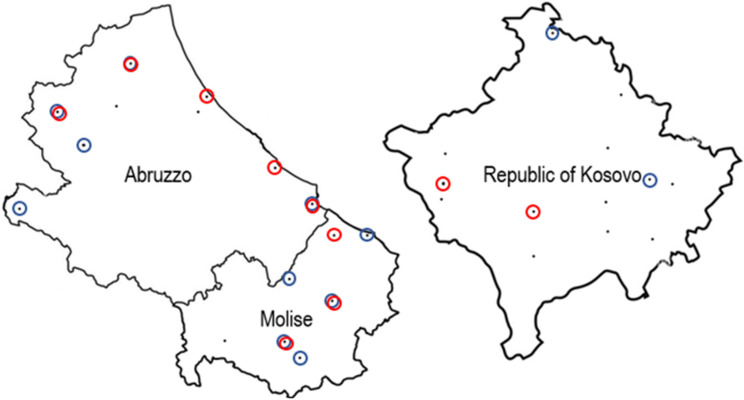
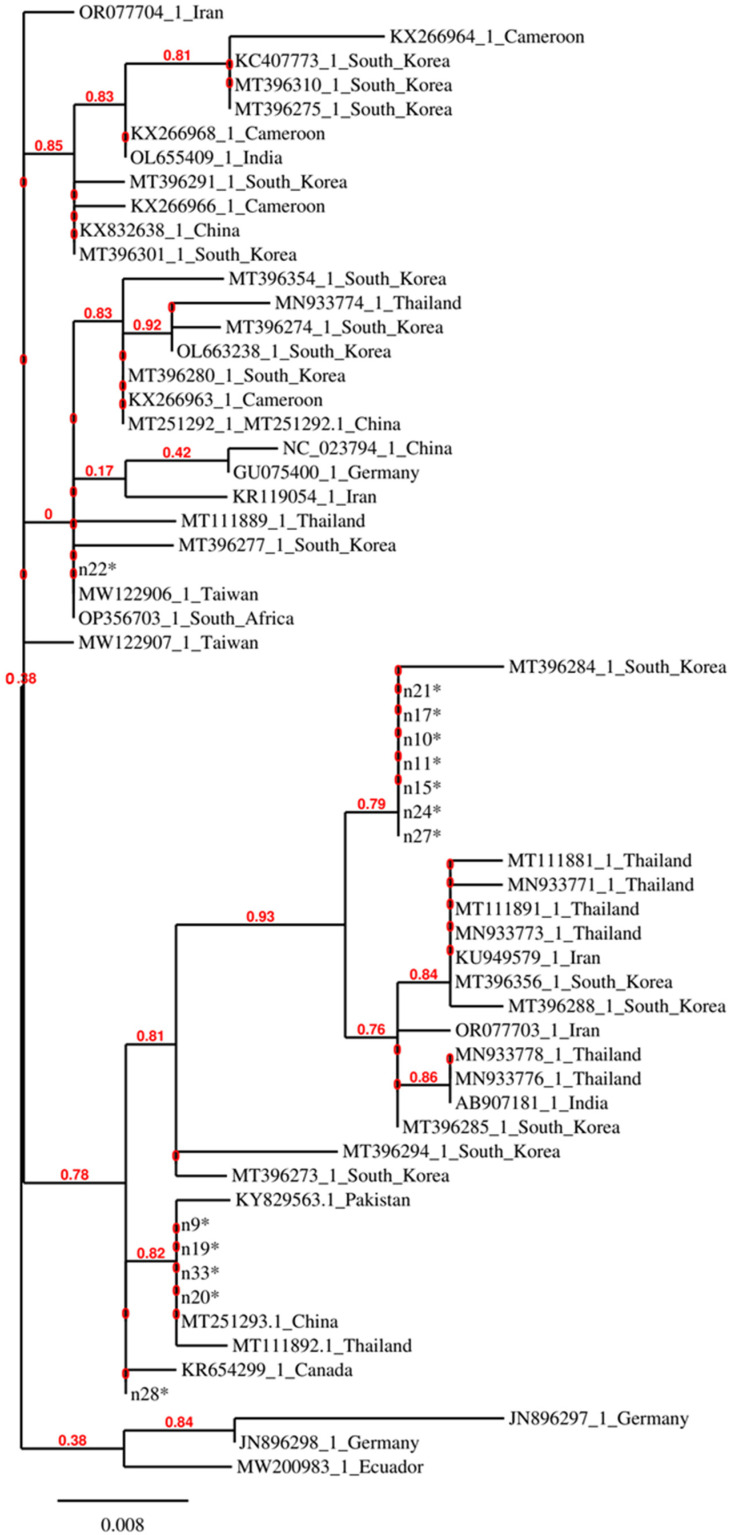
The Megaselia scalaris and Senotainia tricuspis parasitoid flies of the honeybee Apis mellifera were found to infest apiaries of different European and Mediterranean countries but their prevalence and impact on apiary health are little known. Therefore, in this study, quantitative PCR (qPCR)-based methods were developed for their rapid detection directly in hive matrices. The newly developed qPCR assays were targeted at the mitochondrial cytochrome oxidase subunit I (COI) gene for the M. scalaris and the cytochrome B (cytB) gene for the S. tricuspis. The tests were preliminarily applied to 64 samples of adult honeybees and hive debris collected in the Abruzzo and Molise regions, Central Italy, and the Republic of Kosovo showing that both flies occur in the two countries and more frequently in Italy. The positive apiaries in Italy were re-sampled by capturing viable forager bees and isolating emerging flies to carry out the genotyping and analyses aimed at defining if these flies can transmit honeybee pathogens. Genotyping based on the COI and cytB gene sequencing for M. scalaris and S. tricuspis, respectively, identified one S. tricuspis genotype and diverse genotypes of M. scalaris highly similar to those from distant countries. Some fly isolates harbored the DNA or RNA of honeybee microbial pathogens Paenibacillus larvae, deformed wing viruses A and B (DWVA and B), black queen cell virus (BQCV), chronic paralysis virus (CBPV), and Nosema ceranae. The results indicated that these parasites should be efficiently controlled in apiaries by using rapid detection methods to facilitate the large screening studies and early detection.
Keywords: Apis mellifera; Megaselia scalaris; Senotainia tricuspis; genotyping; occurrence in apiaries; parasitoid flies; pathogen carriage; qPCR detection.
Conflict of interest statement
The authors declare no conflicts of interest.
Figures
References
-
- Fernández P., Alverez S.C., Moraga Q.E. Primera cita de Megaselia scalaris (Loew, 1866), (Diptera: Phoridae) en Apis mellifera iberiensis. Rev. Ibero Latinoam. De Parasitol. 2010;69:72–76.
-
- Ricchiuti L., Miranda M., Venti R., Bosi F., Marino L., Mutinelli F. Infestation of Apis mellifera colonies by Megaselia scalaris (Loew, 1866) in Abruzzo and Molise regions, central-southern Italy. J. Apic. Res. 2016;55:187–192. doi: 10.1080/00218839.2016.1196017. - DOI
-
- Cham D.T., Fombong A.T., Ndegwa P.N., Irungu L.W., Nguku E., Raina S.K. Megaselia scalaris (Diptera: Phoridae), an opportunist parasitoid of honey bees in Cameroon. [(accessed on 27 August 2024.)];Afr. Entomol. 2018 26:254–258. doi: 10.4001/003.026.0254. Available online: https://hdl.handle.net/10520/EJC-df2838c22. - DOI
-
- Debnath P., Roy D. First Record of Megaselia Scalaris (Loew) as a Potential Facultative Parasitoid of Apis Mellifera in India. Asian J. Biol. 2019;7:1–9. doi: 10.9734/AJOB/2018/46210. - DOI
LinkOut - more resources
Full Text Sources
