


Comparative Impact of Organic Grass-Fed and Conventional Cattle-Feeding Systems on Beef and Human Postprandial Metabolomics-A Randomized Clinical Trial
- PMID: 39452914
- PMCID: PMC11509860
- DOI: 10.3390/metabo14100533
Comparative Impact of Organic Grass-Fed and Conventional Cattle-Feeding Systems on Beef and Human Postprandial Metabolomics-A Randomized Clinical Trial
Abstract
Background/objectives: Cattle-feeding systems may have health implications for consumers of beef products. Organic grass-fed (GRA) and conventional (CON) cattle-feeding systems may result in beef products with differing metabolite profiles and therefore could impact the postprandial metabolomic response of consumers. This study aims to measure whole beef metabolomics and postprandial metabolomic response of consumers between GRA and CON beef to elucidate potential health implications.
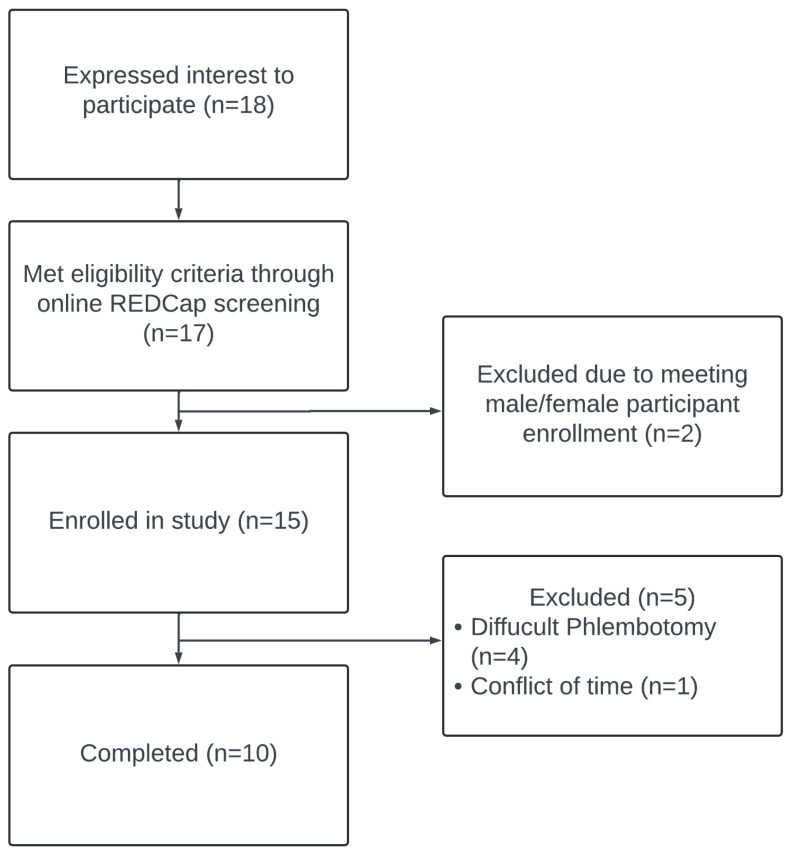
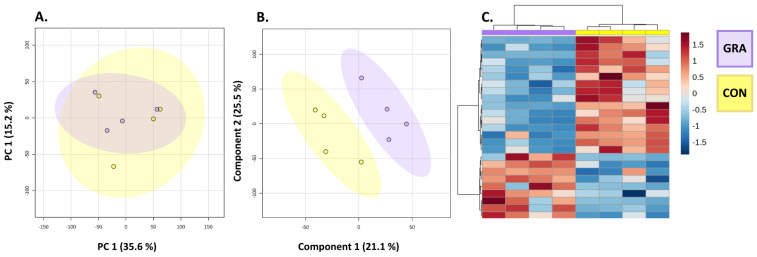
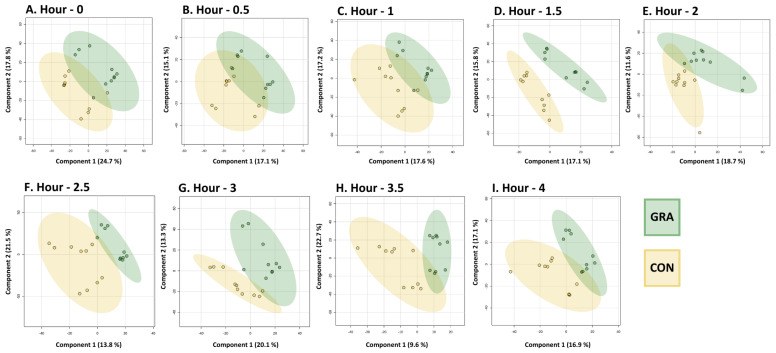
Methods: This study followed a randomized double-blind crossover design with healthy male and female subjects (n = 10). Plasma samples were taken at fasting (0) and postprandially for four hours after consumption of a steak from each condition. Untargeted metabolomic analysis of whole beef and human plasma samples used LC/MS. Multivariate and pathway enrichment analysis in MetaboAnalyst was used to investigate metabolite and biochemical pathways that distinguished CON and GRA.
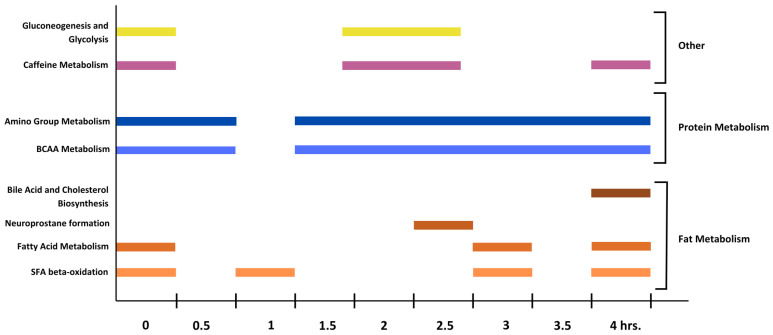
Results: Cattle-feeding systems impacted both postprandial and whole beef steak metabolomic profiles. Metabolites that contributed to this variation included carnitine species (Proionylcarnitine), fatty acids, amino acids (L-valine), and Calamendiol. These metabolites have been associated with oxidative stress, inflammation, and cardiovascular health. Functional pathway enrichment analysis revealed numerous amino acid degradation pathways, especially branched-chain amino acids, and fatty acid degradation that changed throughout the postprandial time course.
Conclusions: These findings suggest that CON and GRA cattle-feeding systems differentially impact whole beef metabolomics, as well as consumer postprandial metabolic responses and the associated health implications.
Keywords: beef; cattle-feeding systems; health implications; metabolomics; pathway enrichment; postprandial; untargeted.
Conflict of interest statement
The authors declare no conflicts of interest. The funders had no role in the design of the study; in the collection, analyses, or interpretation of data; in the writing of the manuscript; or in the decision to publish the results.
Figures
References
-
- Food and Agriculture Organization of the United Nations . Food Balance Sheets 2010–2022 Global, Regional and Country Trends. Food and Agriculture Organization of the United Nations; Rome, Italy: 2024. FAOSTAT Analytical Brief 91.
-
- Hawley A.L., Liang X., Børsheim E., Wolfe R.R., Salisbury L., Hendy E., Wu H., Walker S., Tacinelli A.M., Baum J.I. The Potential Role of Beef and Nutrients Found in Beef on Outcomes of Wellbeing in Healthy Adults 50 Years of Age and Older: A Systematic Review of Randomized Controlled Trials. Meat Sci. 2022;189:108830. doi: 10.1016/j.meatsci.2022.108830. - DOI - PubMed
Grants and funding
LinkOut - more resources
Full Text Sources
