


Untargeted Metabolite Profiling Reveals Acute Toxicity of Pentosidine on Adipose Tissue of Rats
- PMID: 39452920
- PMCID: PMC11509468
- DOI: 10.3390/metabo14100539
Untargeted Metabolite Profiling Reveals Acute Toxicity of Pentosidine on Adipose Tissue of Rats
Abstract
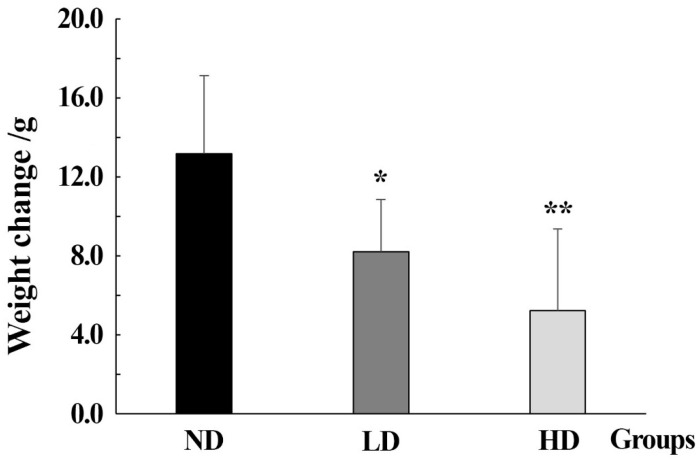
Background: Pentosidine is an advanced glycation end product that is commonly found in heat-processed foods. Pentosidine has been involved in the occurrence and development of some chronic diseases. It was reported that pentosidine exposure can impair the function of the liver and kidneys. Adipose tissue, as an active endocrine organ, plays an important role in maintaining the normal physiological function of cells. However, the metabolic mechanism that causes pentosidine to induce toxicity in adipose tissue remains unclear. Methods: In the study, thirty male Sprague-Dawley rats were divided into a normal diet group, low dose group, and high dose group. A non-targeted metabolomics approach was used to compare the metabolic profiles of adipose tissue between the pentosidine and normal diet groups. Furthermore, histopathological observation and body weight change analysis were performed to test the results of the metabolomics analysis. Results: A total of forty-two differential metabolites were identified. Pentosidine mainly disturbed twelve metabolic pathways, such as ascorbate and aldarate metabolism, glycine, serine, and threonine metabolism, sulfur metabolism, pyruvate metabolism, etc. Additionally, pyruvic acid was identified as a possible key upregulated metabolite involved in thirty-four metabolic pathways. α-Ketoglutaric acid was named as a probable key downregulated metabolite involved in nineteen metabolic pathways based on enrichment network analysis. In addition, histopathological analysis and body weight changes confirmed the results of the metabolomics analysis. Conclusions: These results provided a new perspective for the molecular mechanisms of adipose tissue toxicity induced by pentosidine.
Keywords: food safety; mass spectrometry; metabolomics; pentosidine; untargeted metabolite profiling.
Conflict of interest statement
The authors declare no conflicts of interest.
Figures


References
-
- Cui H.P., Yu J.H., Zhai Y., Feng L.H., Chen P.S., Hayat K., Xu Y., Zhang X.M., Ho C.T. Formation and fate of Amadori rearrangement products in Maillard reaction. Trends Food Sci. Tech. 2021;115:391–408. doi: 10.1016/j.tifs.2021.06.055. - DOI
-
- Qu W., Nie C., Zhao J., Ou X., Zhang Y., Yang S., Bai X., Wang Y., Wang J., Li J. Microbionne-metabolomics analysis of the impacts of long-term dietary advanced-glycation-end-product consumption on C57BL/6 mouse fecal microbiota and metabolites. J. Agric. Food Chem. 2018;66:8864–8875. doi: 10.1021/acs.jafc.8b01466. - DOI - PubMed
-
- Chao P.C., Hsu C.C., Yin M.C. Analysis of glycative products in sauces and sauce-treated foods. Food Chem. 2009;113:262–266. doi: 10.1016/j.foodchem.2008.06.076. - DOI
Grants and funding
LinkOut - more resources
Full Text Sources
