


Undergraduate Research Science Capital: Measuring capacity to engage in research
- PMID: 39453956
- PMCID: PMC11508476
- DOI: 10.1371/journal.pone.0310053
Undergraduate Research Science Capital: Measuring capacity to engage in research
Abstract
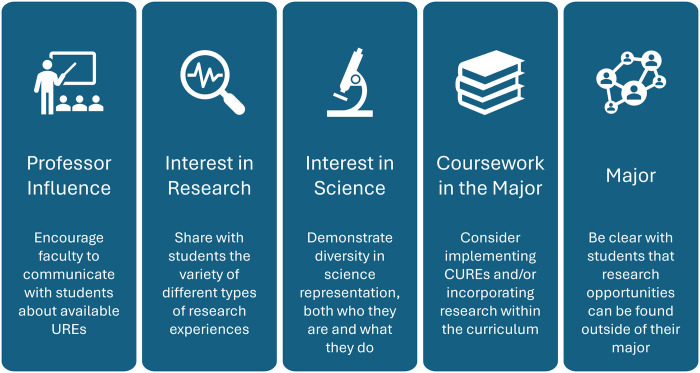
Undergraduate research has been identified as a high-impact educational practice. However, despite the body of evidence on the outcomes of undergraduate research, few studies have focused on the influences students face regarding participation. Developed using Science Capital and Social Cognitive Career Theory, a survey comprised of potential influences to undergraduate science research participation was disseminated to science majors at four R1 institutions in the Southeastern United States. Participation rates across several demographic factors and effect of participation influences were analysed. Results reveal a significantly greater proportion of the Lesbian, Gay, Bisexual, Transgender, Queer, Plus (LGBTQ+) and disability communities indicating participating in research than their peers. Additionally, fourteen participation influences were identified as having a significant difference in their level of influence to the ability to participate in research between researchers and non-researchers. These include professor influence, interest in research, interest in science, coursework in the major, and major all being rated as opportunities with a significant difference of effect between researchers and those who have not yet participated in research. The results of this study will be beneficial for science departments and their respective institutions to improve the equity of access to their undergraduate research experiences.
Copyright: © 2024 Boyd, Lazar. This is an open access article distributed under the terms of the Creative Commons Attribution License, which permits unrestricted use, distribution, and reproduction in any medium, provided the original author and source are credited.
Conflict of interest statement
The authors have declared that no competing interests exist.
Figures

References
-
- Kuh GD. High-Impact Educational Practices: What They Are, Who Has Access to Them, and Why They Matter. Association of American College & Universities; 2008. (LEAP).
-
- Lopatto D. Science in Solution: The Impact of Undergraduate Research on Student Learning. Research Corporation for Science Advancement; 2009.
-
- Vincent-Ruz P, Grabowski J, Schunn CD. The Impact of Early Participation in Undergraduate Research Experiences on Multiple Measures of Premed Path Success. CUR Quarterly. 2018. Mar 1;1(3):13–8.
MeSH terms
LinkOut - more resources
Full Text Sources
