


Feasibility of mNGS in joint replacement patients exhibiting elevated ESR and CRP levels without an underlying diagnosis
- PMID: 39456072
- PMCID: PMC11515214
- DOI: 10.1186/s40001-024-02118-6
Feasibility of mNGS in joint replacement patients exhibiting elevated ESR and CRP levels without an underlying diagnosis
Abstract
Objective: The aim of this study is to investigate the viability of performing initial artificial joint replacement surgery in patients presenting with unexplained elevations in erythrocyte sedimentation rate (ESR) and C-reactive protein (CRP) levels.
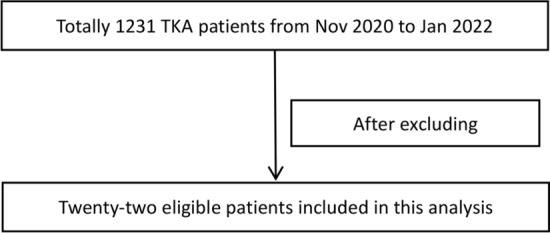
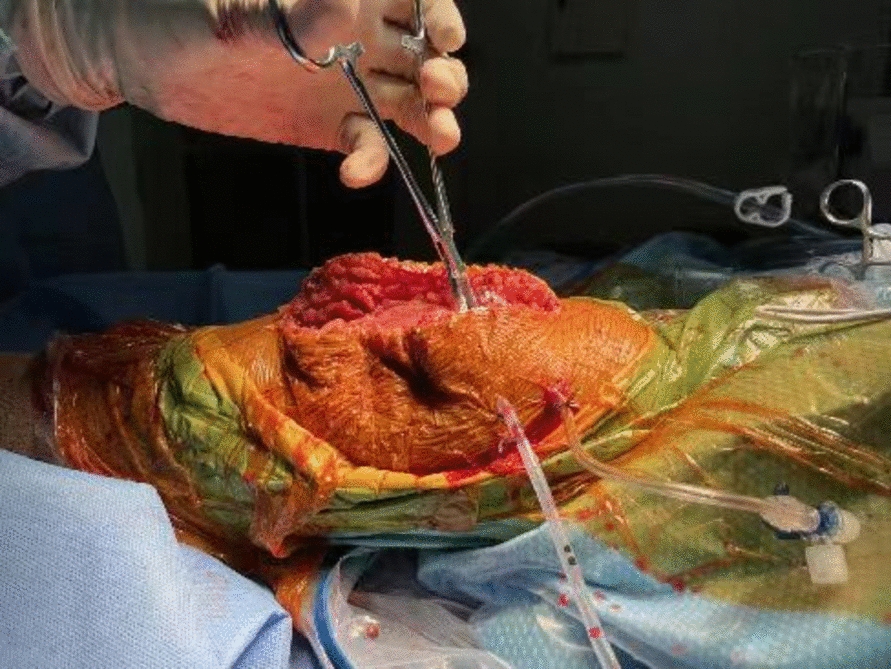
Methods: A cohort of 22 patients, comprising 11 cases each for knee and hip joint replacements, who underwent initial artificial joint replacement surgery between November 2020 and January 2022, was recruited. All patients exhibited elevated levels of ESR and CRP prior to surgery, the etiology of which remained undetermined. Intraoperatively, joint effusion and periarticular tissues were preserved for subsequent bacterial culture and metagenomic next-generation sequencing (mNGS). Postoperatively, a combination of intravenous and local antibiotics was administered for anti-infective management. In cases where bacterial culture and/or mNGS yielded positive results, patients were diagnosed with periprosthetic joint infections (PJI) and underwent one-stage revision; conversely, negative findings led to the discontinuation of intravenous and local antibiotics therapy.
Results: Among the cohort of 22 patients, bacterial cultures yielded negative results, while mNGS identified bacterial infection in 14 patients (63.63%), viral infection in 1 patient (4.55%), and yielded negative results in 7 patients (31.82%). All surgical incisions achieved per primam. Subsequent follow-up assessments conducted for more than 1 year postoperatively revealed absence of PJI among the patients, all of whom exhibited satisfactory progress in their rehabilitation exercises. Notably, the Knee Society Score (KSS) for knee joint patients significantly improved from a preoperative mean of 48.7 ± 3.3 points to 84.3 ± 2.2 points postoperatively, whereas the Harris Hip Score for hip joint patients increased significantly from preoperative mean of 50.6 ± 3.6 points to 87.1 ± 1.6 points (P < 0.01).
Conclusion: In cases where patients present with unexplained elevations in ESR and CRP levels, primary artificial joint replacement can be undertaken following a one-stage revision approach for PJI.
Keywords: Artificial joint replacement; C-reactive protein (CRP); Erythrocyte sedimentation rate (ESR); Metagenomic next-generation sequencing (mNGS); Periprosthetic joint infections (PJI).
© 2024. The Author(s).
Conflict of interest statement
The authors declare no competing interests.
Figures
References
-
- Klug A, Gramlich Y, Rudert M, Drees P, Hoffmann R, Weißenberger M, Kutzner KP. The projected volume of primary and revision total knee arthroplasty will place an immense burden on future health care systems over the next 30 years. Knee Surg Sports Traumatol Arthrosc. 2021;29(10):3287–98. 10.1007/s00167-020-06154-7. - DOI - PMC - PubMed
-
- Liu P, Zhao MS, Cao GD, Deng YP, Gao Y, Liu J, Zhen P. Current status of surgical treatment for traumatic arthritis. Med J PLA. 2020;45(05):559–67. 10.11855/j.issn.0577-7402.2020.05.17.
-
- Huang K. The expression changes and significance of CRP and ESR after orthopedic internal fixation surgery. Label Immunoass Clin Appl. 2016;23(8):874–7.
MeSH terms
Substances
LinkOut - more resources
Full Text Sources
Medical
Research Materials
Miscellaneous
