


Qualitative and Quantitative Sex-Related Differences in the Perception of Single Molecules from Coffee Headspace
- PMID: 39456301
- PMCID: PMC11507563
- DOI: 10.3390/foods13203239
Qualitative and Quantitative Sex-Related Differences in the Perception of Single Molecules from Coffee Headspace
Abstract
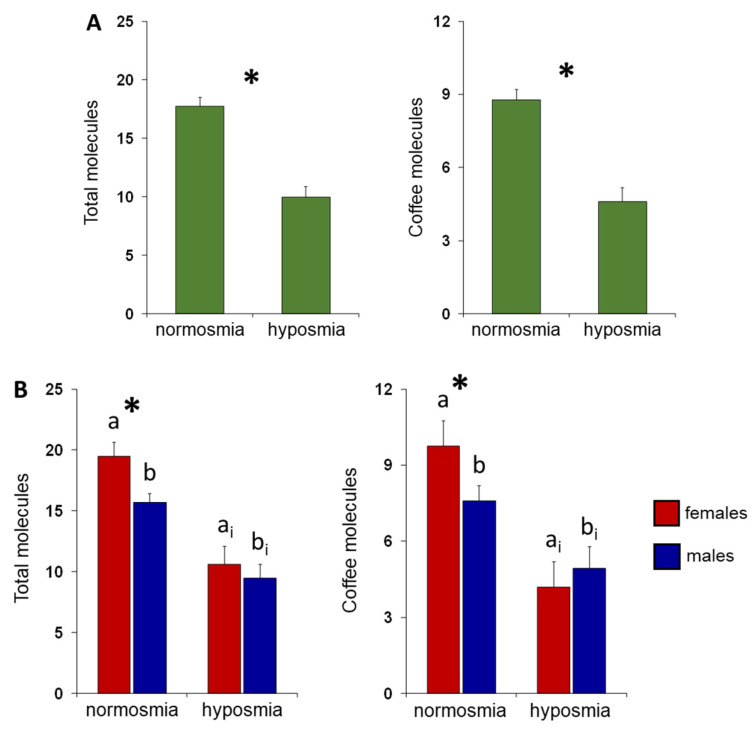
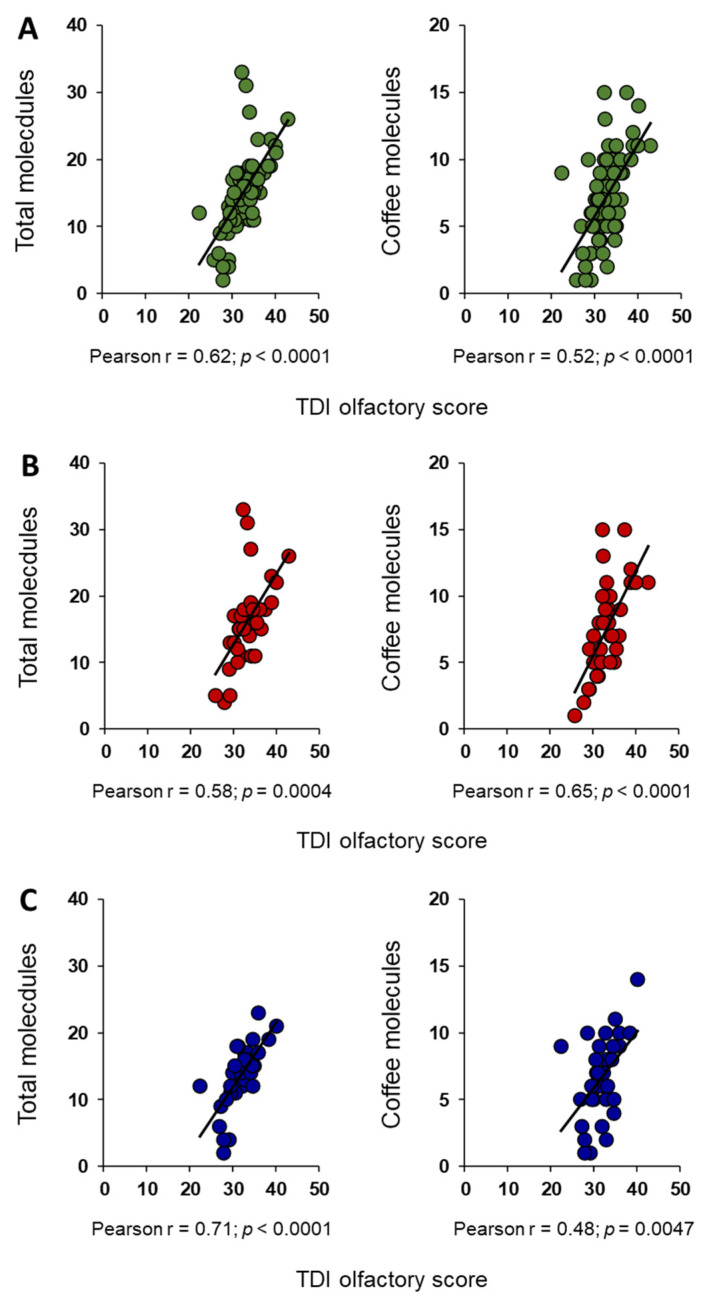
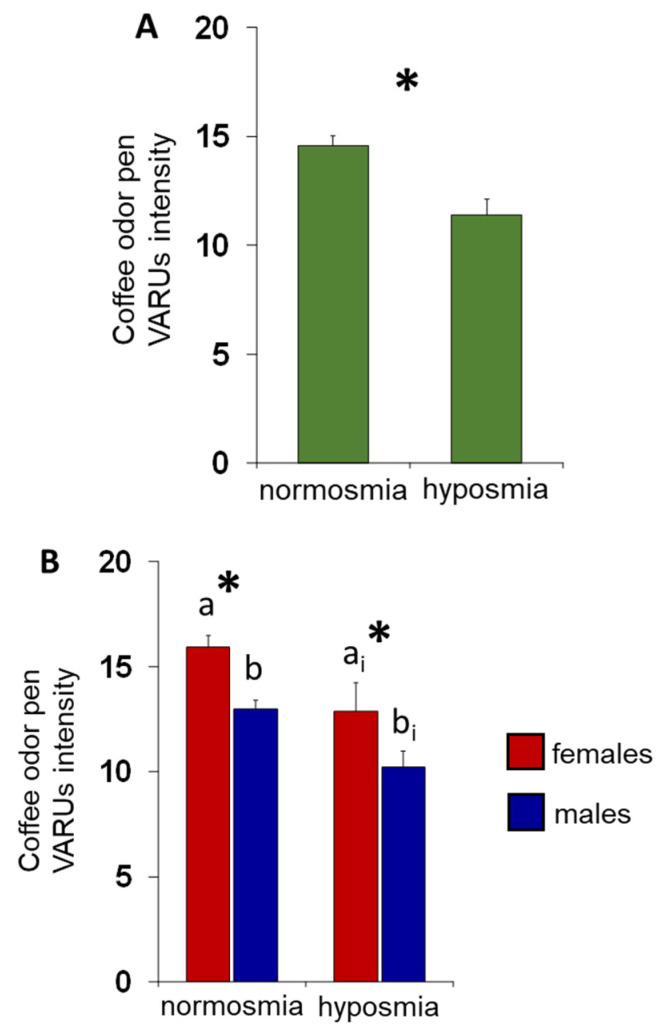
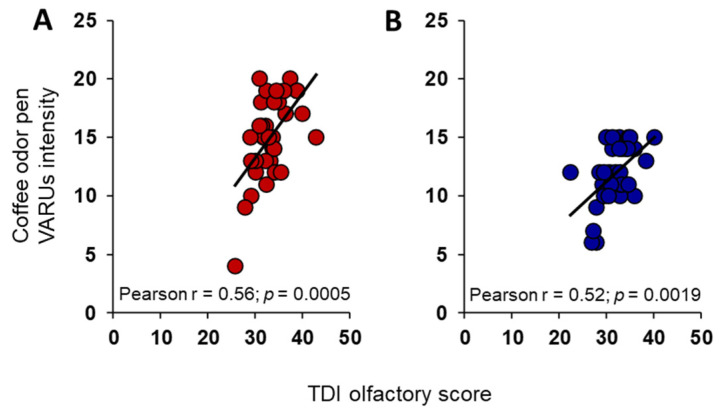
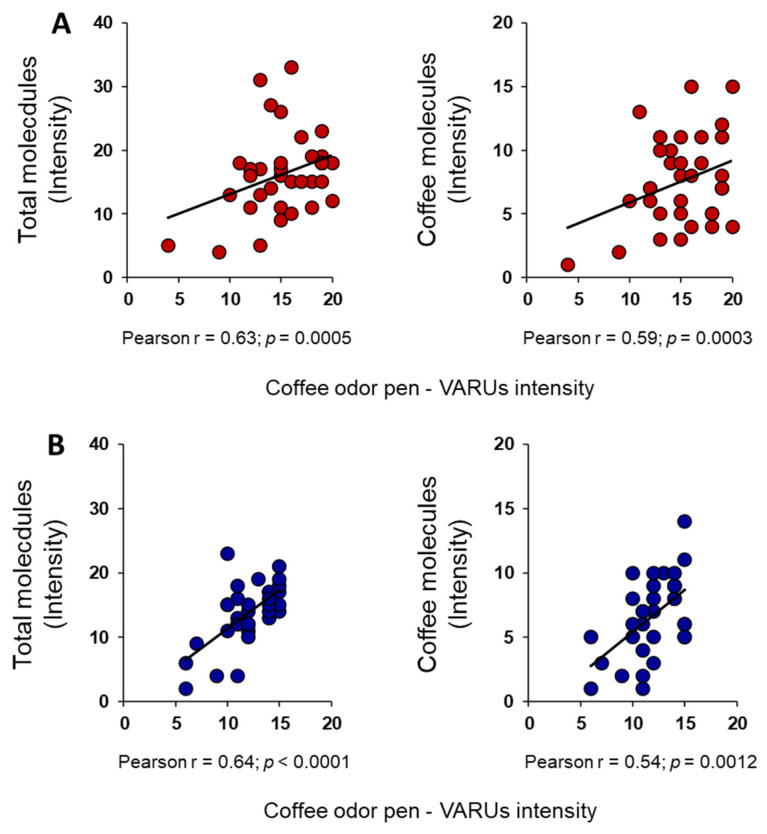
One of the still-debated topics regarding the olfactory function concerns the presence or absence of sex-related differences in individuals. In this study, we checked for a relationship between the olfactory function of females and males and their ability to perceive single molecules, and researched how this can influence the intensity with which the complex odor formed by a set of single molecules is perceived. First, females and males were classified as normosmic or hyposmic based on the TDI olfactory score obtained using the Sniffin' Sticks test. Subsequently, the headspace of roasted coffee beans, as a complex olfactory stimulus, was broken down into single molecules by means of a chromatographic column; these were simultaneously conveyed to a mass spectrometer (for their subsequent classification) and to the human nose, which acts as a chemical sensor by means of an olfactometer port. The results obtained with this gas chromatography-olfactometry approach show both qualitative and quantitative differences between females and males, with females performing better than males. In addition, the odor intensity reported by females when sniffing pen #10, containing coffee aroma, is significantly higher than that reported by males. In conclusion, these data highlight that the human ability to perceive both single compounds and complex odors is strongly conditioned, not only by the olfactory function of individuals, but also by their sex.
Keywords: GC-O technique; VARUs intensity; gender; individual variability; smell.
Conflict of interest statement
The authors declare no conflicts of interest. The funders had no role in the design of the study; in the collection, analyses or interpretation of data; in the writing of the manuscript or in the decision to publish the results.
Figures
References
-
- Landolt P.J., Heath R.R., Chambers D.L. Oriented flight responses of female Mediterranean fruit flies to calling males, odor of calling males, and a synthetic pheromone blend. Entomol. Exp. Appl. 1992;65:259–266. doi: 10.1111/j.1570-7458.1992.tb00679.x. - DOI
Grants and funding
LinkOut - more resources
Full Text Sources
Miscellaneous
