


Genetic Insights into the Giant Keyhole Limpet (Megathura crenulata), an Eastern Pacific Coastal Endemic: Complete Mitogenome, Phylogenetics, Phylogeography, and Historical Demography
- PMID: 39457427
- PMCID: PMC11507411
- DOI: 10.3390/genes15101303
Genetic Insights into the Giant Keyhole Limpet (Megathura crenulata), an Eastern Pacific Coastal Endemic: Complete Mitogenome, Phylogenetics, Phylogeography, and Historical Demography
Abstract
Background: The giant keyhole limpet Megathura crenulata is a gastropod mollusk (Fissurella superfamily) that is endemic to the eastern Pacific coast from southern California, USA, to Baja California Sur, Mexico. M. crenulata is socioeconomically important as it produces a potent immune-stimulating protein, called Keyhole Limpet Hemocyanin, which is extracted in vivo and utilized for vaccine development. However, ecological studies are scarce and genetic knowledge of the species needs to be improved. Our objectives were to assemble and annotate the mitogenome of M. crenulata, and to assess its phylogenetic relationships with other marine gastropods and to evaluate its population genetic diversity and structure.
Methods: Samples were collected for mitogenome assembly (n = 3) spanning its geographic range, Puerto Canoas (PCA) and Punta Eugenia (PEU), Mexico, and California (CAL), USA. Total DNA was extracted from gills sequenced using Illumina paired-end 150-bp-read sequencing. Reads were cleaned, trimmed, assembled de novo, and annotated. In addition, 125 samples from eight locations were analyzed for genetic diversity and structure analysis at the 16s rRNA and COX1 genes.
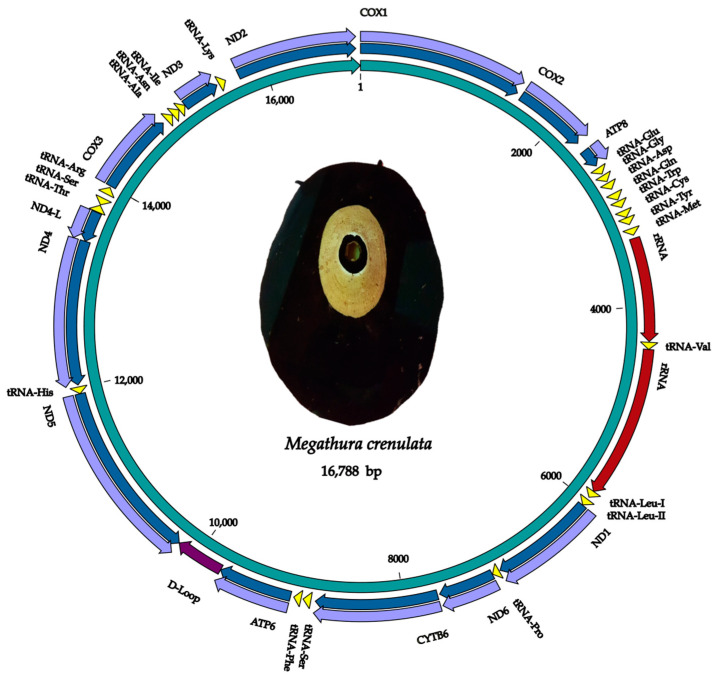
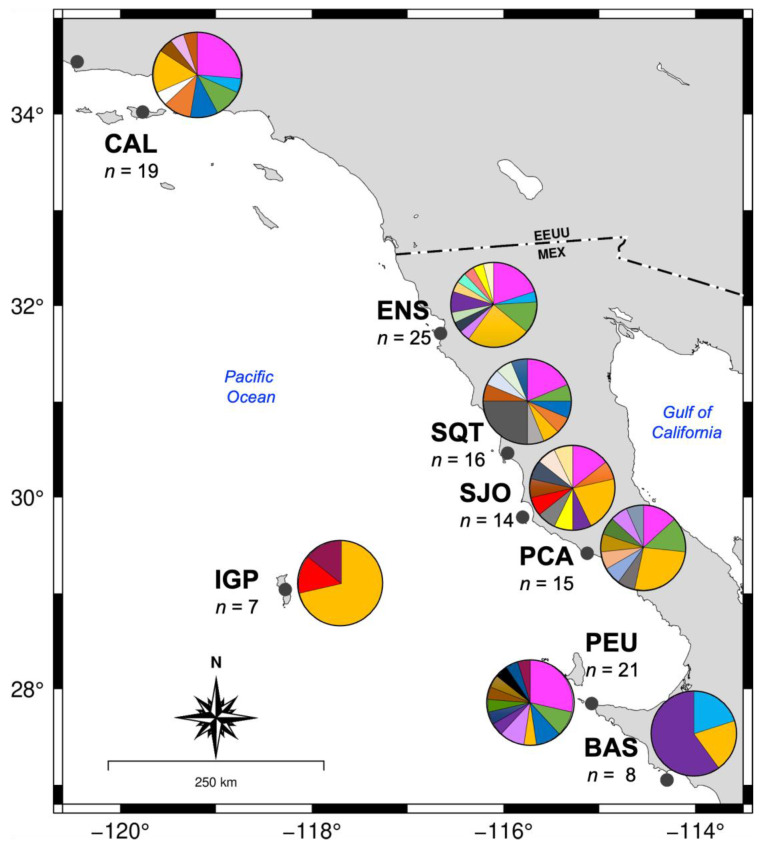
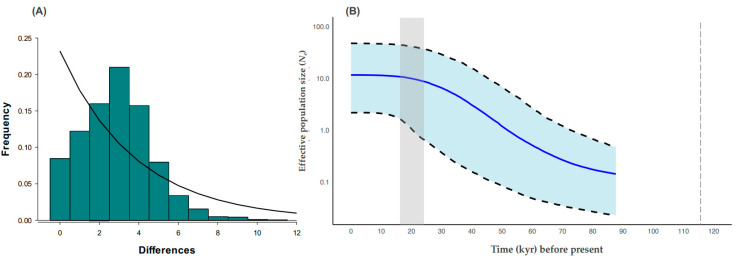
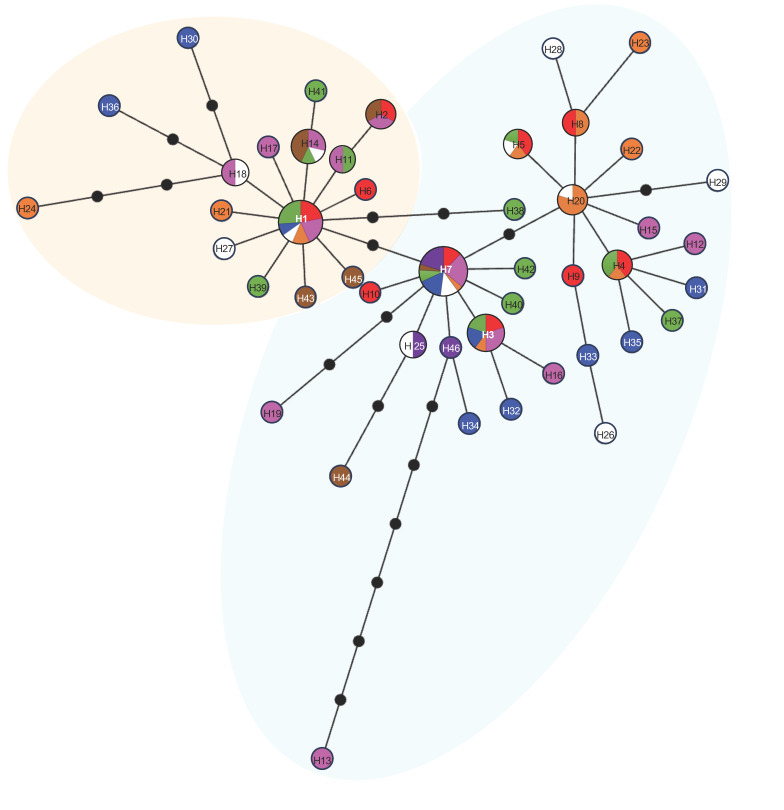
Results: The M. crenulata mitogenomes had lengths of 16,788 bp (PCA) and 16,787 bp (PEU) and were composed of 13 protein-coding regions, 22 tRNAs, two rRNAs, and the D-Loop region. In terms of phylogeographic diversity and structure, we found a panmictic population that has experienced recent demographic expansion with low nucleotide diversity (0.002), high haplotypic diversity (0.915), and low φST (0.047).
Conclusions: Genetic insights into the giant keyhole limpet provides tools for its management and conservation by delimiting fishing regions with low genetic diversity and/or genetically discrete units.
Keywords: Fissurella; genetic diversity; mitogenome; population structure.
Conflict of interest statement
The authors have no conflicts of interest to declare.
Figures
References
-
- Sowerby G.B. A Catalogue of the Shells Contained in the Collection of the Late Earl of Tankerville: Arranged According to the Lamarckian Conchological System. EJ Stirling; London, UK: 1825. Together with an Appendix Containing Descriptions of Many New Species.
-
- Torres-Moye G. Ph.D. Thesis. University of California; Davis, CA, USA: 2012. Mainland and Island Kelp Forests in Northern Baja California, México: Subtidal Community Structure, Dynamics, and Connectivity for the Design of Marine Protected Areas.
-
- Mau A., Jha R. Aquaculture of two commercially important mollusks (abalone and limpet): Existing knowledge and futures prospects. Rev. Aquac. 2018;10:611–625. doi: 10.1111/raq.12190. - DOI
-
- Miller C., Robbins R. Chemical analysis and vitamin assays of opihi, the Hawaiian limpet. [(accessed on 1 January 2020)];Philipp. J. Sci. 1940 71:141–163. Available online: https://www.cabidigitallibrary.org/doi/full/10.5555/19401401307. - DOI
MeSH terms
Grants and funding
LinkOut - more resources
Full Text Sources
