Review
. 2024 Sep 27;12(10):2206.
doi: 10.3390/biomedicines12102206.

Efficacy of Ivermectin, Chloroquine/Hydroxychloroquine, and Azithromycin in Managing COVID-19: A Systematic Review of Phase III Clinical Trials

Affiliations
Review

Efficacy of Ivermectin, Chloroquine/Hydroxychloroquine, and Azithromycin in Managing COVID-19: A Systematic Review of Phase III Clinical Trials

Nathália Mariana Santos Sansone et al. Biomedicines. .

Abstract

Background: During the coronavirus disease (COVID)-19 pandemic several drugs were used to manage the patients mainly those with a severe phenotype. Potential drugs were used off-label and major concerns arose from their applicability to managing the health crisis highlighting the importance of clinical trials. In this context, we described the mechanisms of the three repurposed drugs [Ivermectin-antiparasitic drug, Chloroquine/Hydroxychloroquine-antimalarial drugs, and Azithromycin-antimicrobial drug]; and, based on this description, the study evaluated the clinical efficacy of those drugs published in clinical trials. The use of these drugs reflects the period of uncertainty that marked the beginning of the COVID-19 pandemic, which made them a possible treatment for COVID-19. Methods: In our review, we evaluated phase III randomized controlled clinical trials (RCTs) that analyzed the efficacy of these drugs published from the COVID-19 pandemic onset to 2023. We included eight RCTs published for Ivermectin, 11 RCTs for Chloroquine/Hydroxychloroquine, and three RCTs for Azithromycin. The research question (PICOT) accounted for P-hospitalized patients with confirmed or suspected COVID-19; I-use of oral or intravenous Ivermectin OR Chloroquine/Hydroxychloroquine OR Azithromycin; C-placebo or no placebo (standard of care); O-mortality OR hospitalization OR viral clearance OR need for mechanical ventilation OR clinical improvement; and T-phase III RCTs. Results: While studying these drugs' respective mechanisms of action, the reasons for which they were thought to be useful became apparent and are as follows: Ivermectin binds to insulin-like growth factor and prevents nuclear transportation of severe acute respiratory syndrome coronavirus 2 (SARS-CoV-2), therefore preventing cell entrance, induces apoptosis, and osmotic cell death and disrupts viral replication. Chloroquine/Hydroxychloroquine blocks the movement of SARS-CoV-2 from early endosomes to lysosomes inside the cell, also, this drug blocks the binding between SARS-CoV-2 and Angiotensin-Converting Enzyme (ACE)-2 inhibiting the interaction between the virus spike proteins and the cell membrane and this drug can also inhibit SARS-CoV-2 viral replication causing, ultimately, the reduction in viral infection as well as the potential to progression for a higher severity phenotype culminating with a higher chance of death. Azithromycin exerts a down-regulating effect on the inflammatory cascade, attenuating the excessive production of cytokines and inducing phagocytic activity, and acts interfering with the viral replication cycle. Ivermectin, when compared to standard care or placebo, did not reduce the disease severity, need for mechanical ventilation, need for intensive care unit, or in-hospital mortality. Only one study demonstrated that Ivermectin may improve viral clearance compared to placebo. Individuals who received Chloroquine/Hydroxychloroquine did not present a lower incidence of death, improved clinical status, or higher chance of respiratory deterioration compared to those who received usual care or placebo. Also, some studies demonstrated that Chloroquine/Hydroxychloroquine resulted in worse outcomes and side-effects included severe ones. Adding Azithromycin to a standard of care did not result in clinical improvement in hospitalized COVID-19 participants. In brief, COVID-19 was one of the deadliest pandemics in modern human history. Due to the potential health catastrophe caused by SARS-CoV-2, a global effort was made to evaluate treatments for COVID-19 to attenuate its impact on the human species. Unfortunately, several countries prematurely justified the emergency use of drugs that showed only in vitro effects against SARS-CoV-2, with a dearth of evidence supporting efficacy in humans. In this context, we reviewed the mechanisms of several drugs proposed to treat COVID-19, including Ivermectin, Chloroquine/Hydroxychloroquine, and Azithromycin, as well as the phase III clinical trials that evaluated the efficacy of these drugs for treating patients with this respiratory disease. Conclusions: As the main finding, although Ivermectin, Chloroquine/Hydroxychloroquine, and Azithromycin might have mechanistic effects against SARS-CoV-2 infection, most phase III clinical trials observed no treatment benefit in patients with COVID-19, underscoring the need for robust phase III clinical trials.

Keywords: antibiotics; azithromycin; chloroquine; clinical trial; coronavirus disease; hydroxychloroquine; ivermectin; severe acute respiratory syndrome coronavirus 2.


Conflict of interest statement

The authors declare no conflicts of interest.

Figures
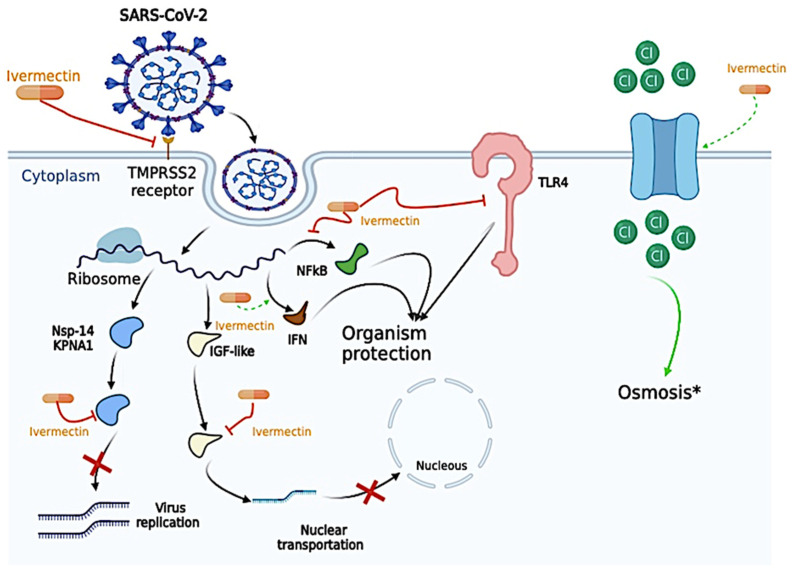
Figure 1
Figure 1
Proposed antiviral mechanism of Ivermectin. Ivermectin can disrupt the binding of essential proteins that allow cell entrance, such as Transmembrane Serine Protease 2 (TMPRSS2) and the Spike Protein. Ivermectin was also described to (i) bind to the alpha subunit of the insulin-like growth factor (IGF) superfamily and prevent the nuclear transportation of the severe acute respiratory syndrome coronavirus 2 (SARS-CoV-2); (ii) generate apoptosis and osmotic cell death by upregulating chloride channels since Ivermectin molecules behave as ionophores. In the same way, Ivermectin was able to bind to essential proteins for viral replication, such as nonstructural protein 1 (nsp-14) and Karyopherin-α1 (KPNA1), thus decreasing viral replication activity. Ivermectin also plays a vital role in several pro-inflammatory and anti-inflammatory cytokines, as inhibition of Toll-Like Receptors (TLRs), especially the TLR-4, blockade the nuclear factor kappa-light-chain-enhancer of activated B cells (NF-kB) transcriptional pathway, which might “protect” the host cell from the SARS-CoV-2 infection. IFN, interferon. *, Ivermectin is able to increase cell osmosis, and, in the figure, we exemplify its effect through the passage of Chloride (Cl). The figure was created in BioRender (BioRender.com).
Figure 2
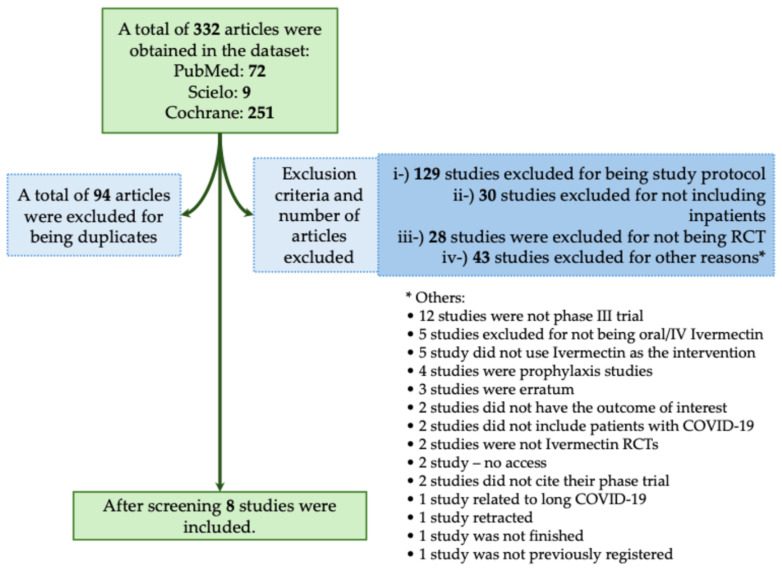
Figure 2
Systematic review flowchart of clinical trials using Ivermectin during the coronavirus disease (COVID)-19 pandemic. We included in our systematic review a total of eight studies (Okumuş et al., 2021; Shakhsi Niaee et al., 2021; Beltran Gonzalez et al., 2022; Heydari et al., 2022; Lim et al., 2022; Qadeer et al., 2022; Rezai et al., 2022; Baghbanian et al., 2023) [17,18,19,20,21,22,23,24]. The data search was performed on PubMed-Medline, Cochrane, and SciELO from COVID-19 pandemic onset to December 2023. The following search was performed: Ivermectin: (((Ivermectin)) AND ((COVID-19) OR (COVID-19 treatments) OR (COVID-19 pandemic) OR (SARS-CoV-2) OR (SARS-CoV-2 infection))) AND (Therapy/Narrow[filter]) AND (randomized controlled trial[pt] OR controlled clinical trial[pt] OR clinical trials as topic[mesh:noexp] OR trial[ti] OR random*[tiab] OR placebo*[tiab]). RCT, randomized controlled trial; IV, intravenous. *, The 45 studies that were excluded from different criteria were presented separately due to the low number of studies per criteria.
Figure 3
Figure 3
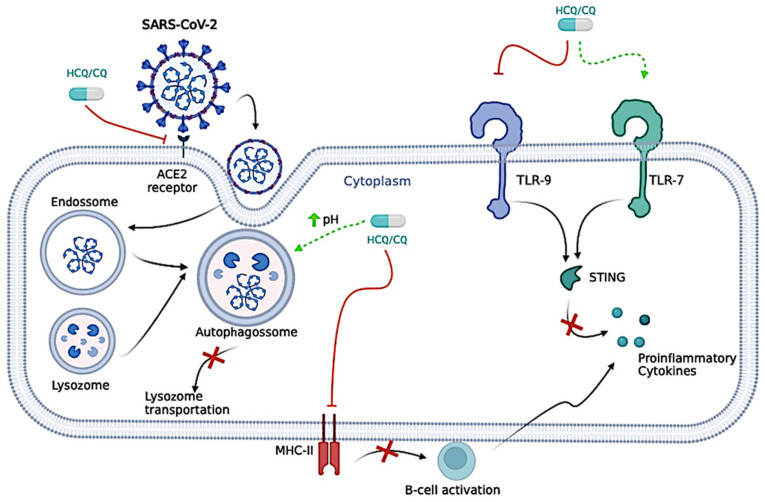
Proposed antiviral mechanisms of Chloroquine/Hydroxychloroquine (CQ/HCQ). CQ/HCQ is responsible for neutralizing the pH of the lysosome, which could prevent vital viral pathways, such as the S protein cleavages, and make it difficult for the virus to enter host cells. CQ/HCQ is also responsible for the inhibition of the lysosomes and autophagosomes, ultimately leading to the blockage of lysosome transportation. CQ/HCQ inhibits the movement of severe acute respiratory syndrome coronavirus 2 (SARS-CoV-2) from early endosomes to early lysosomes, thus further disrupting the release of viral genetic material. CQ/HCQ reduces Angiotensin-Converting Enzyme (ACE)-2 glycosylation, inhibiting this interaction and preventing the virus from binding and integrating into new cells. CQ/HCQ might also interfere in the cytokine storm caused by coronavirus disease (COVID)-19 through several pathways, such as the inhibition of the presentation of antigen by the antigen-presenting cells to T cells, declining the total of T cell activations, the blockage of Toll-Like Receptor (TLR)-9, activation of TLR-7, interfering in the Stimulator of Interferon Gene (STING) pathway—cyclic guanosine monophosphate–adenosine monophosphate (GMP-AMP) synthase, and ultimately decreasing the production of cytokines. The processing of antigens to peptides in Antigen Presenting Cells (APCs) is disrupted by HCQ, which, in turn, disrupts peptide presentation for major histocompatibility complex class II (MHC-II) cells. The disruption caused by HCQ also interferes with B-cell activation by CD4+ (cluster of differentiation 4) T-cells; thus, this diminishes their functions and cytokine production [Interleukin (IL)-1, IL-6, Interferon (INF)-gamma (INF-γ), TNF-alpha (TNF-α), and B-cell activating factor]. The figure was created in BioRender (BioRender.com).
Figure 4
Figure 4
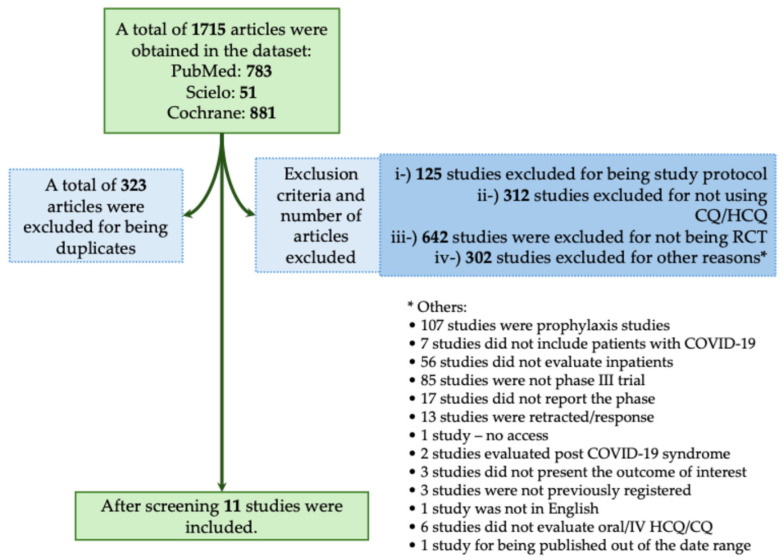
Systematic review flowchart of clinical trials using Chloroquine/Hydroxychloroquine (CQ/HCQ) during the coronavirus disease (COVID)-19 pandemic. We included in our systematic review a total of 11 studies according to the inclusion criteria (Horby et al., 2020; NCT04358081, 2020; Self et al., 2020; Ader et al., 2021; Arabi et al., 2021; Dubée et al., 2021; Hernandez-Cardenas et al., 2021; Pan et al., 2021; Réa-Neto et al., 2021; Ader and DisCoVeRy Study Group, 2022; Beltran Gonzalez et al., 2022) [19,25,26,27,28,29,30,31,32,33,34]. The data search was performed on PubMed-Medline, Cochrane, and SciELO from the COVID-19 pandemic onset to December 2023. The following search was performed: (((Chloroquine) OR (Hydroxychloroquine)) AND ((COVID-19) OR (COVID-19 treatments) OR (COVID-19 pandemic) OR (SARS-CoV-2) OR (SARS-CoV-2 infection))) AND (Therapy/Narrow[filter]) AND (randomized controlled trial[pt] OR controlled clinical trial[pt] OR clinical trials as topic[mesh:noexp] OR trial[ti] OR random*[tiab] OR placebo*[tiab]). RCT, randomized controlled trial; IV, intravenous. *, The 295 studies that were excluded from different criteria were presented separately due to the low number of studies per criteria.
Figure 5
Figure 5
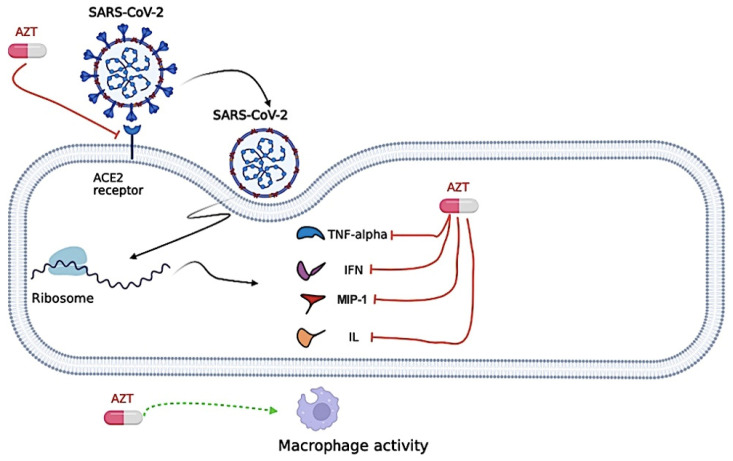
Proposed antiviral mechanism of Azithromycin (AZT). Azithromycin seems to negatively regulate the inflammatory cascade, attenuating the excessive production of cytokines [Tumor necrosis factor alpha (TNF-α), Interferon (INF), Interleukin (IL), and Macrophage Inflammatory Protein-1 (MIP-1)] in viral infections. Azithromycin can also influence phagocytic activity by modifying several functions, including chemotaxis, phagocytosis, oxidative burst, bacterial killing, and cytokine production. Azithromycin could interfere with the binding between the severe acute respiratory syndrome coronavirus 2 (SARS-CoV-2) Spike protein and the Angiotensin Converting Enzyme (ACE)-2 receptor protein, preventing the virus from entering the cell. The figure was created in BioRender (BioRender.com).
Figure 6
Figure 6
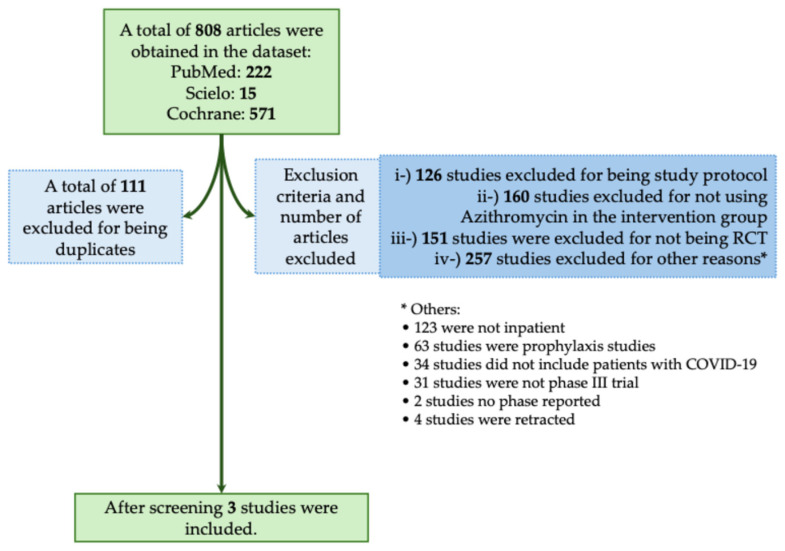
Systematic review flowchart of clinical trials using Azithromycin during the coronavirus disease (COVID)-19 pandemic. We included in our systematic review a total of three studies (Cavalcanti et al., 2020; Furtado et al., 2020; RECOVERY Collaborative Group, 2021) [35,36,37]. The data search was performed on PubMed-Medline, Cochrane, and SciELO from the COVID-19 pandemic onset to December 2023. The following search was performed: (((Azithromycin) OR (Antibiotics) OR (Macrolides)) AND ((COVID-19) OR (COVID-19 treatments) OR (COVID-19 pandemic) OR (SARS-CoV-2) OR (SARS-CoV-2 infection))) AND (Therapy/Narrow[filter]) AND (randomized controlled trial[pt] OR controlled clinical trial[pt] OR clinical trials as topic[mesh:noexp] OR trial[ti] OR random*[tiab] OR placebo*[tiab]). RCT, randomized controlled trial. *, The 257 studies that were excluded from different criteria were presented separately due to the low number of studies per criteria.

References

    1. Alanagreh L., Alzoughool F., Atoum M. The Human Coronavirus Disease COVID-19: Its Origin, Characteristics, and Insights into Potential Drugs and Its Mechanisms. Pathogens. 2020;9:331. doi: 10.3390/pathogens9050331. - DOI - PMC - PubMed
    1. Huang C., Wang Y., Li X., Ren L., Zhao J., Hu Y., Zhang L., Fan G., Xu J., Gu X., et al. Clinical features of patients infected with 2019 novel coronavirus in Wuhan, China. Lancet. 2020;395:497–506. doi: 10.1016/S0140-6736(20)30183-5. - DOI - PMC - PubMed
    1. Zhou P., Yang X.-L., Wang X.-G., Hu B., Zhang L., Zhang W., Si H.-R., Zhu Y., Li B., Huang C.-L., et al. A pneumonia outbreak associated with a new coronavirus of probable bat origin. Nature. 2020;579:270–273. doi: 10.1038/s41586-020-2012-7. - DOI - PMC - PubMed
    1. Yu C.-J., Wang Z.-X., Xu Y., Hu M.-X., Chen K., Qin G. Assessment of basic reproductive number for COVID-19 at global level. Medicine. 2021;100:e25837. doi: 10.1097/MD.0000000000025837. - DOI - PMC - PubMed
    1. Alimohamadi Y., Tola H.H., Abbasi-Ghahramanloo A., Janani M., Sepandi M. Case Fatality Rate of COVID-19: A Systematic Review and Meta-Analysis. J. Prev. Med. Hyg. 2021;62:E311–E320. doi: 10.15167/2421-4248/jpmh2021.62.2.1627. - DOI - PMC - PubMed

LinkOut - more resources