


Genetic and Neurodevelopmental Markers in Schizophrenia-Spectrum Disorders: Analysis of the Combined Role of the CNR1 Gene and Dermatoglyphics
- PMID: 39457583
- PMCID: PMC11505170
- DOI: 10.3390/biomedicines12102270
Genetic and Neurodevelopmental Markers in Schizophrenia-Spectrum Disorders: Analysis of the Combined Role of the CNR1 Gene and Dermatoglyphics
Abstract
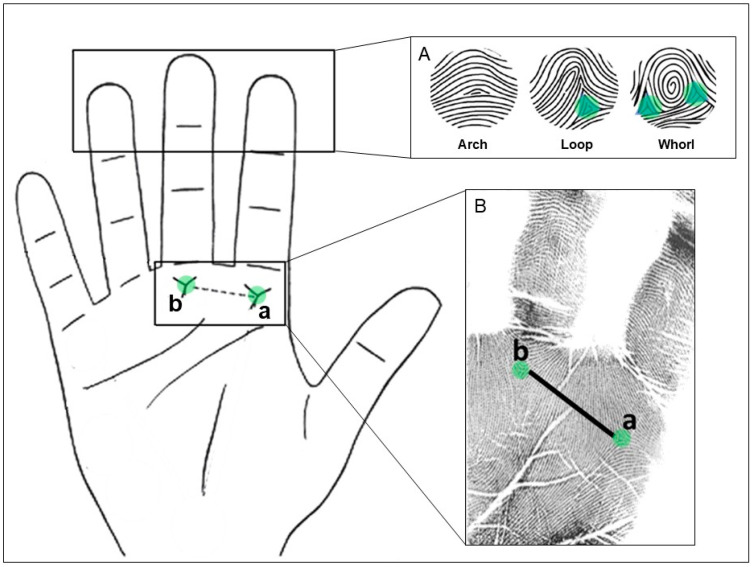
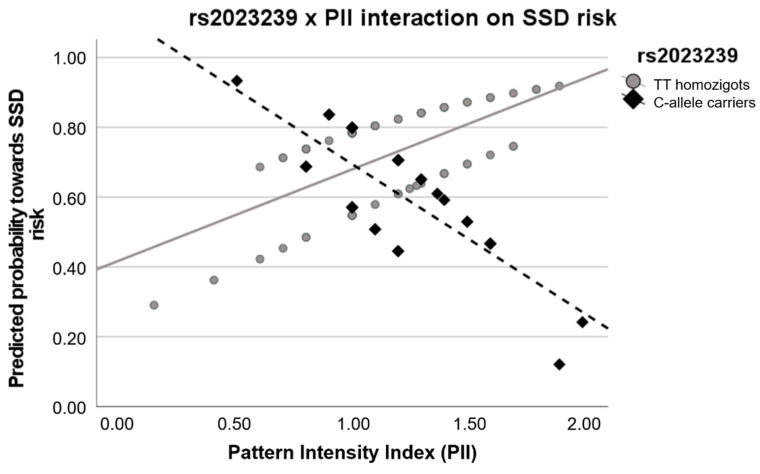
Background: Dermatoglyphic pattern deviances have been associated with schizophrenia-spectrum disorders (SSD) and are considered neurodevelopment vulnerability markers based on the shared ectodermal origin of the epidermis and the central nervous system. The endocannabinoid system participates in epidermal differentiation, is sensitive to prenatal insults and is associated with SSD. Objective: We aimed to investigate whether the Cannabinoid Receptor 1 gene (CNR1) modulates the dermatoglyphics-SSD association. Methods: In a sample of 112 controls and 97 patients with SSD, three dermatoglyphic markers were assessed: the total palmar a-b ridge count (TABRC), the a-b ridge count fluctuating asymmetry (ABRC-FA), and the pattern intensity index (PII). Two CNR1 polymorphisms were genotyped: rs2023239-T/C and rs806379-A/T. We tested: (i) the CNR1 association with SSD and dermatoglyphic variability within groups; and (ii) the CNR1 × dermatoglyphic measures interaction on SSD susceptibility. Results: Both polymorphisms were associated with SSD. The polymorphism rs2023239 modulated the relationship between PII and SSD: a high PII score was associated with a lower SSD risk within C-allele carriers and a higher SSD risk within TT-homozygotes. This result indicates an inverse relationship between the PII and the SSD predicted probability conditional to the rs2023239 genotype. Conclusions: These novel findings suggest the endocannabinoid system's role in the development and variability of dermatoglyphic patterns. The identified interaction encourages combining genetic and dermatoglyphics to assess neurodevelopmental alterations predisposing to SSD in future studies.
Keywords: CNR1; dermatoglyphics; endocannabinoid system; neurodevelopmental biomarkers; schizophrenia-spectrum disorders.
Conflict of interest statement
The authors declare no conflicts of interest.
Figures
References
Grants and funding
LinkOut - more resources
Full Text Sources
