


Towards Transforming Neurorehabilitation: The Impact of Artificial Intelligence on Diagnosis and Treatment of Neurological Disorders
- PMID: 39457727
- PMCID: PMC11504847
- DOI: 10.3390/biomedicines12102415
Towards Transforming Neurorehabilitation: The Impact of Artificial Intelligence on Diagnosis and Treatment of Neurological Disorders
Abstract
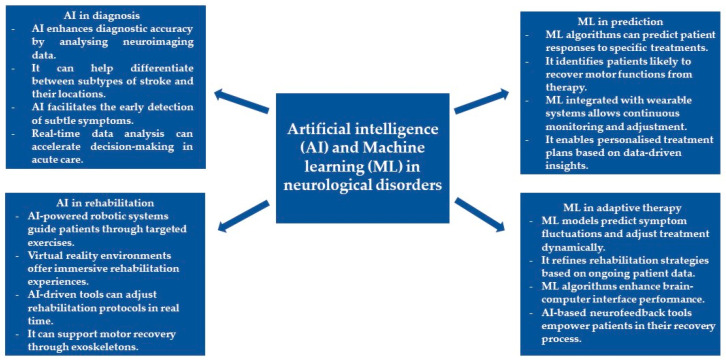
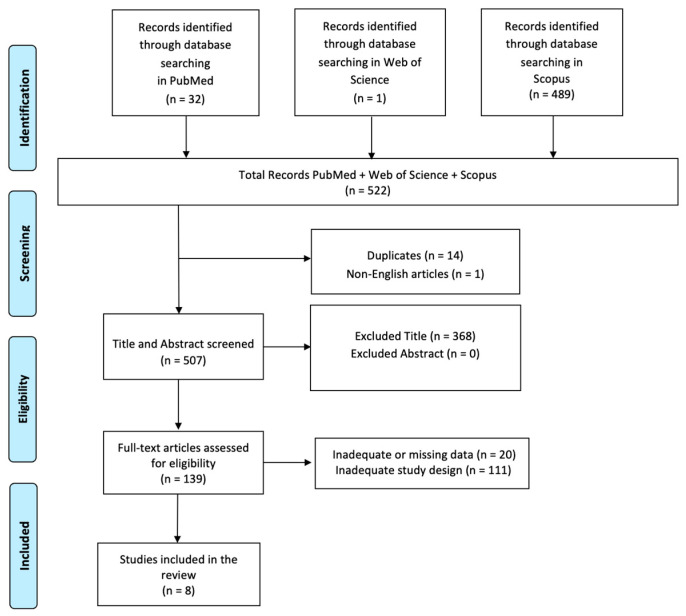
Background and Objectives: Neurological disorders like stroke, spinal cord injury (SCI), and Parkinson's disease (PD) significantly affect global health, requiring accurate diagnosis and long-term neurorehabilitation. Artificial intelligence (AI), such as machine learning (ML), may enhance early diagnosis, personalize treatment, and optimize rehabilitation through predictive analytics, robotic systems, and brain-computer interfaces, improving outcomes for patients. This systematic review examines how AI and ML systems influence diagnosis and treatment in neurorehabilitation among neurological disorders. Materials and Methods: Studies were identified from an online search of PubMed, Web of Science, and Scopus databases with a search time range from 2014 to 2024. This review has been registered on Open OSF (n) EH9PT. Results: Recent advancements in AI and ML are revolutionizing motor rehabilitation and diagnosis for conditions like stroke, SCI, and PD, offering new opportunities for personalized care and improved outcomes. These technologies enhance clinical assessments, therapy personalization, and remote monitoring, providing more precise interventions and better long-term management. Conclusions: AI is revolutionizing neurorehabilitation, offering personalized, data-driven treatments that enhance recovery in neurological disorders. Future efforts should focus on large-scale validation, ethical considerations, and expanding access to advanced, home-based care.
Keywords: artificial intelligence; diagnosis; neurorehabilitation; prognosis.
Conflict of interest statement
The authors declare no conflicts of interest to disclose.
Figures
References
Publication types
LinkOut - more resources
Full Text Sources
