


Video Game Skills across Diverse Genres and Cognitive Functioning in Early Adulthood: Verbal and Visuospatial Short-Term and Working Memory, Hand-Eye Coordination, and Empathy
- PMID: 39457746
- PMCID: PMC11504367
- DOI: 10.3390/bs14100874
Video Game Skills across Diverse Genres and Cognitive Functioning in Early Adulthood: Verbal and Visuospatial Short-Term and Working Memory, Hand-Eye Coordination, and Empathy
Abstract
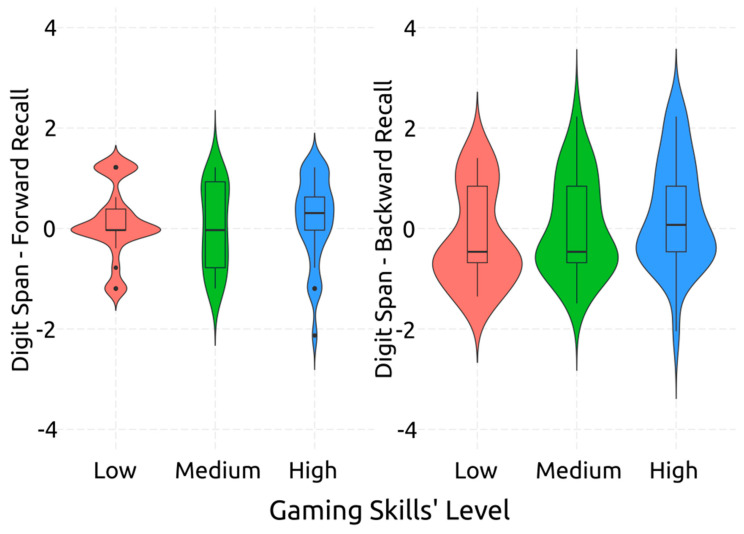
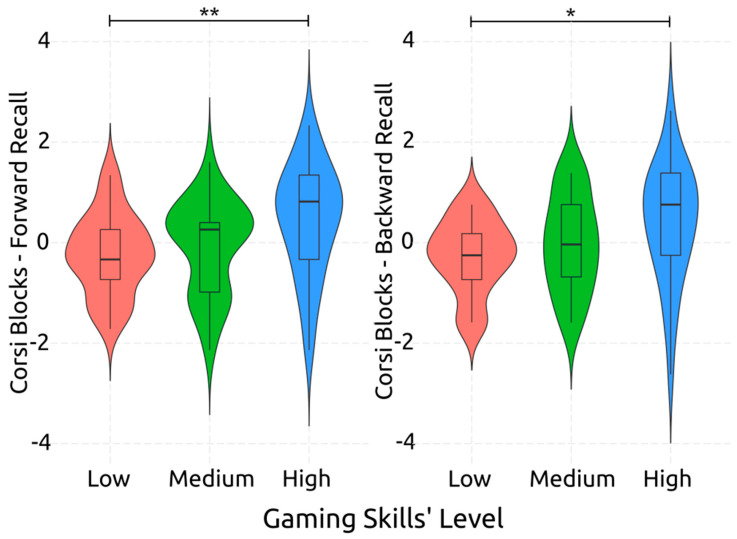
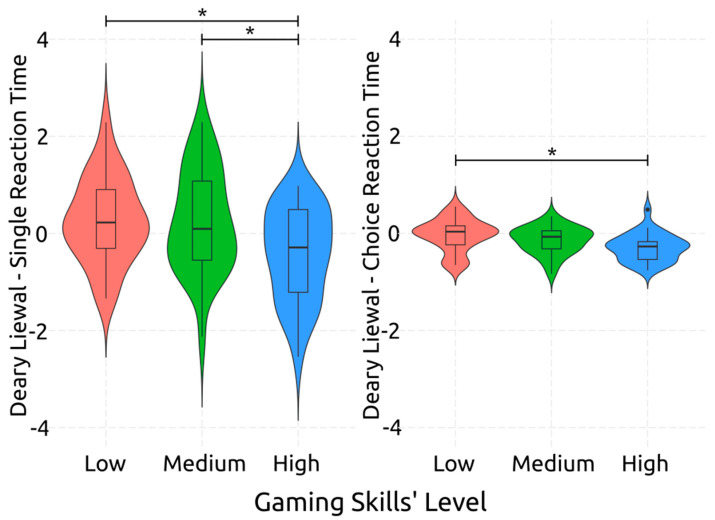
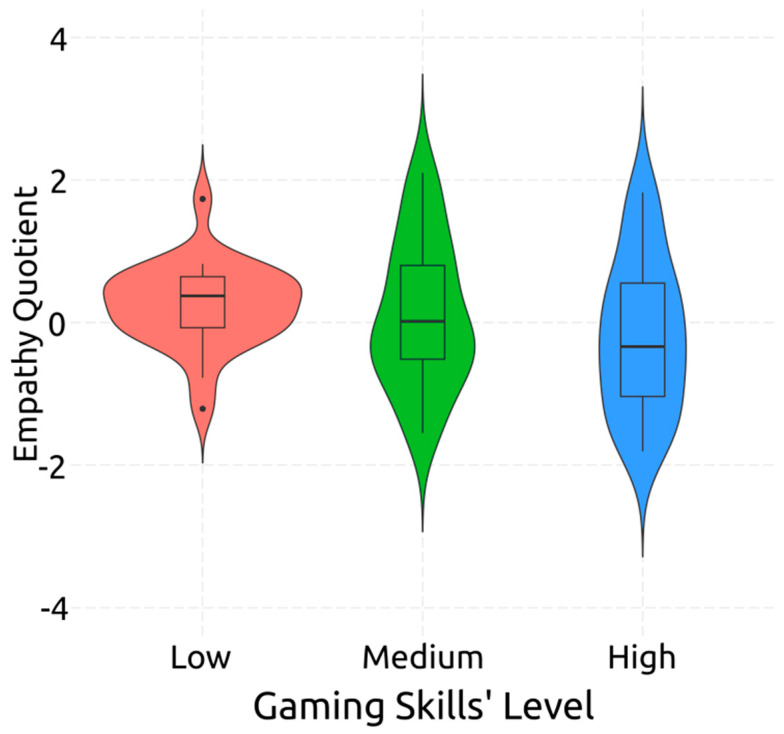
The cognitive and affective impacts of video games are subjects of ongoing debate, with recent research recognizing their potential benefits. This study employs the Gaming Skill Questionnaire (GSQ) to evaluate participants' gaming skills across six genres and overall proficiency. A total of 88 individuals aged 20-40 participated, completing assessments of empathy and six cognitive abilities: verbal short-term memory, verbal working memory, visuospatial short-term memory, visuospatial working memory, psychomotor speed (hand-eye coordination), and attention. Participants' cognitive abilities were examined using the Digit Span Test, Corsi Block Test, and Deary-Liewald Reaction Time Task, while empathy was assessed using the Empathy Quotient Questionnaire. Findings indicate that higher levels of videogaming proficiency are linked to improvements in visuospatial short-term and working memory, psychomotor speed, and attention. Specific genres enhanced particular skills: RPGs were positively associated with both verbal working memory and visuospatial short-term memory, but were negatively associated with empathy; action games improved psychomotor speed and attention; and puzzle games showed a positive relationship with visuospatial working memory. These results add to ongoing research on the cognitive and affective effects of video games, suggesting their potential to enhance specific cognitive functions. They also highlight the complex relationship between video games and empathy. Future research should explore the long-term impacts and genre-specific effects.
Keywords: attentional processing speed; cognition; early adulthood; empathy; hand–eye coordination; short-term memory; verbal memory; video games; visuospatial memory; working memory.
Conflict of interest statement
The authors declare no conflicts of interest.
Figures
References
-
- Williams D., Yee N., Caplan S.E. Who Plays, How Much, and Why? Debunking the Stereotypical Gamer Profile. J. Comput.-Mediat. Commun. 2008;13:993–1018. doi: 10.1111/j.1083-6101.2008.00428.x. - DOI
-
- Entertainment Software Association 2024 Essential Facts about the U.S. Video Game Industry. [(accessed on 12 July 2024)]. Available online: https://www.theesa.com/resources/essential-facts-about-the-us-video-game...
-
- Braun B., Stopfer J.M., Müller K.W., Beutel M.E., Egloff B. Personality and Video Gaming: Comparing Regular Gamers, Non-Gamers, and Gaming Addicts and Differentiating between Game Genres. Comput. Hum. Behav. 2016;55:406–412. doi: 10.1016/j.chb.2015.09.041. - DOI
LinkOut - more resources
Full Text Sources
