


An Update on Advances in Hypopituitarism: Etiology, Diagnosis, and Current Management
- PMID: 39458112
- PMCID: PMC11508259
- DOI: 10.3390/jcm13206161
An Update on Advances in Hypopituitarism: Etiology, Diagnosis, and Current Management
Abstract
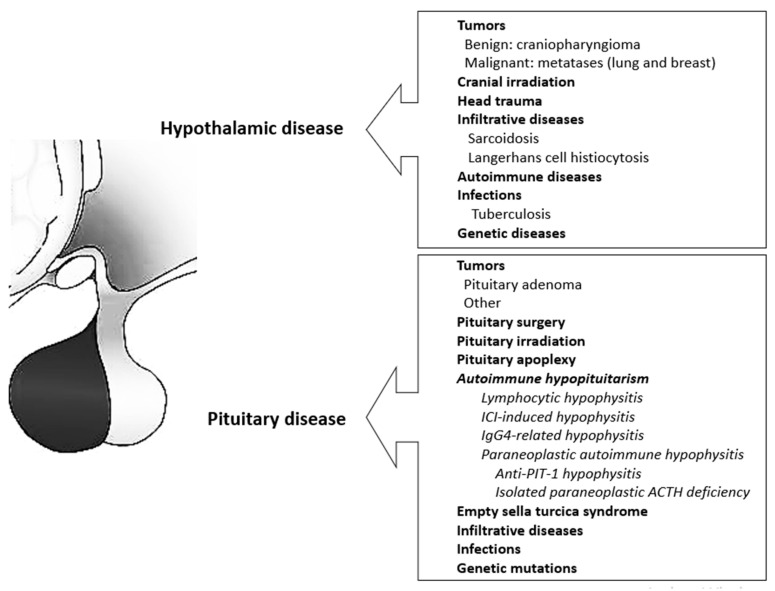
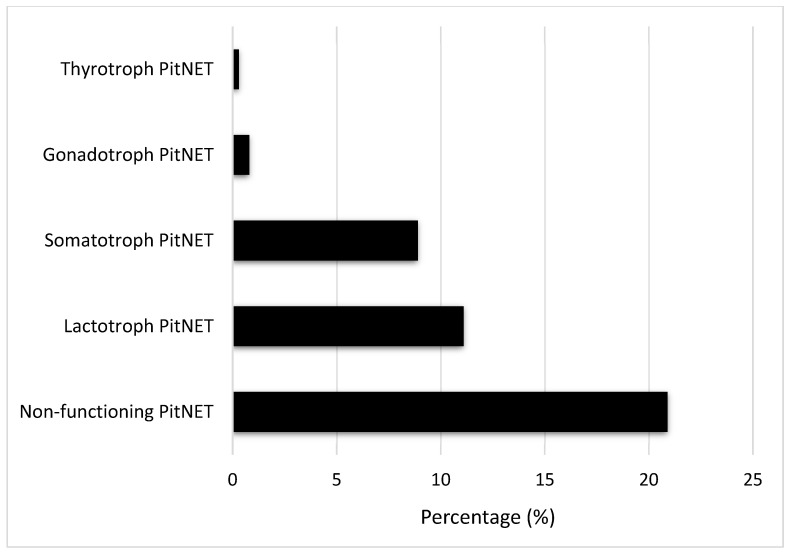
This article provides an updated review of hypopituitarism (HP), an endocrine disorder characterized by a deficiency of one or more pituitary hormones. The various etiologies are reviewed, including pituitary neuroendocrine tumors (PitNETs), hypothalamic lesions, genetic mutations, and acquired factors such as head trauma, medications, neoplasms, and infiltrative diseases. It is noted that PitNETs are responsible for approximately half of the cases in adults, whereas in children the causes are predominantly congenital. Diagnosis is based on clinical evaluation and hormonal testing, with identification of the specific hormonal deficiencies essential for effective treatment. Laboratory tests present challenges and limitations that must be understood and addressed. Hormone replacement therapy is the mainstay of treatment, significantly improving patients' quality of life. It is important to know the possible interactions between hormone replacement therapies in HP. Recent advances in understanding the pathophysiology of HP and the importance of a multidisciplinary approach to the management of associated complications are discussed. This article emphasizes the need for comprehensive evaluation and continuous follow-up to optimize outcomes in patients with HP and highlights the importance of ongoing research to improve diagnostic and treatment strategies.
Keywords: corticotropin; diagnosis and treatment; gonadotropins; growth hormone; hormone replacement therapy; hypopituitarism; prolactin; thyrotropin.
Conflict of interest statement
The author declare no conflict of interest.
Figures
References
-
- Fernandez-Rodriguez E., Lopez-Raton M., Andujar P., Martinez-Silva I.M., Cadarso-Suarez C., Casanueva F.F., Bernabeu I. Epidemiology, Mortality Rate and Survival in a Homogeneous Population of Hypopituitary Patients. Clin. Endocrinol. 2013;78:278–284. doi: 10.1111/j.1365-2265.2012.04516.x. - DOI - PubMed
-
- Tanriverdi F., Dokmetas H.S., Kebapcı N., Kilicli F., Atmaca H., Yarman S., Ertorer M.E., Erturk E., Bayram F., Tugrul A., et al. Etiology of Hypopituitarism in Tertiary Care Institutions in Turkish Population: Analysis of 773 Patients from Pituitary Study Group Database. Endocrine. 2014;47:198–205. doi: 10.1007/s12020-013-0127-4. - DOI - PubMed
Publication types
LinkOut - more resources
Full Text Sources
Research Materials
Miscellaneous
