


First Case of Candida Auris Sepsis in Southern Italy: Antifungal Susceptibility and Genomic Characterisation of a Difficult-to-Treat Emerging Yeast
- PMID: 39458271
- PMCID: PMC11509443
- DOI: 10.3390/microorganisms12101962
First Case of Candida Auris Sepsis in Southern Italy: Antifungal Susceptibility and Genomic Characterisation of a Difficult-to-Treat Emerging Yeast
Abstract
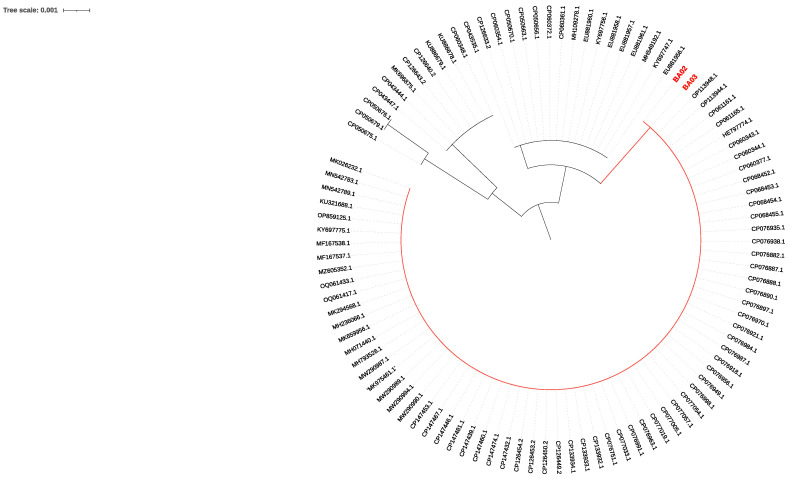
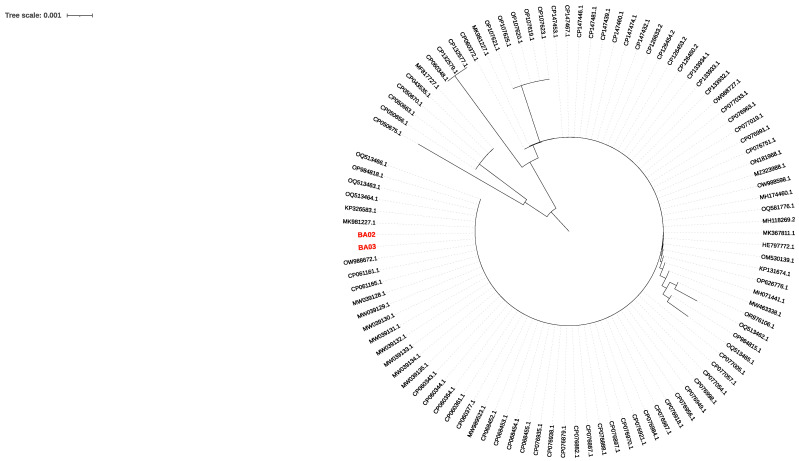
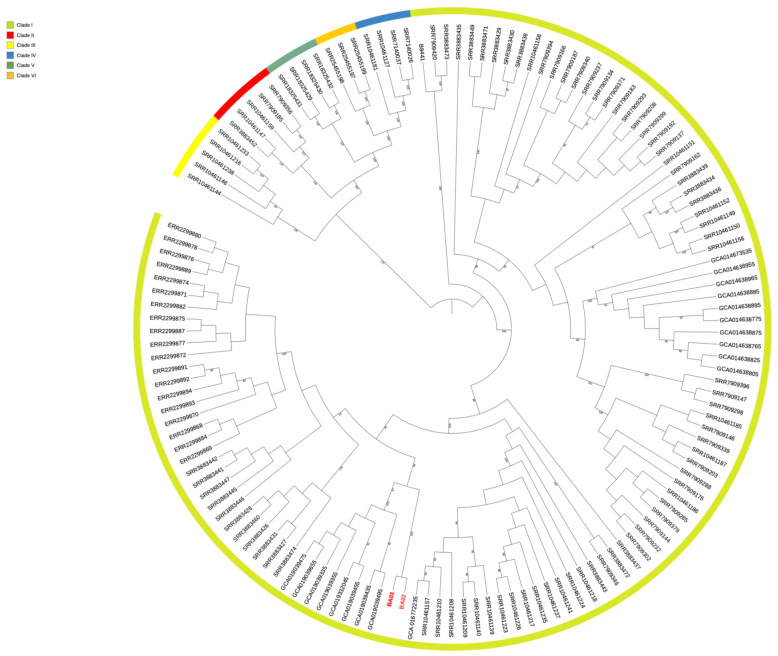
Candida auris is an emerging yeast considered a serious threat to global health. We report the first case of C. auris candidemia in Southern Italy, characterized using whole genome sequencing (WGS), and compared with a second strain isolated from a patient who presented as C. auris-colonized following screening. The C. auris strain was isolated from clinical samples, identified via MALDI-TOF, and subjected to WGS. Antifungal susceptibility testing was performed using commercial broth microdilution plates, and resistance protein sequences were evaluated with TBLASTN-2.15.0. Following the initial C. auris isolation from patient A, active surveillance and environmental investigations were implemented for all ICU patients. Of the 26 ICU surfaces sampled, 46.1% tested positive for C. auris via real-time PCR. Screening identified a second patient (patient B) as C. auris-colonized. The phylogenetic characterization of strains from patients A and B, based on the D1/D2 region of the 28s rDNA and the internal transcribed spacer (ITS) region, showed high similarity with strains from Lebanon. SNP analysis revealed high clonality, assigning both strains to clade I, indicating a significant similarity with Lebanese strains. This case confirms the alarming spread of C. auris infections and highlights the need for stringent infection control measures to manage outbreaks.
Keywords: Candida auris; infection control; phylogenesis; whole-genome sequencing.
Conflict of interest statement
The authors declare no conflicts of interest.
Figures
References
-
- Kohlenberg A., Monnet D.L., Plachouras D., Candida auris survey collaborative group Candida auris survey collaborative group includes the following national experts. Increasing number of cases and outbreaks caused by Candida auris in the EU/EEA, 2020 to 2021. Eurosurveillance. 2022;27:2200846. doi: 10.2807/1560-7917.ES.2022.27.46.2200846. - DOI - PMC - PubMed
-
- Welsh R.M., Bentz M.L., Shams A., Houston H., Lyons A., Rose L.J., Litvintseva A.P. Survival, Persistence, and Isolation of the Emerging Multidrug-Resistant Pathogenic Yeast Candida auris on a Plastic Health Care Surface. J. Clin. Microbiol. 2017;55:2996–3005. doi: 10.1128/JCM.00921-17. - DOI - PMC - PubMed
-
- European Centre for Disease Control and Prevention Candida Auris Outbreak in Healthcare Facilities in Northern Italy, 2019–2021. [(accessed on 30 May 2024)]. Available online: https://www.ecdc.europa.eu/sites/default/files/documents/RRA-candida-aur....
-
- Suphavilai C., Ko K.K.K., Lim K.M., Tan M.G., Boonsimma P., Chu J.J.K., Goh S.S., Rajandran P., Lee L.C., Tan K.Y., et al. Detection and characterisation of a sixth Candida auris clade in Singapore: A genomic and phenotypic study. Lancet Microbe. 2024;5:100878. doi: 10.1016/S2666-5247(24)00101-0. - DOI - PubMed
Publication types
Grants and funding
LinkOut - more resources
Full Text Sources
