


A Rare Case and Literature Review of Pyelo-Hepatic Abscess in an Immunocompetent Patient: When Effective Source Control and Targeted Antimicrobial Therapy Might Not Be Enough
- PMID: 39458298
- PMCID: PMC11509454
- DOI: 10.3390/microorganisms12101989
A Rare Case and Literature Review of Pyelo-Hepatic Abscess in an Immunocompetent Patient: When Effective Source Control and Targeted Antimicrobial Therapy Might Not Be Enough
Abstract
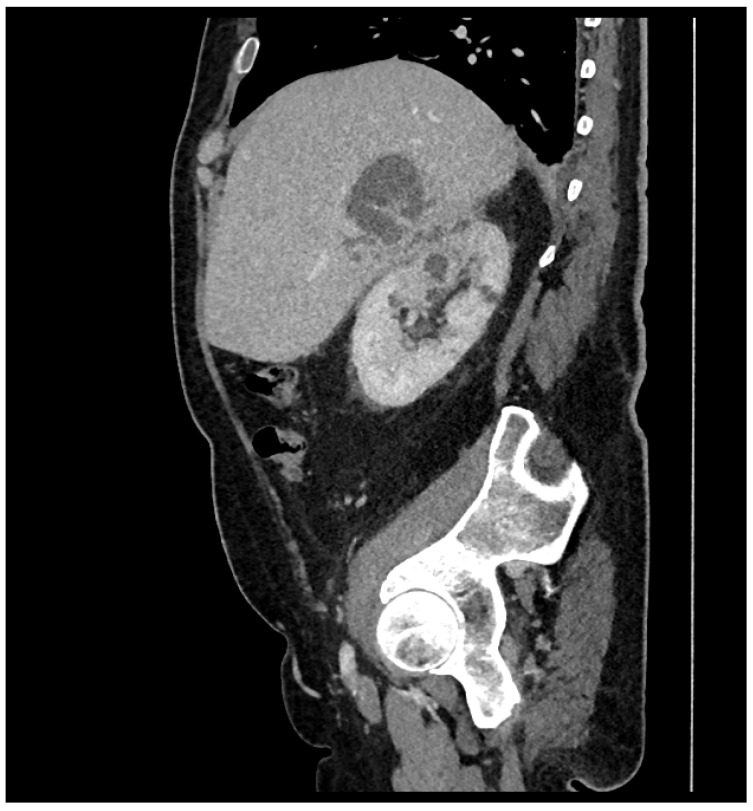
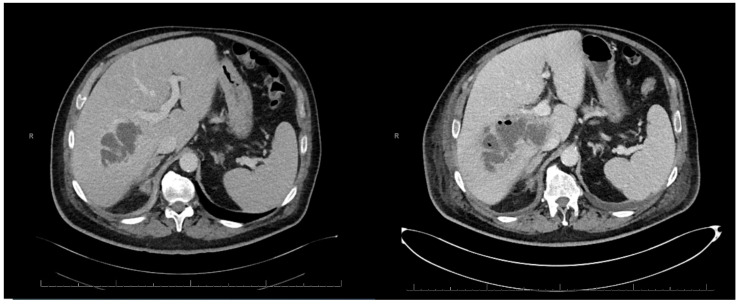
Pyelo-hepatic abscess is a rare complication of upper urinary tract infections (UTIs). We describe a case of polymicrobial pyelo-hepatic abscess in an immunocompetent patient. A 71-year-old male patient with a double-J stent for right ureteral lithiasis was admitted in our Infectious Diseases Department for a pyelo-hepatic abscess. Despite a targeted antibiotic therapy against an extended spectrum betalactamase-negative Escherichia coli, the patient did not improve. Further examinations revealed a possible polymicrobial aetiology, including Candida spp. and E. coli resistant to piperacillin/tazobactam but sensitive to third-generation cephalosporins. To date, a paucity of articles regarding pyelo-hepatic abscess exist, consisting mostly of case reports. Urinary stones and a ureteral stent indwelling time exceeding 90 days are known risk factors for upper UTIs and for bacterial dissemination in contiguous organs. Pyelo-hepatic abscesses usually involve Gram-negative bacilli, but they can be polymicrobial, including fungi. As a range of factors could limit the efficacy of antibiotics inside an encapsulated lesion and might contribute to the selection of resistant species during treatment, clinicians should be aware of this complication and try to prevent this event by acting on the main modifiable risk factor.
Keywords: Candida; Escherichia coli; TZP-R/Ceph3-S; abscess; pyelo-hepatic; urinary stent.
Conflict of interest statement
The authors declare no conflicts of interest.
Figures
References
-
- Okafor C.N., Onyeaso E.E. StatPearls [Internet] StatPearls Publishing; Treasure Island, FL, USA: 2022. Perinephric Abscess. - PubMed
Publication types
LinkOut - more resources
Full Text Sources
Research Materials
Miscellaneous
