


Assessment of Genetic Diversity in Alfalfa Using DNA Polymorphism Analysis and Statistical Tools
- PMID: 39458800
- PMCID: PMC11511019
- DOI: 10.3390/plants13202853
Assessment of Genetic Diversity in Alfalfa Using DNA Polymorphism Analysis and Statistical Tools
Abstract
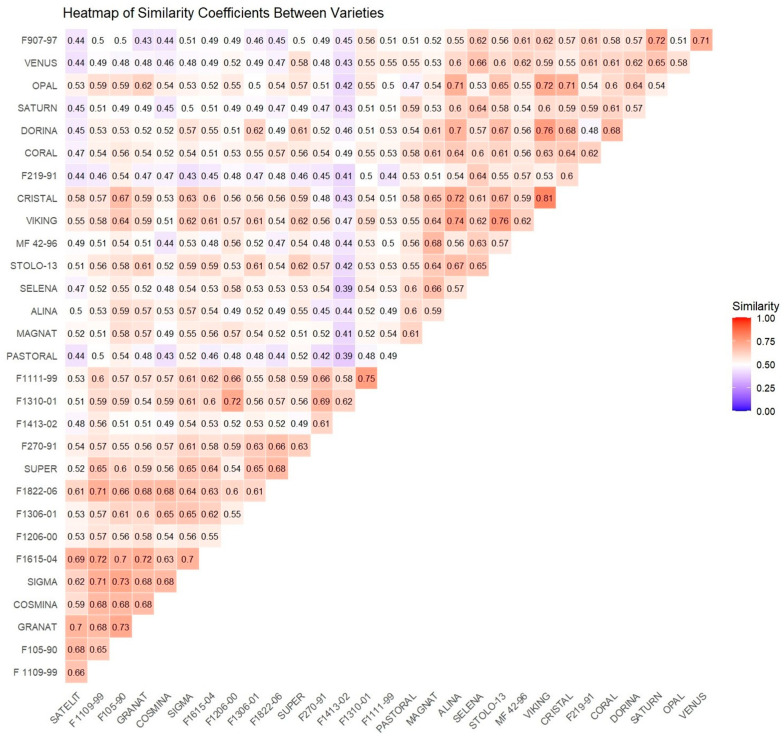
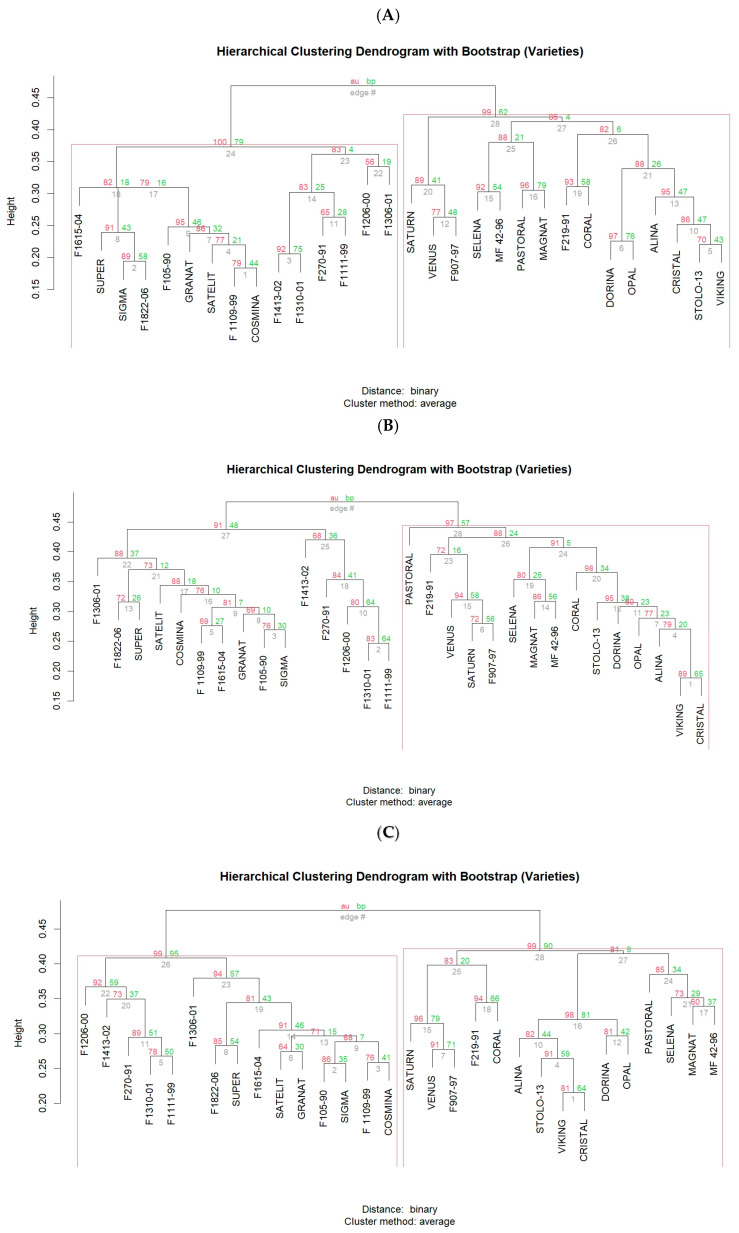
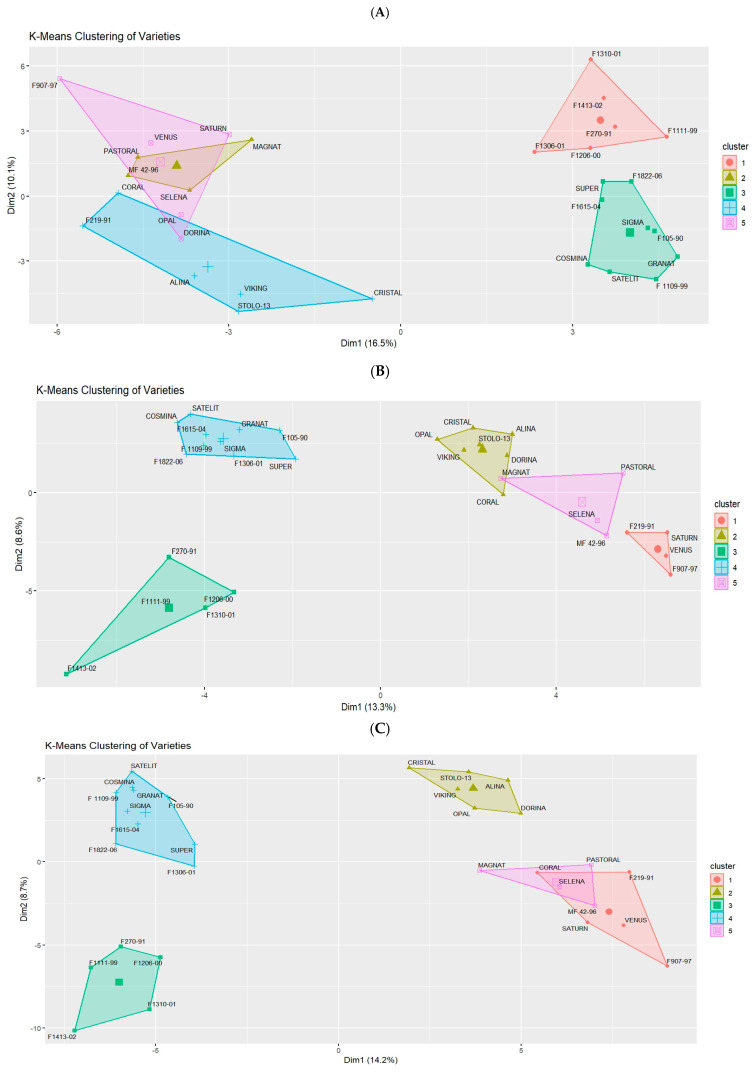
The cultivation of alfalfa is crucial for farmers as it is an excellent forage crop with a high nitrogen-fixing capacity, making it indispensable in crop rotations. Breeding programs face challenges in advancing more rapidly in genetic diversity to achieve a higher heterosis effect and, consequently, greater yield. In this study, we used 30 alfalfa varieties, which were used for molecular analyses by 5 ISSR primers and 13 RAPD primers. The results obtained highlighted the greater efficiency of ISSR primers in identifying genetic diversity. On the other hand, the simultaneous use of ISSR + RAPD allowed for clearer clustering of varieties that enabled more efficiently distinguishing the genetic diversity. The most efficient ISSR primer, A17, generated 31 polymorphic bands, while the most efficient RAPD primer, L-07, generated only 21 bands. Varieties such as "Pastoral" and "F1413-02" exhibited low similarity coefficients (0.39), suggesting their potential for enhancing genetic variability through crossbreeding, thereby increasing the potential of achieving a greater heterosis effect. Conversely, varieties with high similarity coefficients, such as "Cristal" and "Viking" (0.81) are less suited for this purpose. The correlation between specific markers highlights that using both ISSR and RAPD markers together offers a clear understanding of genetic diversity in alfalfa, aiding in more effective selection for crossbreeding in breeding programs.
Keywords: ISSR primers; RAPD markers; alfalfa; genetic diversity; molecular breeding strategies.
Conflict of interest statement
The authors declare no conflicts of interest.
Figures
References
-
- Li X., Brummer E.C. Applied Genetics and Genomics in Alfalfa Breeding. Agronomy. 2012;2:40–61. doi: 10.3390/agronomy2010040. - DOI
-
- Grabber J.H., Dias J.L.C.S., Renz M.J. Establishment of Alfalfa Intercropped under Corn in Response to Varying Rates of Prohexadione with or without Fungicide Plus Insecticide. Agronomy. 2023;13:2823. doi: 10.3390/agronomy13112823. - DOI
-
- Holík M., Kunzová E., Ludvíková V., Hakl J. Impact of Long-Term Manure and Mineral Fertilization on Accumulation of Non-Structural Carbohydrates in Lucerne Forage. Agronomy. 2022;12:639. doi: 10.3390/agronomy12030639. - DOI
LinkOut - more resources
Full Text Sources
