Review
. 2024 Oct 10;17(10):1354.
doi: 10.3390/ph17101354.

Metabolic-Associated Fatty Liver Disease: The Influence of Oxidative Stress, Inflammation, Mitochondrial Dysfunctions, and the Role of Polyphenols

Affiliations
Review

Metabolic-Associated Fatty Liver Disease: The Influence of Oxidative Stress, Inflammation, Mitochondrial Dysfunctions, and the Role of Polyphenols

Raissa Bulaty Tauil et al. Pharmaceuticals (Basel). .

Abstract

Metabolic-Associated Fatty Liver Disease (MAFLD) is a clinical-pathological scenario that occurs due to the accumulation of triglycerides in hepatocytes which is considered a significant cause of liver conditions and contributes to an increased risk of death worldwide. Even though the possible causes of MAFLD can involve the interaction of genetics, hormones, and nutrition, lifestyle (diet and sedentary lifestyle) is the most influential factor in developing this condition. Polyphenols comprise many natural chemical compounds that can be helpful in managing metabolic diseases. Therefore, the aim of this review was to investigate the impact of oxidative stress, inflammation, mitochondrial dysfunction, and the role of polyphenols in managing MAFLD. Some polyphenols can reverse part of the liver damage related to inflammation, oxidative stress, or mitochondrial dysfunction, and among them are anthocyanin, baicalin, catechin, curcumin, chlorogenic acid, didymin, epigallocatechin-3-gallate, luteolin, mangiferin, puerarin, punicalagin, resveratrol, and silymarin. These compounds have actions in reducing plasma liver enzymes, body mass index, waist circumference, adipose visceral indices, lipids, glycated hemoglobin, insulin resistance, and the HOMA index. They also reduce nuclear factor-KB (NF-KB), interleukin (IL)-1β, IL-6, tumor necrosis factor-α (TNF-α), blood pressure, liver fat content, steatosis index, and fibrosis. On the other hand, they can improve HDL-c, adiponectin levels, and fibrogenesis markers. These results show that polyphenols are promising in the prevention and treatment of MAFLD.

Keywords: MAFLD; inflammation; liver disease; metabolic-associated fatty liver disease; mitochondrial dysfunction; oxidative stress; polyphenols.


Conflict of interest statement

The authors declare no conflicts of interest.

Figures
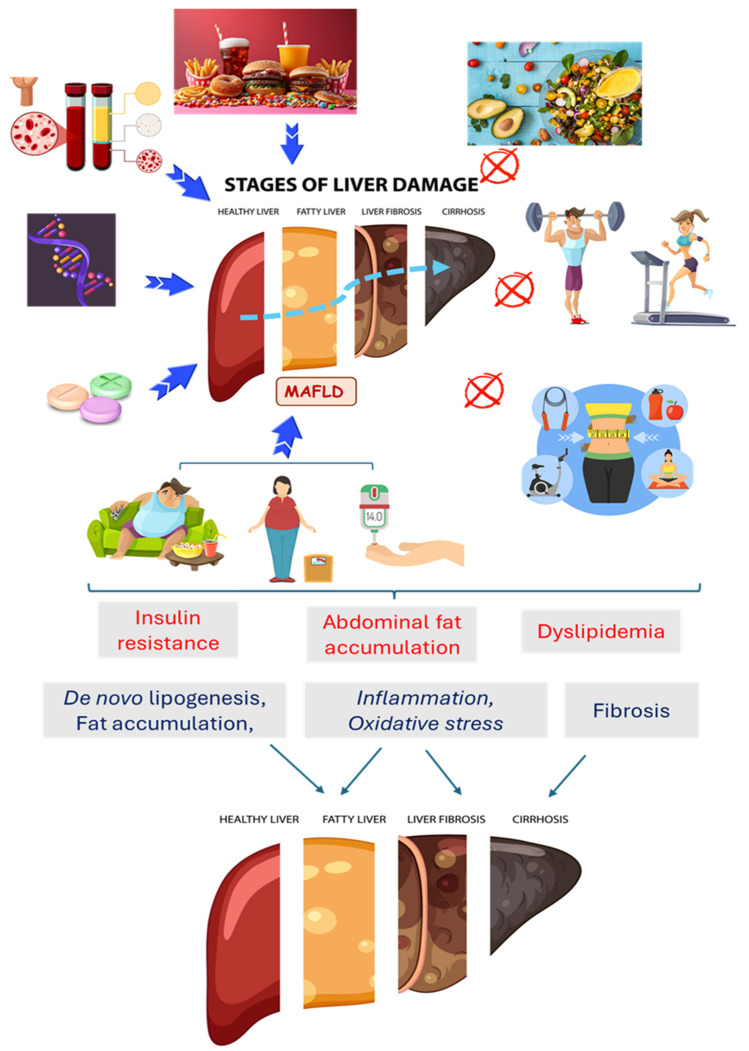
Figure 1
Figure 1
Factors related to the occurrence of Metabolic-Associated Fatty Liver Disease (MAFLD) and the possibility of the inhibition of this condition. An unhealthy diet, sedentary lifestyle, obesity, insulin resistance/diabetes, dyslipidemia, genetics, and excessive drug consumption are related to the pathogenesis of MAFLD and its progression to fibrosis, cirrhosis, and cancer. A healthy diet, physical exercise, and weight loss can improve metabolic conditions and can prevent or reduce MAFLD.
Figure 2
Figure 2
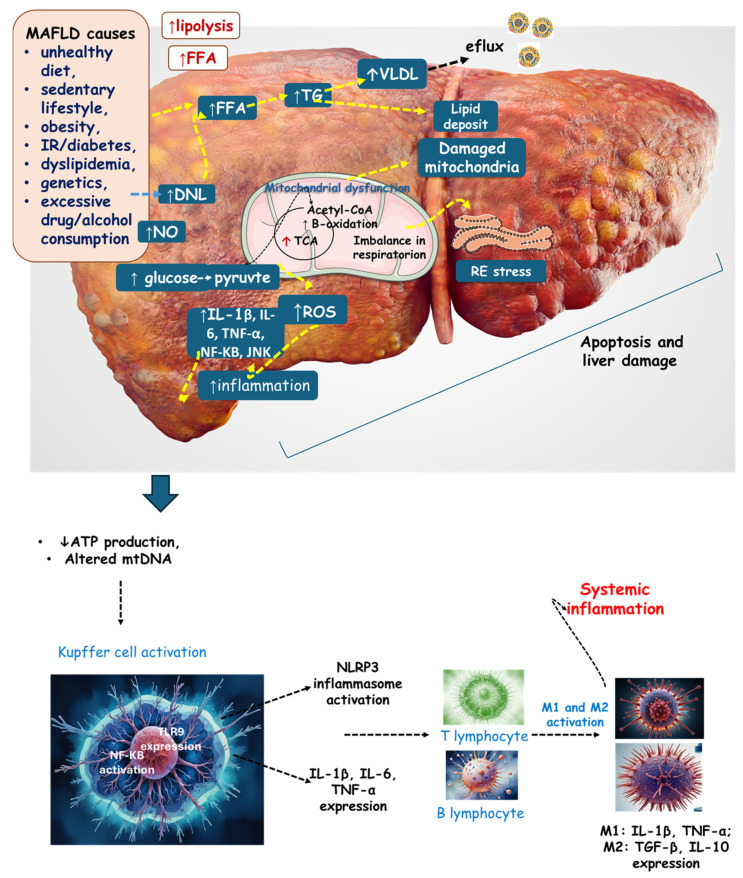
The liver in the context of MAFLD. Lifestyle and metabolic alterations lead to an increased lipolysis of visceral adipose tissue, stimulating de novo lipogenesis, and an increase in FFA and VLDL (and a consequent efflux of this lipoprotein). Increased glucose intake results in increased pyruvate and Acetyl-CoA production, leading to increased TCA activity. Furthermore, there is augmented β-oxidation resulting in mitochondrial dysfunction. The consequences are mitochondrial dysfunction, altered mtDNA, an imbalance in respiration (reduction in ATP production), and RE stress. All these events are related to increased inflammation and ROS, which results in apoptosis and liver damage. Systemic inflammation occurs due to Kupffer cell activation. DNL: de novo lipogenesis; FFA: free fatty acid; IL: interleukin; JNK: c-Jun N-terminal kinase; M2: macrophage; mtDNA: mitochondrial DNA; NF-KB: nuclear factor-KB, NO: nitric acid; NLRP3: NLR family pyrin domain-containing 3; ROS: reactive oxygen species; VLDL: very-low-density lipoprotein; TG: triglyceride; TNF-α: tumor necrosis factor-α; TCA: tricarboxylic acid cycle.
Figure 3
Figure 3
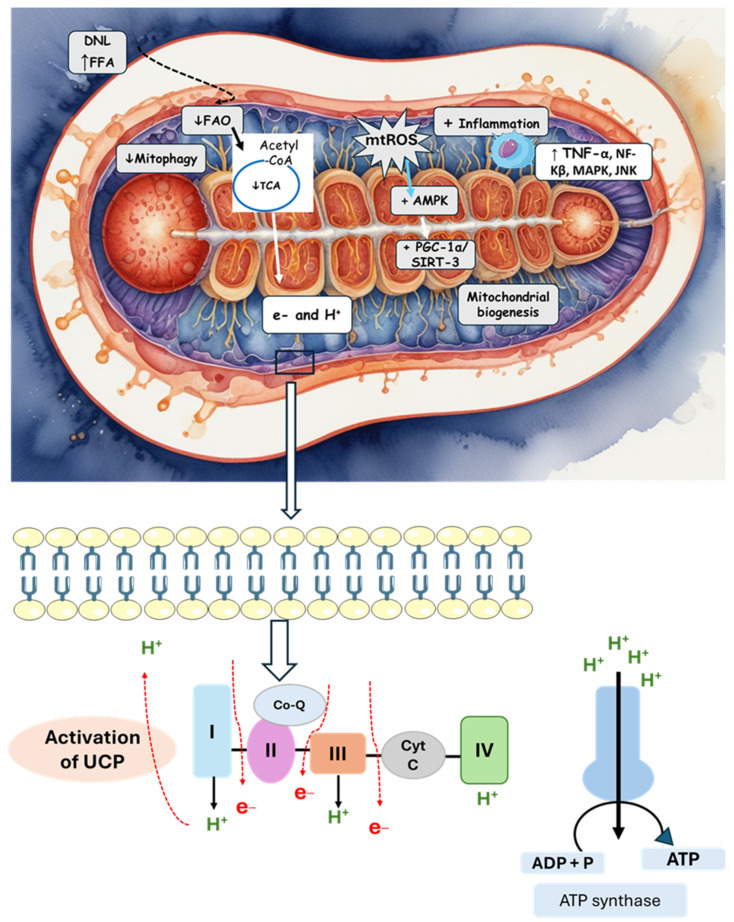
The activation of DNL and an increase in FFAs lead to mitochondrial alterations and an increase in oxidative stress and inflammation. The stimulation of the mitochondrial membrane permeability transition pore is also observed by mitochondrial alterations and the deposit of fatty acids. There is stimulation in the activity of inner membrane proteins, leading to a reduction in ATP production. Mitochondrial gene mutation (mt-DNA) also activates uncoupling proteins. AMPK: AMP-activated protein kinase; CoQ: coenzyme Q; Cyt C: cytochrome C; DNL: de novo lipogenesis; FAO: fatty acid oxidation; FFA: free fatty acid; PGC1α: peroxisome proliferator-activated receptor-γ coactivator 1-α; JNK: c-Jun N-terminal kinase; NF-KB: nuclear factor kappa B; SIRT3: sirtuin 3; TCA: tricarboxylic acid cycle; TNF-α: tumor necrosis factor-α; UCP: uncoupling protein.
Figure 4
Figure 4
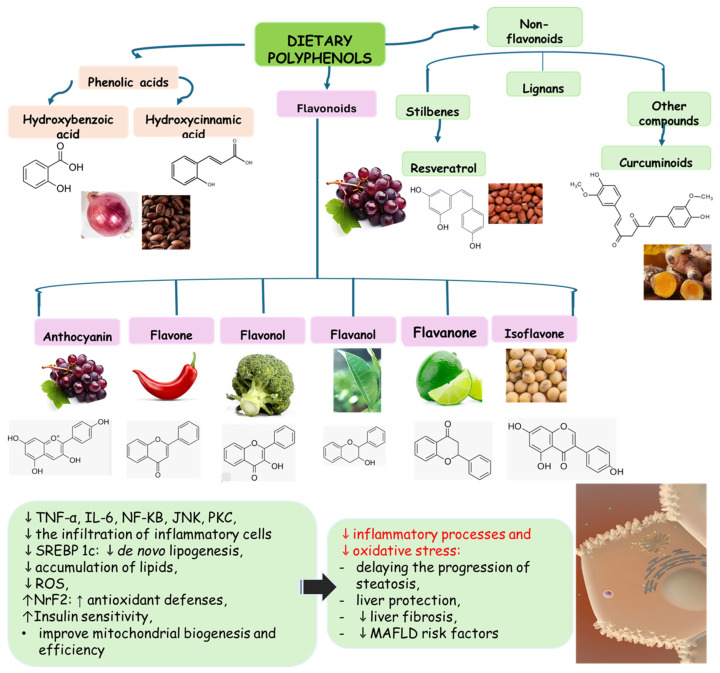
Polyphenols: classification and origin. Polyphenols are found in many fruits and vegetables and can be separated into phenolic acids, flavonoids, and non-flavonoids. Phenolic acids can be found in onion, tea, and coffee; flavonoids in grapes, pepper, broccoli, green tea, lemon, and soy; and non-flavonoids in grapes, peanut skin, and Curcuma longa. These compounds can protect the liver since they can reduce the risks for MAFLD, such as oxidative stress, inflammation, and lipid deposits. IL: interleukin; JNK: c-Jun N-terminal kinase; MAFLD: Metabolic-Associated Fatty Liver Disease; NF-KB: nuclear factor kappa B; Nrf2: nuclear factor erythroid 2-related factor 2, PKC: protein kinase C; ROS: reactive oxygen species; SREBP-1c: Sterol regulatory element-binding protein 1c.
Figure 5
Figure 5
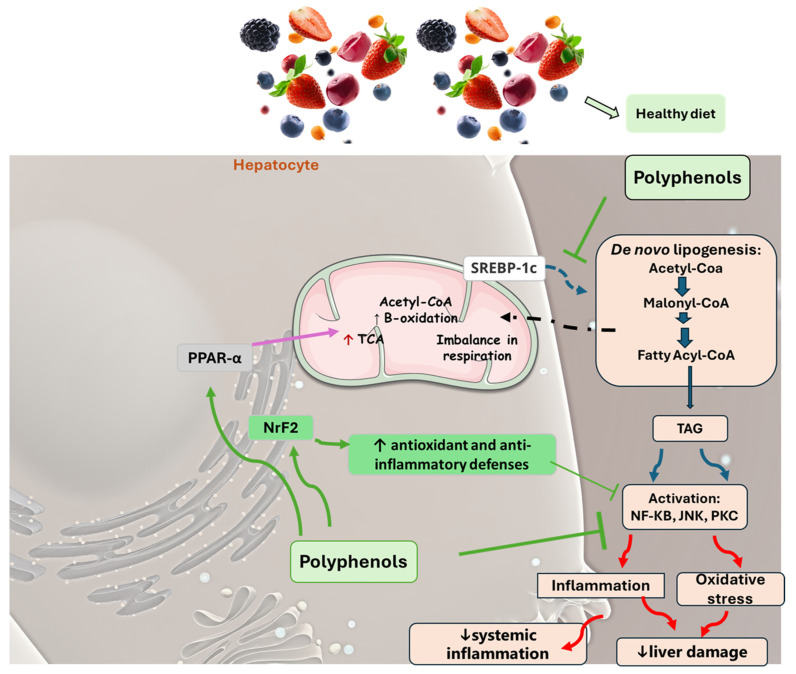
The main mechanisms of action promoted by phenols in MAFLD. A salubrious diet with an increased consumption of fruits and vegetables elevates the intake of polyphenols. These phytochemicals can inhibit liver cellular damage associated with MAFLD through varied mechanisms that may include a decrease in de novo lipogenesis due to the downregulation of SREBP-1c, elevating β-fatty acid oxidation through PPAR α upregulation, ameliorating insulin sensitivity, and reducing oxidative stress and inflammation processes. This scenario is related to a reduction in liver damage and systemic inflammation. JNK: c-Jun N-terminal kinase; NF-KB: nuclear factor kappa B; Nrf2: nuclear factor erythroid 2-related factor 2, PKC: protein kinase C; PPAR-α: peroxisome proliferator-activated receptor gamma; SREBP-1c: Sterol regulatory element-binding protein 1c; TCA: tricarboxylic acid cycle; TAG: triglyceride.

References

    1. Ramos-Lopez O. Multi-Omics Nutritional Approaches Targeting Metabolic-Associated Fatty Liver Disease. Genes. 2022;13:2142. doi: 10.3390/genes13112142. - DOI - PMC - PubMed
    1. Abdelhameed F., Kite C., Lagojda L., Dallaway A., Chatha K.K., Chaggar S.S., Dalamaga M., Kassi E., Kyrou I., Randeva H.S. Non-invasive Scores and Serum Biomarkers for Fatty Liver in the Era of Metabolic Dysfunction-associated Steatotic Liver Disease (MASLD): A Comprehensive Review from NAFLD to MAFLD and MASLD. Curr. Obes. Rep. 2024;13:510–531. doi: 10.1007/s13679-024-00574-z. - DOI - PMC - PubMed
    1. Khaznadar F., Khaznadar O., Petrovic A., Hefer M., Gjoni F., Gjoni S., Steiner J., Smolic M., Bojanic K. MAFLD Pandemic: Updates in Pharmacotherapeutic Approach Development. Curr. Issues Mol. Biol. 2024;46:6300–6314. doi: 10.3390/cimb46070376. - DOI - PMC - PubMed
    1. Powell E.E., Wong V.W., Rinella M. Non-alcoholic fatty liver disease. Lancet. 2021;397:2212–2224. doi: 10.1016/S0140-6736(20)32511-3. - DOI - PubMed
    1. Carpi R.Z., Barbalho S.M., Sloan K.P., Laurindo L.F., Gonzaga H.F., Grippa P.C., Zutin T.L.M., Girio R.J.S., Repetti C.S.F., Detregiachi C.R.P., et al. The Effects of Probiotics, Prebiotics and Synbiotics in Non-Alcoholic Fat Liver Disease (NAFLD) and Non-Alcoholic Steatohepatitis (NASH): A Systematic Review. Int. J. Mol. Sci. 2022;23:8850. doi: 10.3390/ijms23158805. - DOI - PMC - PubMed

LinkOut - more resources