


Trends in Antidiabetic Drug Use and Safety of Metformin in Diabetic Patients with Varying Degrees of Chronic Kidney Disease from 2010 to 2021 in Korea: Retrospective Cohort Study Using the Common Data Model
- PMID: 39459008
- PMCID: PMC11510110
- DOI: 10.3390/ph17101369
Trends in Antidiabetic Drug Use and Safety of Metformin in Diabetic Patients with Varying Degrees of Chronic Kidney Disease from 2010 to 2021 in Korea: Retrospective Cohort Study Using the Common Data Model
Abstract
Background/objectives: This study aimed to investigate trends in antidiabetic drug use and assess the risk of metformin-associated lactic acidosis (MALA) in patients with chronic kidney disease (CKD).
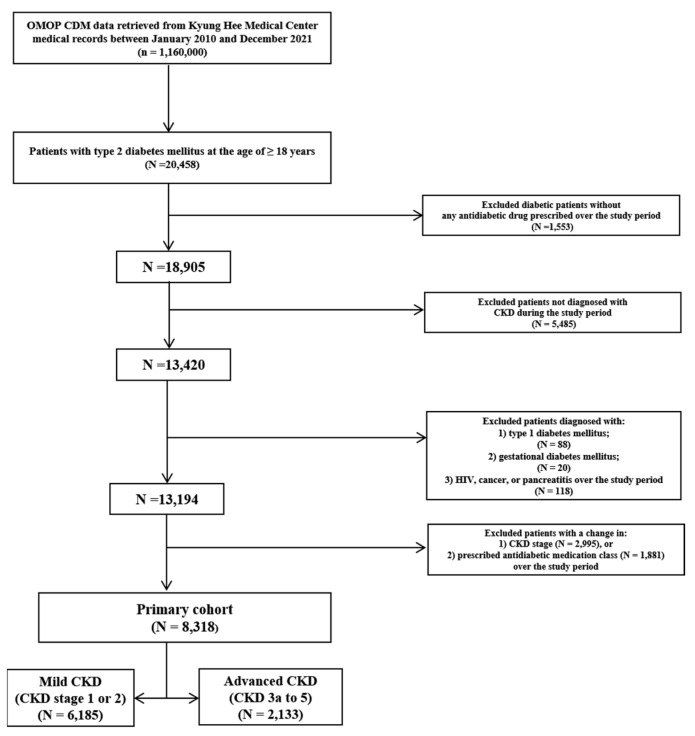
Methods: A retrospective observational analysis based on the common data model was conducted using electronic medical records from 2010 to 2021. The patients included were aged ≥18, diagnosed with CKD and type 2 diabetes, and had received antidiabetic medications for ≥30 days. MALA was defined as pH ≤ 7.35 and arterial lactate ≥4 mmol/L.
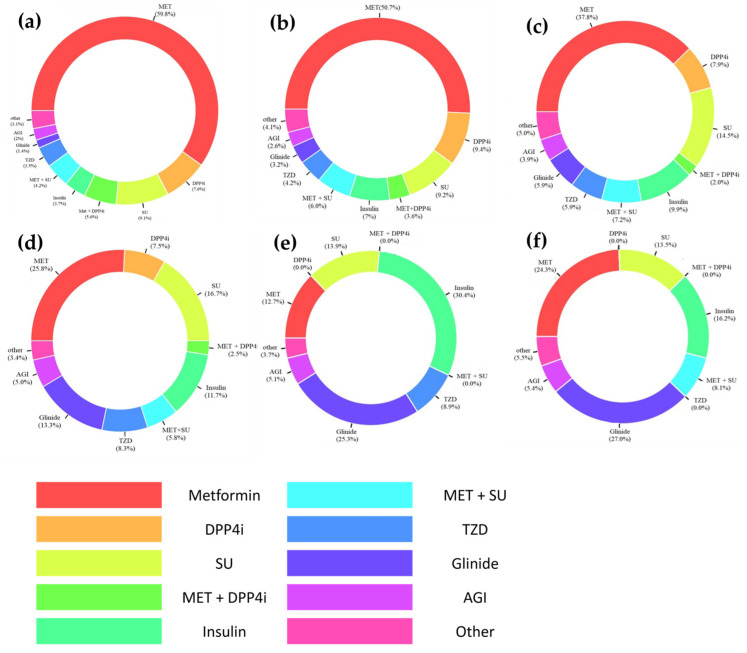
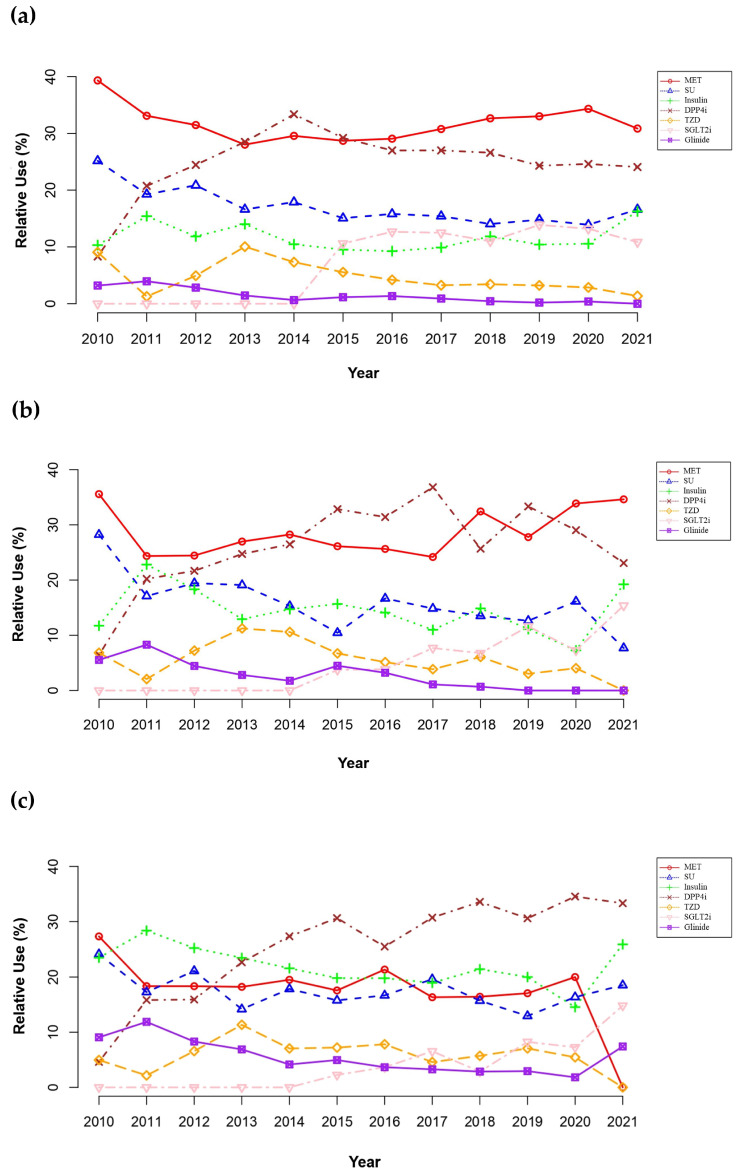
Results: A total of 8318 patients were included, with 6185 in CKD stages 1-2 and 2133 in stages 3a-5. Metformin monotherapy was the most prescribed regimen, except in stage 5 CKD. As CKD progressed, metformin use significantly declined; insulin and meglitinides were most frequently prescribed in end-stage renal disease. Over the study period, the use of SGLT2 inhibitors (13.3%) and DPP-4 inhibitors (24.5%) increased significantly, while sulfonylurea use decreased (p < 0.05). Metformin use remained stable in earlier CKD stages but significantly decreased in stage 3b or worse. The incidence rate (IR) of MALA was 1.22 per 1000 patient-years, with a significantly increased IR in stage 4 or worse CKD (p < 0.001).
Conclusions: Metformin was the most prescribed antidiabetic drug in CKD patients in Korea with a low risk of MALA. Antidiabetic drug use patterns varied across CKD stages, with a notable decline in metformin use in advanced CKD and a rise in SGLT2 inhibitor prescriptions, underscoring the need for further optimized therapy.
Keywords: chronic kid-ney disease; common data model (CDM); metformin-associated lactic acidosis; observational medical outcomes partnership (OMOP); pharmacoepidemiology; pharmacovigilance; real-world data (RWD); type 2 diabetes mellitus.
Conflict of interest statement
The authors declare no conflicts of interest.
Figures
References
-
- de Boer I.H., Khunti K., Sadusky T., Tuttle K.R., Neumiller J.J., Rhee C.M., Rosas S.E., Rossing P., Bakris G. Diabetes Management in Chronic Kidney Disease: A Consensus Report by the American Diabetes Association (ADA) and Kidney Disease: Improving Global Outcomes (KDIGO) Diabetes Care. 2022;45:3075–3090. doi: 10.2337/dci22-0027. - DOI - PMC - PubMed
-
- Stevens P.E., Levin A. Kidney Disease: Improving Global Outcomes Chronic Kidney Disease Guideline Development Work Group Members. Evaluation and Management of Chronic Kidney Disease: Synopsis of the Kidney Disease: Improving Global Outcomes 2012 Clinical Practice Guideline. Ann. Intern. Med. 2013;158:825–830. doi: 10.7326/0003-4819-158-11-201306040-00007. - DOI - PubMed
-
- World Health Organization Diabetes: Fact Sheets. [(accessed on 15 March 2024)]. Available online: https://www.who.int/news-room/fact-sheets/detail/diabetes.
-
- Korean Society of Nephrology Practical Recommendations for the Management of Diabetic Kidney Disease. [(accessed on 15 March 2024)]. Available online: https://ksn.or.kr/bbs/index.php?page=1&code=guideline_k.
Grants and funding
LinkOut - more resources
Full Text Sources
Research Materials
Miscellaneous
