


Expression of PD-L1, PD-L2, and inflammatory gene expression profile in locally advanced head and neck squamous cell carcinoma
- PMID: 39461260
- PMCID: PMC11546268
- DOI: 10.1016/j.esmoop.2024.103961
Expression of PD-L1, PD-L2, and inflammatory gene expression profile in locally advanced head and neck squamous cell carcinoma
Abstract
Background: The tumor immune microenvironment in cancer treatment response and resistance is of increasing interest. This retrospective study characterized and investigated programmed death-ligand 1 (PD-L1), PD-L2, and the immune gene expression signature and their association with clinical outcomes in locoregionally advanced head and neck squamous cell carcinoma (LA HNSCC).
Patients and methods: PD-L1 and PD-L2 expression on tumor and immune-infiltrating cells (positivity defined as combined positive score or immunohistochemistry proportion score >1) and T-cell-inflamed gene expression profile (TcellinfGEP) were evaluated in patients with LA HNSCC treated in South Korea from 2000 to 2015. Correlations among the three biomarkers and their associations with overall survival and recurrence-free survival were assessed.
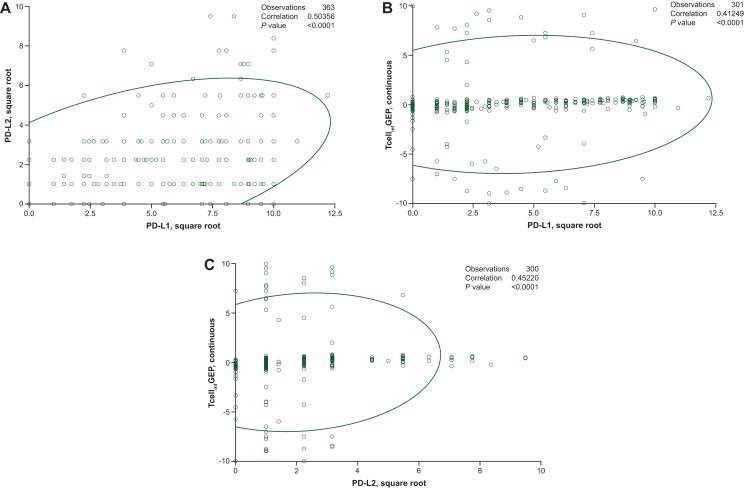
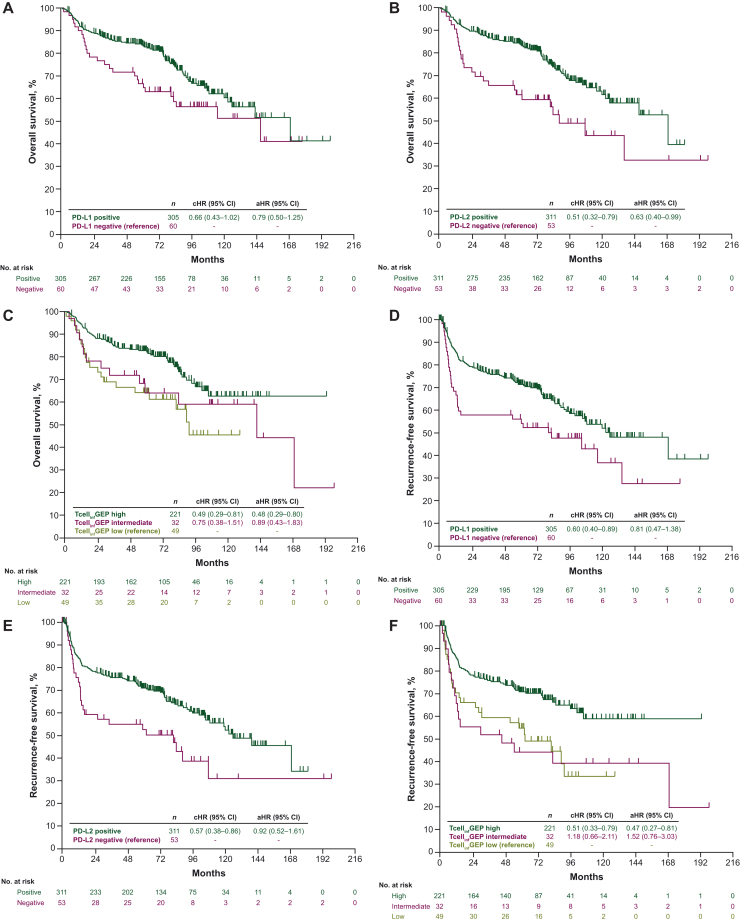
Results: Among 366 patients, 38.8% had human papillomavirus-positive disease. PD-L1-positive, PD-L2-positive, and high TcellinfGEP (≤-0.162) status were observed in 83.6%, 85.4%, and 73.2% of patients, respectively; 4.1% were posttreatment samples. Correlation between PD-L1 and PD-L2 scores was moderate (rSpearman = 0.50), and each biomarker was slightly less correlated with TcellinfGEP (0.41-0.45). PD-L1 expression and high TcellinfGEP status were associated with human papillomavirus positivity. Higher levels of all biomarkers were observed in oral cavity and oropharyngeal cancers compared with other HNSCC sites. In a multivariable analysis that simultaneously adjusted for all three biomarkers, only high TcellinfGEP was significantly associated with longer overall survival (adjusted hazard ratio, 0.57; 95% confidence interval 0.33-0.98) and recurrence-free survival (adjusted hazard ratio, 0.41; 95% confidence interval 0.23-0.74).
Conclusion: High TcellinfGEP status, but not PD-L1 or PD-L2 expression, was independently associated with longer survival in patients with LA HNSCC. Results may have implications for evaluating therapies targeting programmed cell death protein 1 (PD-1)/programmed death-ligand 1 (PD-L1) in HNSCC.
Keywords: PD-L1; PD-L2; gene expression profile; head and neck squamous cell carcinoma; programmed cell death protein 1.
Copyright © 2024 The Authors. Published by Elsevier Ltd.. All rights reserved.
Figures
References
-
- International Agency for Research on Cancer (IARC) Estimated number of new cases in 2020, worldwide, both sexes, all ages (excl. NMSC). IARC. https://gco.iarc.fr/today/online-analysis-table?v=2020&mode=cancer&mode_... Available at.
-
- International Agency for Research on Cancer (IARC) Estimated number of deaths in 2020, World, both sexes, all ages (excl. NMSC). World Health Organization. https://gco.iarc.fr/today/online-analysis-table?v=2020&mode=cancer&mode_... Available at.
-
- Gillison M.L., Koch W.M., Capone R.B., et al. Evidence for a causal association between human papillomavirus and a subset of head and neck cancers. J Natl Cancer Inst. 2000;92(9):709–720. - PubMed
MeSH terms
Substances
LinkOut - more resources
Full Text Sources
Medical
Research Materials
