


Sleep quality in glaucoma patients
- PMID: 39462008
- PMCID: PMC11513007
- DOI: 10.1038/s41598-024-76368-z
Sleep quality in glaucoma patients
Abstract
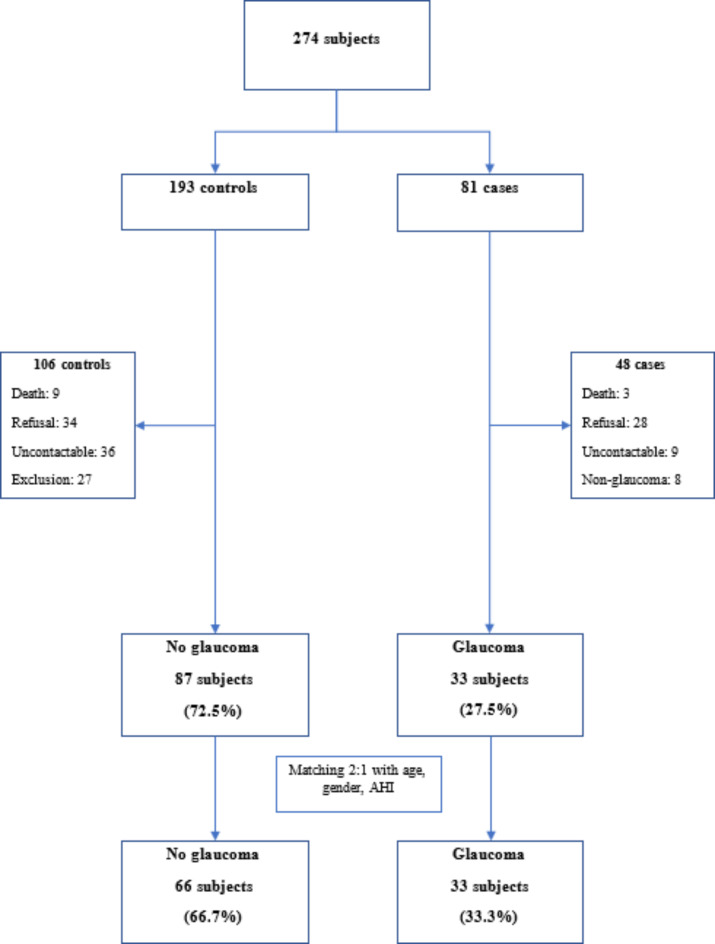
The purpose of this study is to objectively assess by polysomnography total sleep time and sleep macrostructure in glaucomatous versus non-glaucomatous individuals after adjusting for possible confounding factors affecting the quality of sleep. This is an observational, prospective, single-center, case-controlled study using a sleep research database (MARS e-Cohort) collecting clinical data, comorbidities, medications, and sleep studies of glaucomatous and non-glaucomatous individuals. The diagnosis of glaucoma was confirmed with a full comprehensive ophthalmological examination including a visual field test. Total sleep time and the main sleep parameters (time spent in stages 1, 2, 3 and 4, microarousals, apnea-hypopnea index, and indices of hypoxic burden) were compared in glaucomatous and non-glaucomatous individuals after adjusting for age, anthropometric data, and comorbidities. The study included 33 glaucomatous and 66 non-glaucomatous individuals. The median total sleep time was 325 min [273; 398] for the control group and 311 min [244; 349] for the glaucoma group. After adjusting for the potential confounding factors, there was no significant difference in total sleep time (p = 0.3) and other sleep parameters between the control group and the glaucoma group. The sleep macrostructure was comparable in the glaucomatous and non-glaucomatous individuals after careful adjustment for confounders.
Keywords: Glaucoma; Polysomnography; Sleep; Sleep quality.
© 2024. The Author(s).
Conflict of interest statement
The authors declare no competing interests.
Figures
References
-
- Gracitelli, C. P. B. & Paranhos, A. Jr. Can glaucoma affect sleep quality? Arq. Bras. Oftalmol78 (2015). - PubMed
Publication types
MeSH terms
LinkOut - more resources
Full Text Sources
Medical
Miscellaneous
