


Estimating reference intervals from an IPD meta-analysis using quantile regression
- PMID: 39462323
- PMCID: PMC11514908
- DOI: 10.1186/s12874-024-02378-0
Estimating reference intervals from an IPD meta-analysis using quantile regression
Abstract
Background: Reference intervals, which define an interval in which a specific proportion of measurements from a healthy population are expected to fall, are commonly used in medical practice. Synthesizing information from multiple studies through meta-analysis can provide a more precise and representative reference interval than one derived from a single study. However, the current approaches for estimating the reference interval from a meta-analysis mainly rely on aggregate data and require parametric distributional assumptions that cannot always be checked.
Methods: With the availability of individual participant data (IPD), non-parametric methods can be used to estimate reference intervals without any distributional assumptions. Furthermore, patient-level covariates can be introduced to estimate personalized reference intervals that may be more applicable to specific patients. This paper introduces quantile regression as a method to estimate the reference interval from an IPD meta-analysis under the fixed effects model.
Results: We compared several non-parametric bootstrap methods through simulation studies to account for within-study correlation. Under fixed effects model, we recommend keeping the studies fixed and only randomly sampling subjects with replacement within each study.
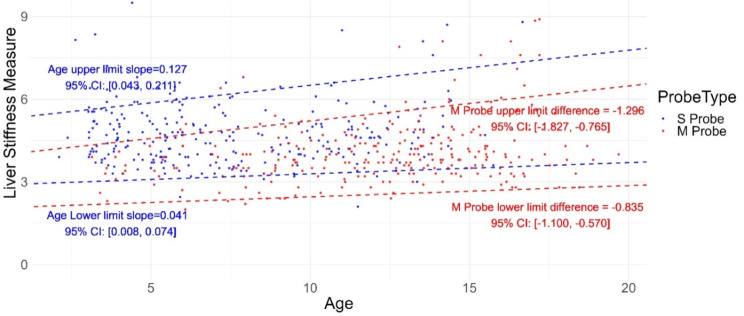
Conclusion: We proposed to use the quantile regression in the IPD meta-analysis to estimate the reference interval. Based on the simulation results, we identify an optimal bootstrap strategy for estimating the uncertainty of the estimated reference interval. An example of liver stiffness measurements, a clinically important diagnostic test without explicitly established reference range in children, is provided to demonstrate the use of quantile regression in estimating both overall and subject-specific reference intervals.
Keywords: Bootstrap; Individual participant data; Meta-analysis; Quantile regression; Reference interval.
© 2024. The Author(s).
Conflict of interest statement
The authors declare no competing interests.
Figures
References
-
- Horn PS, Pesce AJ, Copeland BE. A robust approach to reference interval estimation and evaluation. Clin Chem. 1998;44(3):622–31. 10.1093/clinchem/44.3.622. - PubMed
MeSH terms
Grants and funding
LinkOut - more resources
Full Text Sources
