. 2024 Oct 26;16(1):63.
doi: 10.1186/s13099-024-00653-5.

CRISPR-Cas system positively regulates virulence of Salmonella enterica serovar Typhimurium

Affiliations

CRISPR-Cas system positively regulates virulence of Salmonella enterica serovar Typhimurium

Nandita Sharma et al. Gut Pathog. .

Abstract

Background: Salmonella, a foodborne pathogen, possesses a type I-E clustered regularly interspaced short palindromic repeats (CRISPR)-CRISPR associated (Cas) system. We investigated the system's role in regulating Salmonella virulence by deleting the CRISPR arrays and Cas operon.

Results: Our study demonstrates invasion and proliferation defects of CRISPR-Cas knockout strains in intestinal epithelial cells and macrophages owing to the repression of invasion and virulence genes. However, proliferation defects were not observed in the Gp91phox-/- macrophages, suggesting the system's role in the pathogens' antioxidant defense. We deduced that the CRISPR-Cas system positively regulates H2O2 importer (OmpW), catalase (katG), peroxidase (ahpC), and superoxide dismutase (soda and sodCI), thereby protecting the cells from oxidative radicals. The knockout strains were attenuated in in-vivo infection models (Caenorhabditis elegans and BALB/c mice) due to hypersensitivity against antimicrobial peptides, complement proteins, and oxidative stress. The attenuation in virulence was attributed to the suppression of LPS modifying (pmr) genes, antioxidant genes, master regulators, and effectors of the SPI-1 (invasion) and SPI-2 (proliferation) islands in knockout strains. The regulation could be attributed to the partial complementarity of the CRISPR spacers with these genes.

Conclusions: Overall, our study extends our understanding of the role of the CRISPR-Cas system in Salmonella pathogenesis and its virulence determinants.

Keywords: Salmonella; Anti-oxidant genes; SPI-1-T3SS; SPI-2-T3SS; Type 1-E CRISPR-Cas system; Virulence.


Conflict of interest statement

The authors declare no competing interests.

Figures
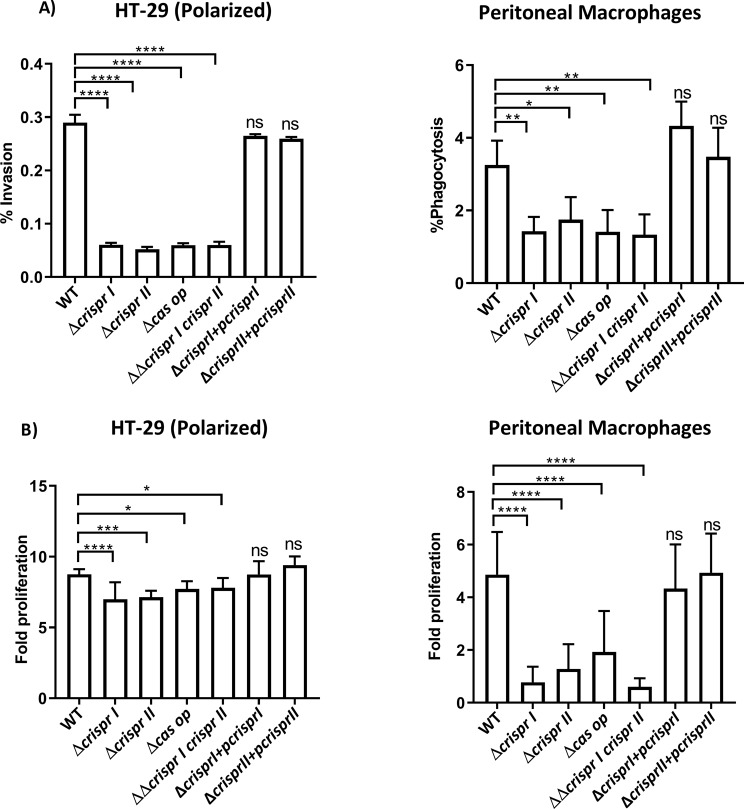
Fig. 1
Fig. 1
The knockout strains of CRISPR-Cas components show invasion and replication defects. (A-B) HT-29 cell lines, and peritoneal macrophages were infected with S. Typhimurium strain 14028s wildtype (WT), CRISPR (ΔcrisprI, ΔcrisprII, and ΔΔcrisprI crisprII) and cas operon   (Δcas op) knockout strains along with their respective complements (ΔcrisprI + pcrisprI and ΔcrisprII + pcrisprII). (A) The percentage of invasion/ phagocytosis in intestinal epithelial cells was calculated using CFU analysis of the infected cell lysate and the pre-inocula used for infection. Fold proliferation was calculated by normalizing the CFU at 16 h to 2 h. One-way ANOVA (Dunnett’s multiple comparison test) was used to determine significant differences between the WT and knockout strains, in at least three independent experiments, with at least 3 replicates in each. Error bars indicate SD. Statistical significance is shown as follows: *, p ≤ 0.05; **, p ≤ 0.01; ***, p ≤ 0.001; ****, p < 0.0001; and ns, not significant
Fig. 2
Fig. 2
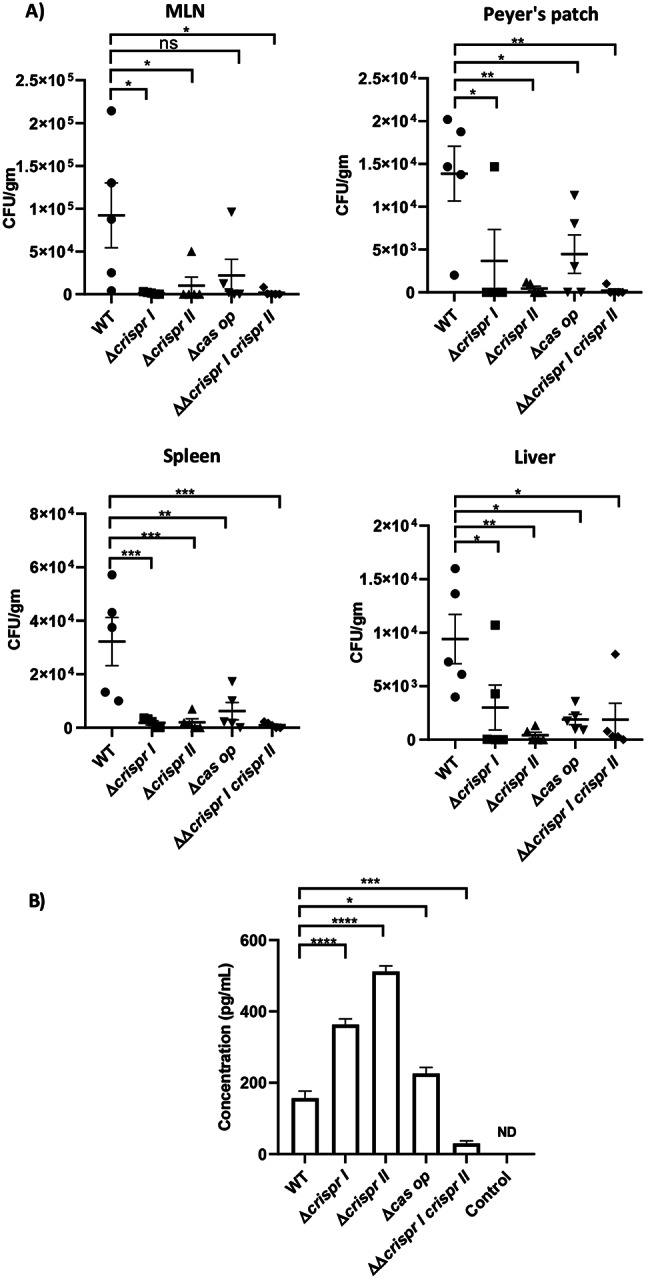
The knockout strains of CRISPR-Cas components show impaired colonisation in in-vivo model organism (mice) (A) The mice were orally gavaged with wildtype (WT) and CRISPR (ΔcrisprI, ΔcrisprII, and ΔΔcrisprI crisprII) and cas operon (Δcas op) knockout strains. Bacterial burden in different reticuloendothelial organs of these infected mice was estimated 3 days post-infection by plating the organ lysates, followed by CFU analysis. (B) The sera of infected mice were pooled and the concentrations of proinflammatory cytokine IFN-γ was determined using ELISA. Results are represented as mean ± SD pooled sera samples (2 mice per pool) for each infected and control group. One-way ANOVA (Dunnett’s multiple comparison test) was used to determine significant differences between the WT and knockout strains, in two independent experiments, with at least 3 replicates in each. Error bars indicate SD. Statistical significance is shown as follows: *, p ≤ 0.05; **, p ≤ 0.01; ***, p ≤ 0.001; ****, p < 0.0001; and ns, not significant
Fig. 3
Fig. 3
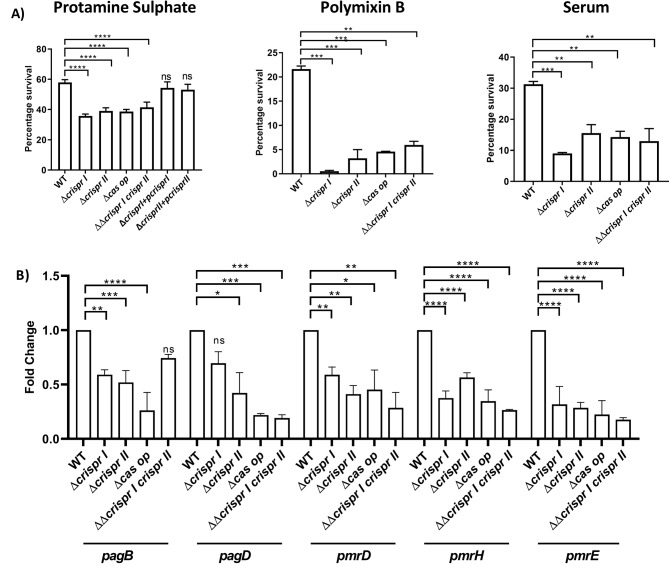
The knockout strains of CRISPR-Cas components show sensitivity towards antimicrobial peptides (AMP), and the complement system. (A) The strains were exposed to antimicrobials (i) AMPs- protamine sulfate (0.5 µg/mL), polymyxin B (0.5 µg/mL), and (ii) serum (20% FBS) for 1 h. For AMPs, the percentage survival was determined by analyzing CFU in both untreated and treated samples, the untreated samples were used as controls. Percentage survival in serum was determined by using heat-inactivated samples as control. (B) Total RNA isolated from late log-phase bacteria strains was used for cDNA synthesis, followed by qRT-PCR to assess the expression of polymyxin resistance (pmr) genes like pagB, pagD, pmrH, pmrE, pmrD. Relative expression of the gene was calculated using the 2 –ΔΔCt method, and normalized to reference gene rpoD. One-way ANOVA (Dunnett’s multiple comparison test) was used to determine significant differences between the WT and knockout strains, in at least three independent experiments, with at least 3 replicates in each. Error bars indicate SD. Statistical significance is shown as follows: *, p ≤ 0.05; **, p ≤ 0.01; ***, p ≤ 0.001; ****, p < 0.0001; and ns, not significant
Fig. 4
Fig. 4
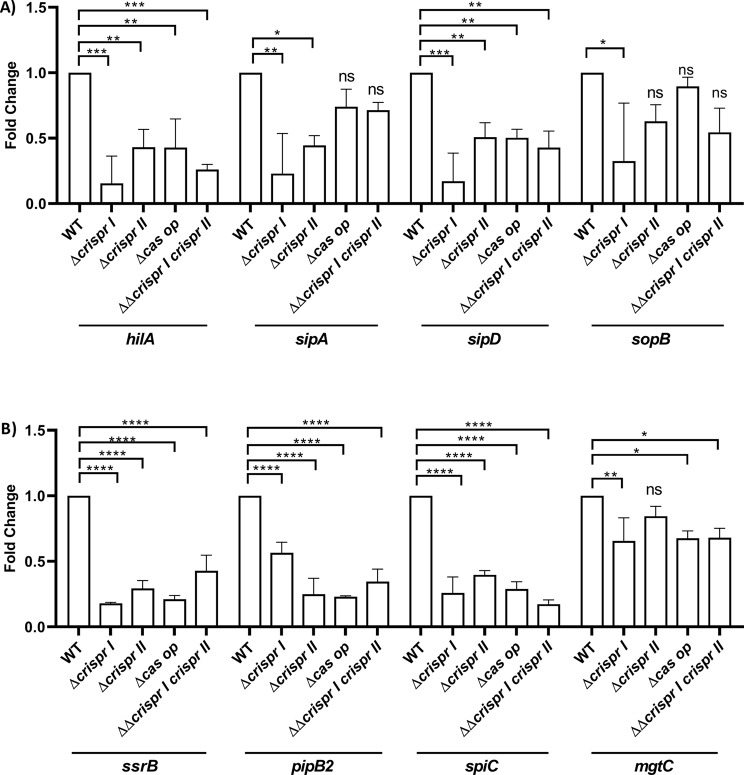
The CRISPR-Cas system regulates SPI-1, and SPI-2 genes expression. (A) The bacterial strains were cultivated in conditions (1:100 dilution in LB, followed by 8 h incubation) that promote SPI-1 activation. Subsequently, qRT-PCR was conducted on isolated RNA samples to assess the expression levels of key SPI-1 components, including transcriptional regulator-hilA, and SPI-1 effectors- sipA, sipD, sopB. (B) The bacterial strains were cultivated in SPI-2 inducing conditions (MgM- MES media) for 5 h, and qRT-PCR was performed from isolated RNA to check expression of SPI-2 effectors- pipB2 and spiC, SPI-2 encoded transcriptional regulator-ssrB, and SPI-3 encoded protein-mgtC. Relative expression of the gene was calculated using the 2 –ΔΔCt method and normalized to the reference gene, rpoD. One-way ANOVA (Dunnett’s multiple comparison test) was used to determine significant differences between the WT and knockout strains, in at least three independent experiments, with at least 3 replicates in each. Error bars indicate SD. Statistical significance is shown as follows: *, p ≤ 0.05; **, p ≤ 0.01; ***, p ≤ 0.001; ****, p < 0.0001; and ns, not significant
Fig. 5
Fig. 5
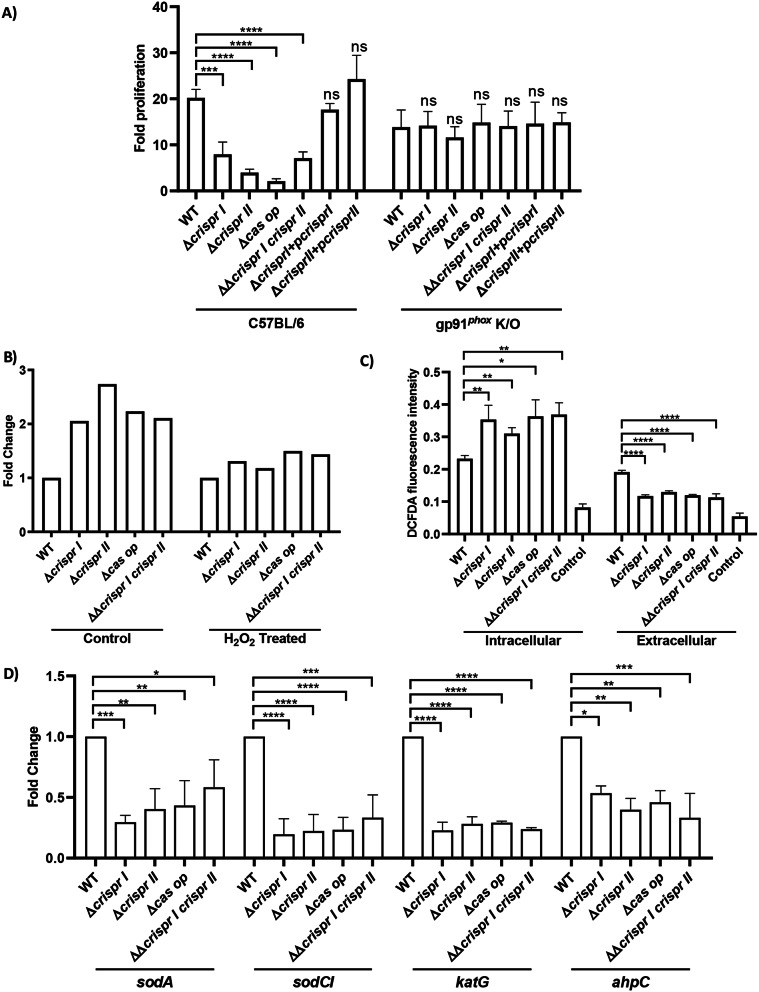
The knockout strains of CRISPR-Cas components are ROS-susceptible owing to elevated H2O2influx, and reduced antioxidant genes expression. (A)The peritoneal macrophages were infected with S. Typhimurium strain 14028s wildtype (WT), CRISPR (ΔcrisprI, ΔcrisprII, and ΔΔcrisprI crisprII) and cas operon (Δcas op) knockout strains along with their respective complements (ΔcrisprI + pcrisprI and ΔcrisprII + pcrisprII). Intracellular fold proliferation was calculated by normalizing the CFU count of intracellular bacteria at 16 h to 2 h. (B) The bacterial strains were cultivated in MgM-MES media, with and without H2O2 for 8 h. RNA was isolated, followed by qRT-PCR analysis of ompW. Relative expression of the gene was calculated using the 2 -ΔΔCt method and normalized to reference gene rpoD. (C) The bacterial strains were cultivated in MgM-MES media until they reached an OD600nm ∼ 0.5. They were then incubated in the dark for 5 min with 1 mM H2O2. The H2O2 levels in both extracellular and intracellular fractions were measured using H2DCFDA. The H2O2 untreated sample was used as a control. (D) The bacterial strains were cultivated in SPI-2 inducing conditions (MgM-MES media), and qRT-PCR was performed from isolated RNA to evaluate the expression of ROS detoxifying enzymes, superoxide dismutases (sodCI and sodA), catalase (katG), and peroxidase (ahpC). Relative expression of the gene was calculated using the 2 –ΔΔCt method and normalized to the reference gene, rpoD. One-way ANOVA (Dunnett’s multiple comparison test) was used to determine significant differences between the WT and knockout strains, in at least three independent experiments, with at least 3 replicates in each. Error bars indicate SD. Statistical significance is shown as follows: *, p ≤ 0.05; **, p ≤ 0.01; ***, p ≤ 0.001; ****, p < 0.0001; and ns, not significant
Fig. 6
Fig. 6
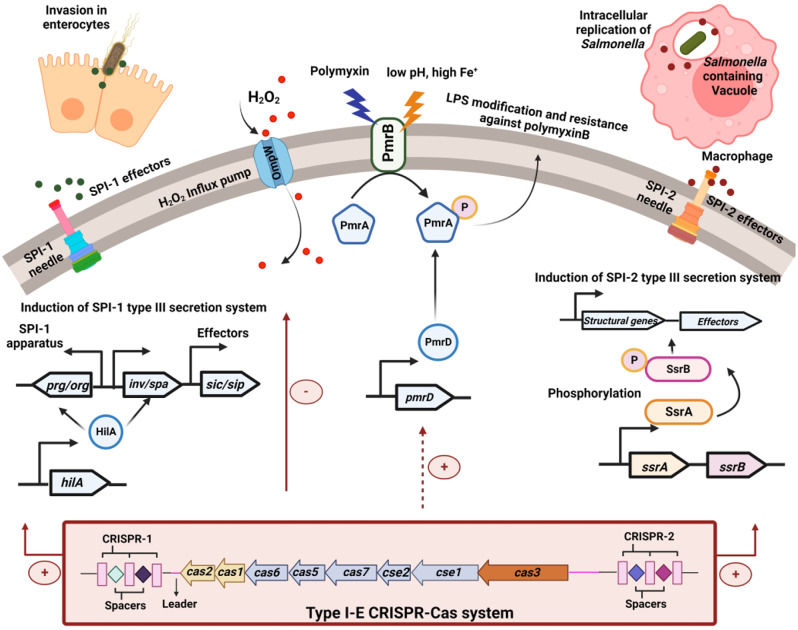
Deletion of the CRISPR-Cas system attenuates Salmonella pathogenicity. Proposed mechanisms of the type I-E CRISPR-Cas system in regulating Salmonella pathogenesis via modulation of SPI-1 and SPI-2 genes. We propose that the CRISPR-Cas system positively regulates hilA (direct regulation via complementary base-pairing between crRNA and gene) whereby it upregulates the expression of SPI-1 apparatus and effector proteins (direct regulation of sipA) involved in the invasion of enterocytes by Salmonella. The intestinal epithelial cells reinforce the intestinal barrier function by releasing antimicrobial peptides. The CRISPR-Cas system appears to indirectly regulate (red dotted lines) pmr genes to provide resistance against antimicrobial peptides (AMPs). Within the Salmonella containing vacuole (SCV) of macrophages, the bacteria shut down its SPI-1 system and activates the SPI-2-encoded SsrAB system in response to the acidic milieu. The SsrAB system further activates the SPI-2 encoded genes. The CRISPR-Cas may be positively regulating SsrB (direct regulation) to trigger activation of SPI-2 encoded structural genes and effector proteins (direct regulation of pipB2) to aid intracellular proliferation and survival of Salmonella. In addition, the CRISRP-Cas system negatively regulates OmpW (direct regulation) during oxidative stress, thereby aiding in Salmonella’s survival. Taken together, the CRISPR-Cas system positively regulates Salmonella pathogenesis. The figure was created using Biorender

References

    1. Sampson TR, Weiss DS. CRISPR-Cas systems: new players in gene regulation and bacterial physiology. Front Cell Infect Microbiol. 2014;4. 10.3389/FCIMB.2014.00037. - PMC - PubMed
    1. Dong Y, Ma K, Cao Q, Huang H, Nie M, Liu G, et al. CRISPR-dependent endogenous gene regulation is required for virulence in piscine Streptococcus agalactiae. Emerg Microbes Infect. 2021;10:2113. 10.1080/22221751.2021.2002127. - PMC - PubMed
    1. Wu Q, Cui L, Liu Y, Li R, Dai M, Xia Z, et al. CRISPR-Cas systems target endogenous genes to impact bacterial physiology and alter mammalian immune responses. Mol Biomed. 2022;3. 10.1186/S43556-022-00084-1. - PMC - PubMed
    1. Sampson TR, Weiss DS. Cas9-dependent endogenous gene regulation is required for bacterial virulence. Biochem Soc Trans. 2013;41:1407–11. 10.1042/BST20130163. - PubMed
    1. Louwen R, Horst-Kreft D, De Boer AG, Van Der Graaf L, De Knegt G, Hamersma M, et al. A novel link between Campylobacter jejuni bacteriophage defence, virulence and Guillain-Barré syndrome. Eur J Clin Microbiol Infect Dis. 2013;32:207–26. 10.1007/S10096-012-1733-4. - PubMed

LinkOut - more resources