


Role of glia in delirium: proposed mechanisms and translational implications
- PMID: 39463449
- PMCID: PMC11835730
- DOI: 10.1038/s41380-024-02801-4
Role of glia in delirium: proposed mechanisms and translational implications
Abstract
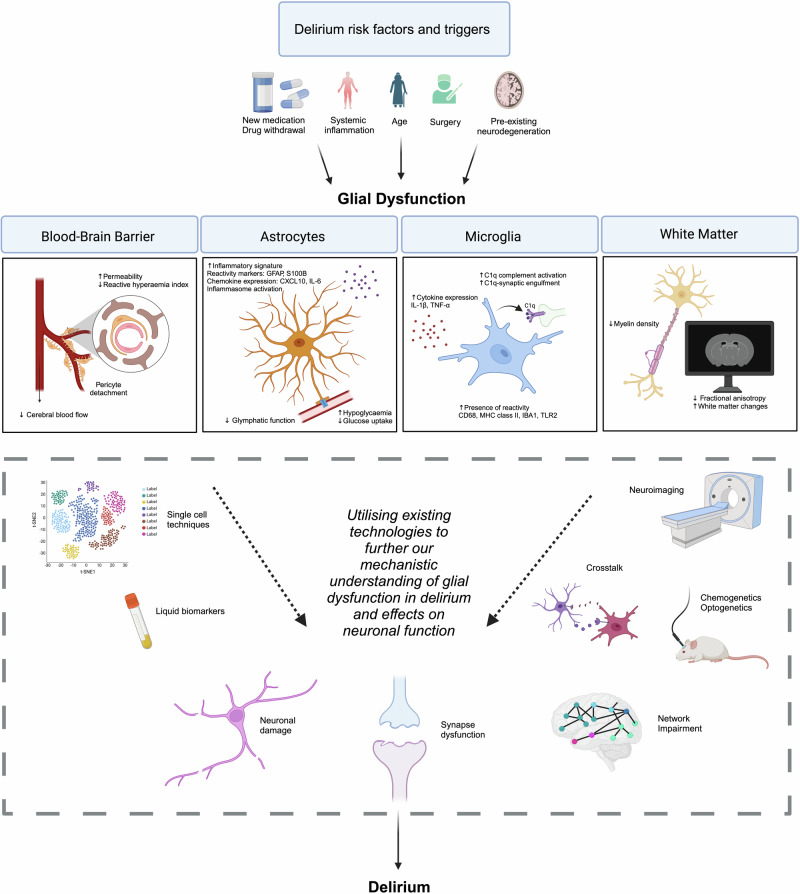
Delirium is a common acute onset neurological syndrome characterised by transient fluctuations in cognition. It affects over 20% of medical inpatients and 50% of those critically ill. Delirium is associated with morbidity and mortality, causes distress to patients and carers, and has significant socioeconomic costs in ageing populations. Despite its clinical significance, the pathophysiology of delirium is understudied, and many underlying cellular mechanisms remain unknown. There are currently no effective pharmacological treatments which directly target underlying disease processes. Although many studies focus on neuronal dysfunction in delirium, glial cells, primarily astrocytes, microglia, and oligodendrocytes, and their associated systems, are increasingly implicated in delirium pathophysiology. In this review, we discuss current evidence which implicates glial cells in delirium, including biomarker studies, post-mortem tissue analyses and pre-clinical models. In particular, we focus on how astrocyte pathology, including aberrant brain energy metabolism and glymphatic dysfunction, reactive microglia, blood-brain barrier impairment, and white matter changes may contribute to the pathogenesis of delirium. We also outline limitations in this body of work and the unique challenges faced in identifying causative mechanisms in delirium. Finally, we discuss how established neuroimaging and single-cell techniques may provide further mechanistic insight at pre-clinical and clinical levels.
© 2024. Crown.
Conflict of interest statement
Competing interests: The authors declare no competing interests.
Figures
References
-
- American Psychiatric Association. Diagnostic and statistical manual of mental disorders. 5th ed., text rev. edn, 2022.
-
- Roberts B, Rickard CM, Rajbhandari D, Turner G, Clarke J, Hill D, et al. Multicentre study of delirium in ICU patients using a simple screening tool. Aust Crit Care. 2005;18:6. 8-9, 11-14 passim - PubMed
Publication types
MeSH terms
LinkOut - more resources
Full Text Sources
Medical
