[Preprint]. 2024 Oct 17:2024.10.17.618959.
doi: 10.1101/2024.10.17.618959.

Targeted degradation of the HPV oncoprotein E6 reduces tumor burden in cervical cancer

Affiliations

Targeted degradation of the HPV oncoprotein E6 reduces tumor burden in cervical cancer

Tracess B Smalley et al. bioRxiv. .

Update in

Abstract

Human Papilloma Virus (HPV)-related cancers are a global health burden, yet there are no targeted therapies available for chronically infected patients. The HPV protein E6 is essential for HPV-mediated tumorigenesis and immune evasion, making it an attractive target for antiviral drug development. In this study, we developed an E6-targeting Proteolysis Targeting Chimera (PROTAC) that inhibits the growth of HPV(+) tumors. To develop E6 antagonists, we generated a panel of nanobodies targeting E6 proteins derived from the oncogenic HPV16 subtype. The highest affinity E6 nanobody, A5, was fused to Von Hippel Lindau protein (VHL) to generate a PROTAC that degrades E6 (PROTACE6). Mutational rescue experiments validated specific degradation via the CRL2VHL E3 ligase. Intralesional administration of the PROTACE6 using a clinically viable DNA vaccine reduced tumor burden in an immunocompetent mouse model of HPV(+) cancer. The inhibitory effect of the PROTACE6 was abrogated by CD4+ and CD8+ T-cell depletion, indicating that the antitumor function of the PROTACE6 relies in part on a host immune response. Overall, these results suggest that the targeted degradation of E6 inhibits its oncogenic function and stimulates a robust immune response against HPV(+) tumors, opening new opportunities for virus-specific therapies in the treatment of HPV-related cancers.


Conflict of interest statement

Conflict of Interest The authors declare no competing interests.

Figures
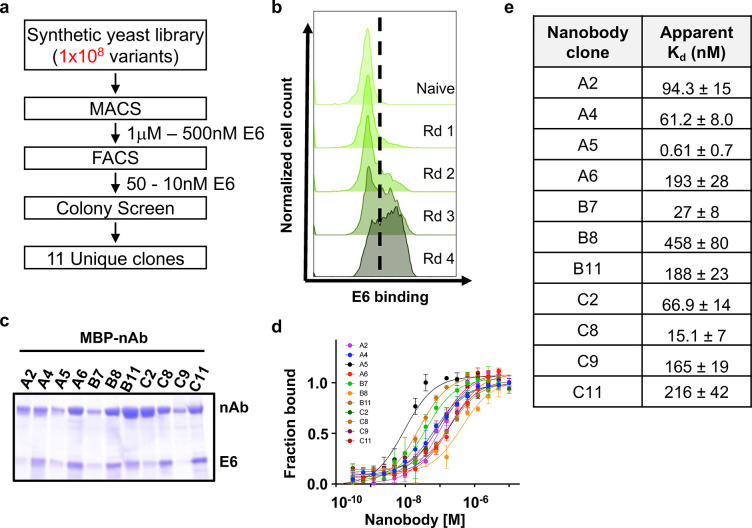
Figure 1.
Figure 1.. Generation and characterization of nanobodies to HPV16 E6.
E6-specific nanobodies were discovered through (a) rounds of selection from a synthetic yeast surface display library, starting with enriching through magnetic cell sorting (MACS), fluorescent cell sorting (FACS), colony screen, and sequencing. (b) Flow cytometry histogram plots of yeast stained with fluorescently labeled E6 protein (50nM) following each round (Rd) of selection indicating enrichment in E6 binding. (c) Coomassie stained gels for MBP-E6 nanobodies fused co-expressed with His-E6 and pulled down with amylose resin. (d) Microscale thermophoresis (MST) binding curves for nanobodies interacting with the E6-sfGFP probe. Each point represents means of triplicates; error bars indicate standard deviation (SD). (e) Averaged binding affinities (KD) for all nanobodies as determined in (d).
Figure 2.
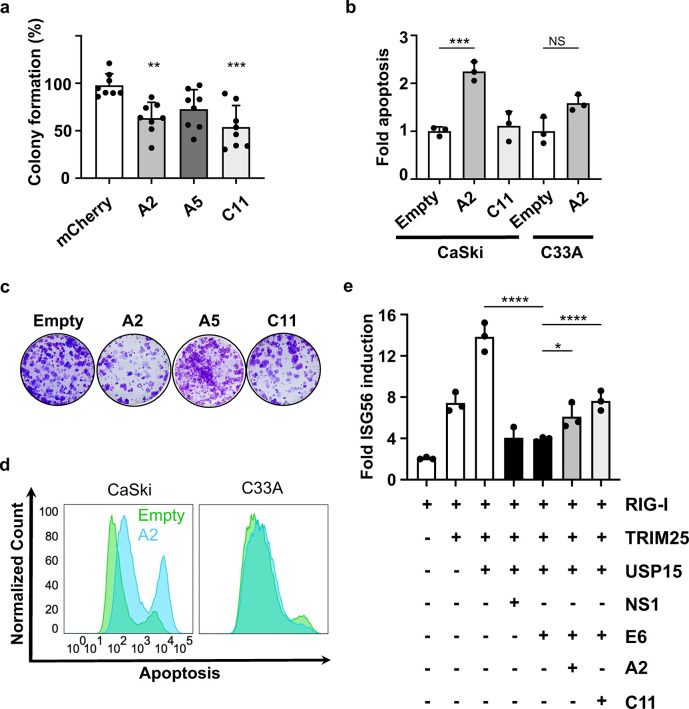
Figure 2.. Nanobodies reduce colony-forming ability and induce apoptosis in HPV(+) cells.
(a) Clonogenic assay. Colonies were stained with crystal violet and counted by Image J software. Colony-forming units were normalized to the mCherry control well in each plate and statistically analyzed using a one-way ANOVA (N=8). (b) Annexin V-APC/PI analysis of apoptosis compared to Empty control. Apoptosis was analyzed using FlowJo and analyzed with GraphPad using a one-way ANOVA (N=3). Error bars represent ± SD. (c) Colony forming assay images. (d) Annexin-V-APC/PI histograms for CaSki and C33A cell lines transfected with Empty control and A2 nanobody. (e) Dual Luciferase activity for ISG56 transcription. Luciferase activities shown are the means ± SD of triplicate samples for one of three representative experiments (N=3). (* p < 0.0332, ** p < 0.0021, *** p < 0.0002, **** p < 0.0001).
Figure 3.
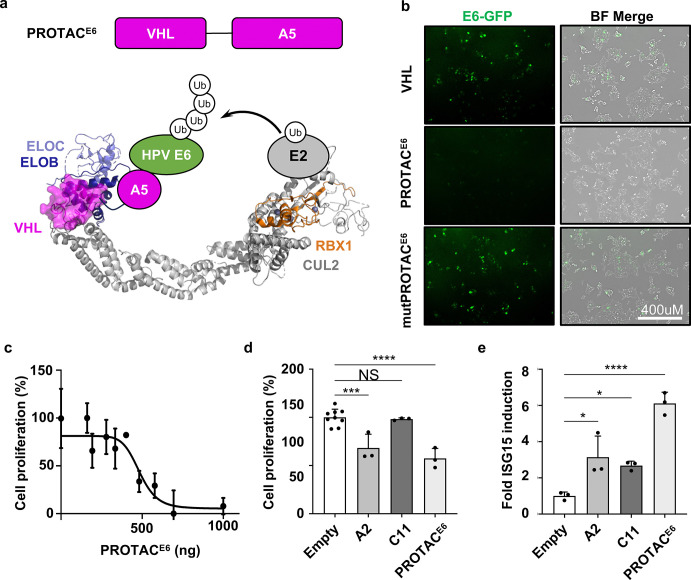
Figure 3.. BioPROTACE6 degrades E6, disrupts HPV(+) proliferation and induces ISG15 mRNA.
(a) Schematic representing PROTACE6 interacting with CUL2. (b) Confocal microscopic images of HEK293T cells transfected with E6-GFP alone, or in combination with VHL, PROTACE6(VHL-A5), or mutPROTACE6 (VHLTLK157-159AAA-A5) and imaged after 48 hours (N=3). (c) The dose-dependent titration of PROTACE6 was assessed for cellular proliferation in CaSki cells 48 hours post-transfection, using WST-1 reagent in a 96-well plate (N=4, error bars ± SD). A curve was fitted using Prism GraphPad. (d) CaSki cells transfected with Empty control, A2, C11, and PROTACE6 were assessed 48 hours later for cellular proliferation using WST. (e) Induction of ISG15 mRNA using RT-qPCR (N=3). A one-way ANOVA was performed, and error bars represent ± SD. (* p < 0.0332, ** p < 0.0021, *** p < 0.0002, **** p < 0.0001).
Figure 4.
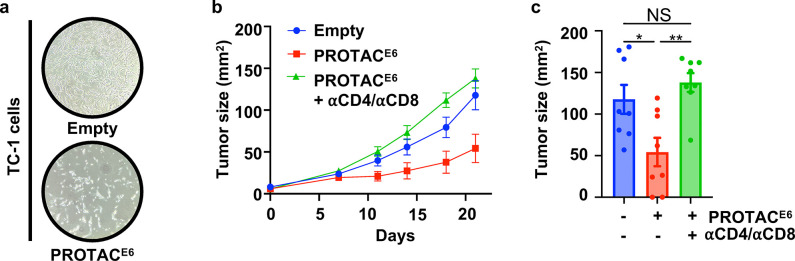
Figure 4.. PROTACE6 mediated the reduction in TC-1 tumor burden.
(a) Brightfield microscopic images of TC-1 cells transfected with Empty and PROTACE6 and imaged 48 hours later. (b) Tumor growth curves after treatment on days 7 and 14 with Empty (N=8) and PROTACE6 (N=16) and a subgroup on PROTACE6 treated with αCD4 and αCD8 (N=8). (c) Endpoint tumor size was graphed and analyzed using a one-way ANOVA and error bars represent ± SEM. (* p < 0.0332, ** p < 0.0021, *** p < 0.0002, **** p < 0.0001).

References

    1. Bruni L et al. Human Papillomavirus and Related Disease in the World. ICO/IARC Infromation Centre on HPV and Cancer (HPV Information Centre) (2023).
    1. eClinicalMedicine. Global strategy to eliminate cervical cancer as a public health problem: are we on track? eClinicalMedicine 55, (2023). - PMC - PubMed
    1. Bray F. et al. Global cancer statistics 2018: GLOBOCAN estimates of incidence and mortality worldwide for 36 cancers in 185 countries. CA: A Cancer Journal for Clinicians 68, 394–424 (2018). - PubMed
    1. Harden M. E. & Munger K. Human Papillomavirus Molecular Biology. Mutat Res 772, 3–12 (2017). - PMC - PubMed
    1. Yim E.-K. & Park J.-S. The Role of HPV E6 and E7 Oncoproteins in HPV-associated Cervical Carcinogenesis. Cancer Research and Treatment 37, 319–324 (2005). - PMC - PubMed

Publication types