


The influence of biophysical niche on tumor-associated macrophages in liver cancer
- PMID: 39470328
- PMCID: PMC11524744
- DOI: 10.1097/HC9.0000000000000569
The influence of biophysical niche on tumor-associated macrophages in liver cancer
Abstract
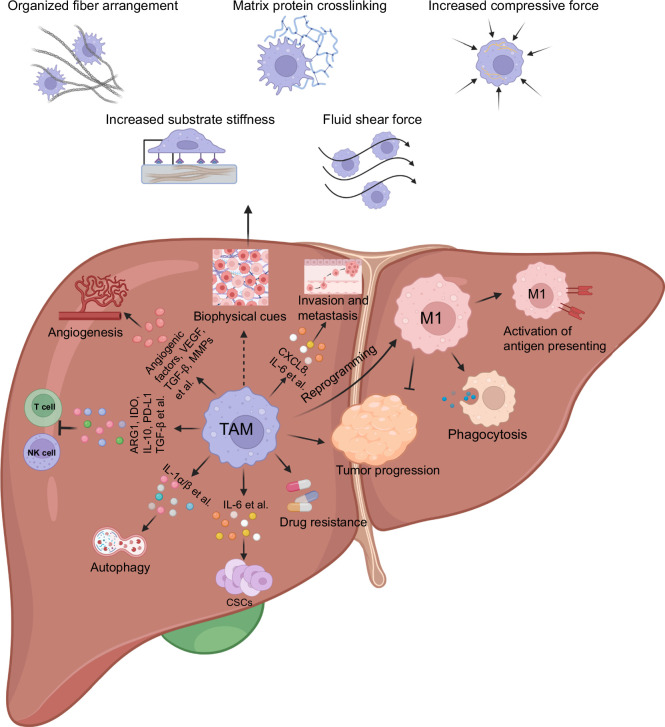
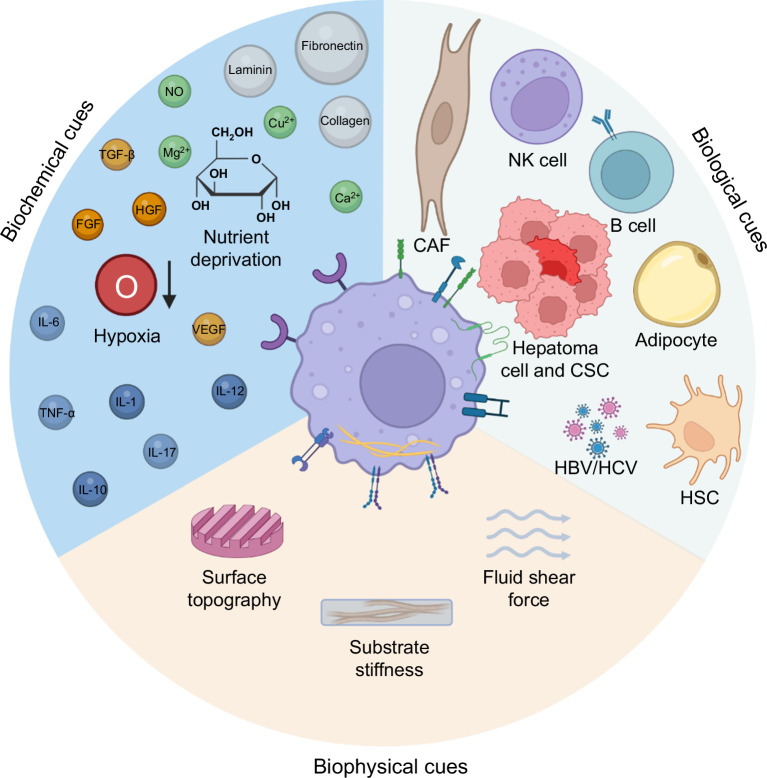
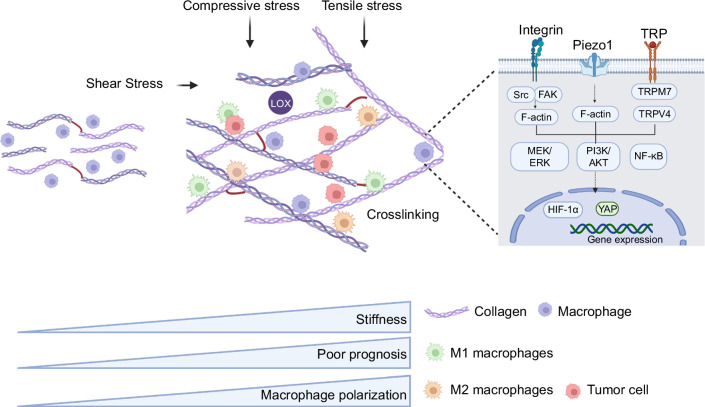
HCC, the most common type of primary liver cancer, is a leading cause of cancer-related mortality worldwide. Although the advancement of immunotherapies by immune checkpoint inhibitors (ICIs) that target programmed cell death 1 or programmed cell death 1-ligand 1 has revolutionized the treatment for HCC, the majority is still not beneficial. Accumulating evidence has pointed out that the potent immunosuppressive tumor microenvironment in HCC poses a great challenge to ICI therapeutic efficacy. As a key component in tumor microenvironment, tumor-associated macrophages (TAMs) play vital roles in HCC development, progression, and ICI low responsiveness. Mechanistically, TAM can promote cancer invasion and metastasis, angiogenesis, epithelial-mesenchymal transition, maintenance of stemness, and most importantly, immunosuppression. Targeting TAMs, therefore, represents an opportunity to enhance the ICI therapeutic efficacy in patients with HCC. While previous research has primarily focused on biochemical cues influencing macrophages, emerging evidence highlights the critical role of biophysical signals, such as substrate stiffness, topography, and external forces. In this review, we summarize the influence of biophysical characteristics within the tumor microenvironment that regulate the phenotype and function of TAMs in HCC pathogenesis and progression. We also explore the possible mechanisms and discuss the potential of manipulating biophysical cues in regulating TAM for HCC therapy. By gaining a deeper understanding of how macrophages sense and respond to mechanical forces, we may potentially usher in a path toward a curative approach for combinatory cancer immunotherapies.
Copyright © 2024 The Author(s). Published by Wolters Kluwer Health, Inc. on behalf of the American Association for the Study of Liver Diseases.
Conflict of interest statement
The authors have no conflicts to report.
Figures
References
-
- Bray FFJ, Soerjomataram I, Siegel RL, Torre LA, Jemal A. Global cancer statistics 2018: GLOBOCAN estimates of incidence and mortality worldwide for 36 cancers in 185 countries. CA Cancer J Clin. 2018;68:394–424. - PubMed
-
- Prieto JMI, Sangro B. Immunological landscape and immunotherapy of hepatocellular carcinoma. Nat Rev Gastroenterol Hepatol. 2015;12:681–700. - PubMed
Publication types
MeSH terms
Substances
LinkOut - more resources
Full Text Sources
Medical
Research Materials
