. 2024 Oct 29;20(10):e1012627.
doi: 10.1371/journal.ppat.1012627. eCollection 2024 Oct.

A novel 4-aminoquinoline chemotype with multistage antimalarial activity and lack of cross-resistance with PfCRT and PfMDR1 mutants

Affiliations

A novel 4-aminoquinoline chemotype with multistage antimalarial activity and lack of cross-resistance with PfCRT and PfMDR1 mutants

Letícia Tiburcio Ferreira et al. PLoS Pathog. .

Abstract

Artemisinin-based combination therapy (ACT) is the mainstay of effective treatment of Plasmodium falciparum malaria. However, the long-term utility of ACTs is imperiled by widespread partial artemisinin resistance in Southeast Asia and its recent emergence in parts of East Africa. This underscores the need to identify chemotypes with new modes of action (MoAs) to circumvent resistance to ACTs. In this study, we characterized the asexual blood stage antiplasmodial activity and resistance mechanisms of LDT-623, a 4-aminoquinoline (4-AQ). We also detected LDT-623 activity against multiple stages (liver schizonts, stage IV-V gametocytes, and ookinetes) of Plasmodium's life cycle, a feature unlike other 4-AQs such as chloroquine (CQ) and piperaquine (PPQ). Using heme fractionation profiling and drug uptake studies in PfCRT-containing proteoliposomes, we observed inhibition of hemozoin formation and PfCRT-mediated transport, which constitute characteristic features of 4-AQs' MoA. We also found minimal cross-resistance to LDT-623 in a panel of mutant pfcrt or pfmdr1 lines, but not the PfCRT F145I mutant that is highly resistant to PPQ resistance yet is very unfit. No P. falciparum parasites were recovered in an in vitro resistance selection study, suggesting a high barrier for resistance to emerge. Finally, a competitive growth assay comprising >50 barcoded parasite lines with mutated resistance mediators or major drug targets found no evidence of cross-resistance. Our findings support further exploration of this promising 4-AQ.


Conflict of interest statement

The authors have declared that no competing interests exist.

Figures
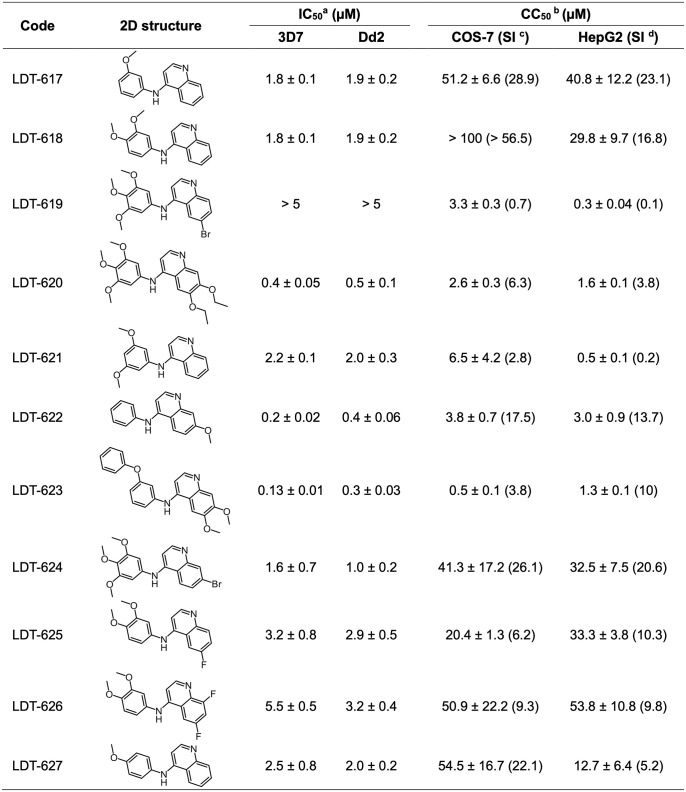
Fig 1
Fig 1. In vitro activity of LDT-611 analogs against P. falciparum asexual blood stages and mammalian cell lines.
a IC50: Mean half-maximal inhibitory concentration and their respective standard errors, assayed against P. falciparum 3D7 and Dd2 ABS parasites (N = 3); b CC50: Mean half-maximal cytotoxic concentration against mammalian cell lines (N = 3); c SI: Selectivity index was calculated by dividing the CC50 (against COS-7) by the IC50 (against 3D7); d SI: Selectivity index was calculated by dividing the CC50 (against HepG2) by the IC50 (against 3D7). Data are represented by mean ± standard deviation.
Fig 2
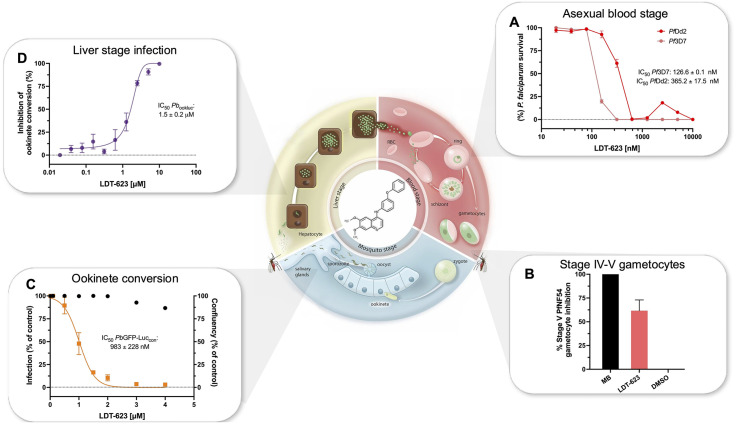
Fig 2. Antiplasmodial activity of LDT-623 throughout the Plasmodium lifecycle.
(A) LDT-623 in vitro activity against ABS P. falciparum CQ-sensitive 3D7 and CQ-resistant Dd2 strains. Mean IC50: 126.6 and 365.2 nM, respectively. Parasite survival was calculated as a percentage of untreated control. Data represent mean ± SEM (N = 2–3 independent assays, with technical duplicates). (B) Percent activity of LDT-623 against late-stage P. falciparum NF54 gametocytes at 5 μM. Gametocyte viability was assessed via bioluminescence. Data represent mean ± SEM (N = 3). MB: methylene blue; DMSO: dimethyl sulfoxide. (C) Dose-response curve for LDT-623 concentration versus inhibition of P. berghei ookinete formation compared to vehicle-treated control. IC50: 1.5 μM. Data represent mean ± SEM (N = 7). (D) Pre-erythrocytic activity of LDT-623. IC50: 983 nM. Dose-response curve represents hepatic stage infection as a percentage of drug-free control assessed by luminescence 48h after infection of Huh-7 cells with P. berghei sporozoites, while black dots express host cell confluency. Data represent mean ± SEM (N = 2).
Fig 3
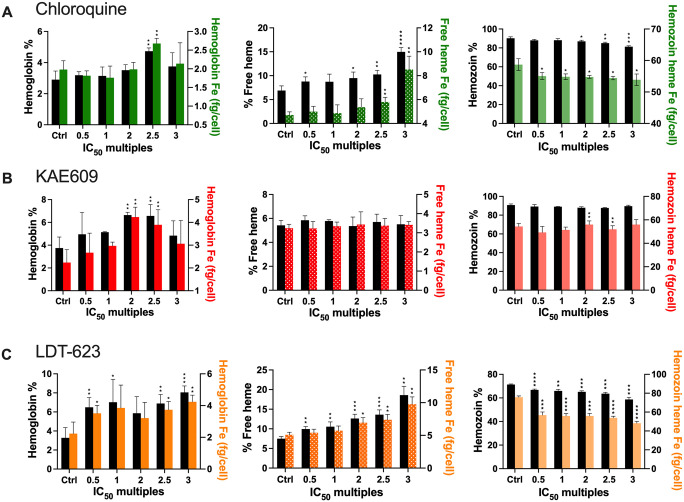
Fig 3. LDT-623 interferes with the hemozoin formation pathway within the digestive vacuole.
(A) Parasites treated with LDT-623 display a more pronounced heme fractionation profile than CQ. (B) Heme fractionation profile of CQ-treated P. falciparum 3D7 parasites showing an increase in free heme and a decrease in Hz, as determined 32 h post-drug exposure. (C) KAE609 treatment did not interfere with heme or Hz accumulation. Percent levels of heme species (hemoglobin, free heme, or hemozoin) are represented by the black bars on the left y-axis, and absolute heme amounts (hemoglobin Fe, free heme Fe, or hemozoin heme Fe) determined from a heme standard curve and measured in femtograms per cell are represented in different colors (LDT-623 in red, CQ in orange, and KAE609 in green) on the right y-axis. Statistical comparisons of the drug-treated lines with their untreated controls were performed using two-tailed Student’s tests (with Welch’s correction). *p < 0.05; **p < 0.01; ***p < 0.001; ****p <0.0001.
Fig 4
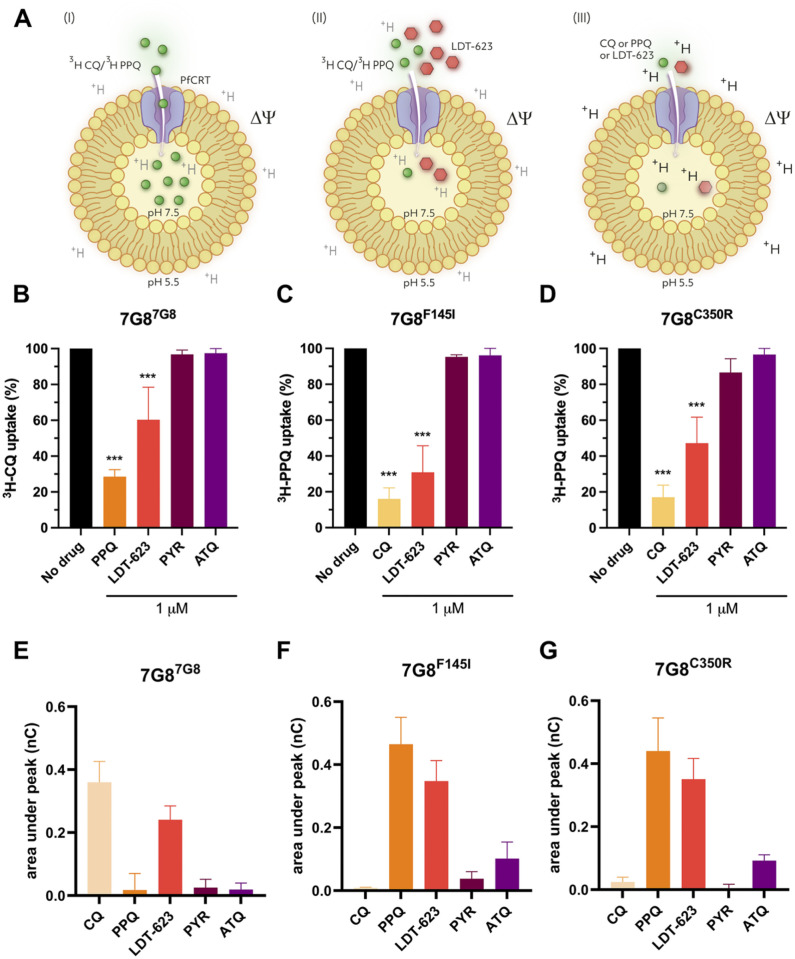
Fig 4. Uptake of the 4-AQs CQ, PPQ, and LDT-623 in PfCRT-containing proteoliposomes.
(A) Schematic representation of the drug uptake assay highlighting the “inside-out” digestive vacuole aspect of PfCRT-containing proteoliposomes. Uptake of radiolabeled CQ or PPQ in the absence (I) or presence (II) of LDT-623 using the accumulation of radiolabeled CQ or PPQ as read-out or measuring 4-AQ transport-associated current fluxes (III) with electrophysiology. Uptake of 100 nM [3H]CQ (B) or [3H]PPQ (C-D) measured for 30 seconds in proteoliposomes containing the indicated PfCRT variants normalized to control liposomes. Data represent mean ± SEM of N = 3 independent experiments with n = 7 technical replicates each. (E-G) Transport of 10 μM CQ, PPQ, LDT-623, PYR, or ATQ by proteoliposomes containing indicated PfCRT variants using the SURFE2R N1-based SSM electrophysiological measurements. Data represent PfCRT isoform-specific currents (corrected for the non-specific signal measured in control liposomes lacking PfCRT) and are the mean ± SEM of N = 3 independent experiments with n = 6–9 technical replicates each.
Fig 5
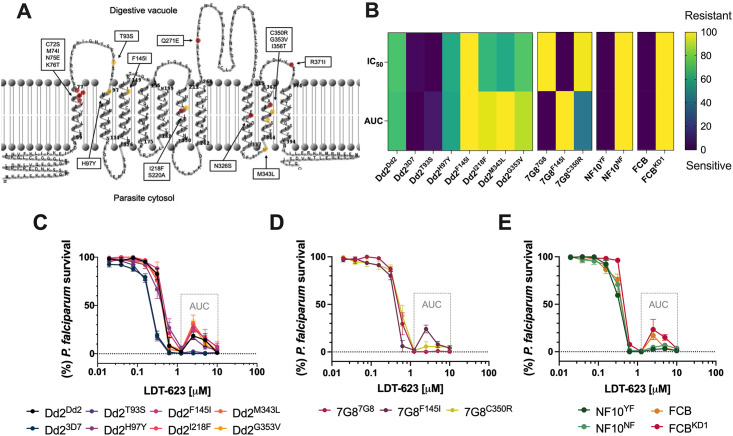
Fig 5. LDT-623 dose–response curves illustrate distinct variant PfCRT-mediated resistance profiles.
(A) Mapping of CQ (red) and PPQ (yellow) resistance-conferring PfCRT amino acid substitutions on the 2D structure of PfCRT3D7 using TMRPres2D [59]. (B) Cross-resistance heatmap of IC50 and AUC values for LDT-623 across pfcrt and pfmdr1-edited P. falciparum lines (N = 2–4). Data were normalized across parameters and scaled into a 0–100 interval for heatmap coloring. (C-D) Dose-response curves for pfcrt-edited clones. Data show mean ± SEM percent parasite survival (relative to drug-free controls) as a function of LDT-623 concentration (N = 2–4). (D) Dose-response curves for pfmdr1-edited clones. Data show mean ± SEM percent parasite survival (relative to drug-free controls) as a function of LDT-623 concentration (N = 3).
Fig 6
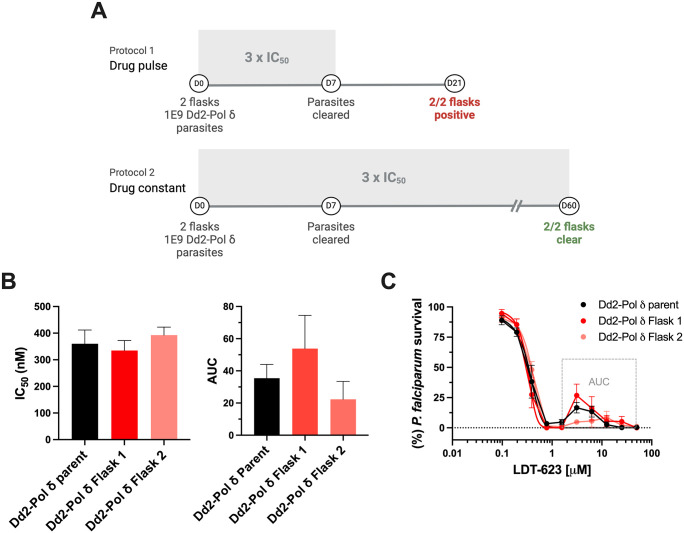
Fig 6. LDT-623 does not readily select for resistance in vitro.
(A) Selection of resistance to LDT-623 using the Dd2-Polδ line. (A) Parasites were cultured in the presence of 1 μM LDT-623 (~3 × IC50). Parasite inoculum was set at 1 × 10⁹ in duplicate flasks. Shading indicated the presence of drug pressure in the protocol. (B) LDT-623 IC50 and AUC values for parental and recrudescent Dd2-Polδ lines under LDT-623 pressure. (C) Dose-response curves of LDT-623 for parental line (Dd2-Polδ) versus drug-pressured lines (Dd2-Polδ Flask 1 and Dd2-Polδ Flask 2). Arrow represents the 3 × IC50 concentration used for resistance selection. Data represent mean ± SEM (N = 5). Statistical significance was determined by Mann-Whitney U tests, *p<0.05.

References

    1. World Health Organization. World Malaria Report 2023. 2023.
    1. Ariey F, Witkowski B, Amaratunga C, Beghain J, Langlois A-C, Khim N, et al.. A molecular marker of artemisinin-resistant Plasmodium falciparum malaria. Nature. 2014;57: 742–68. doi: 10.1038/nature12876 - DOI - PMC - PubMed
    1. van der Pluijm RW, Imwong M, Chau NH, Hoa NT, Thuy-Nhien NT, Thanh NV, et al.. Determinants of dihydroartemisinin-piperaquine treatment failure in Plasmodium falciparum malaria in Cambodia, Thailand, and Vietnam: a prospective clinical, pharmacological, and genetic study. Lancet Infect Dis. 2019;19: 952–61. doi: 10.1016/S1473-3099(19)30391-3 - DOI - PMC - PubMed
    1. Imwong M, Dhorda M, Myo Tun K, Thu AM, Phyo AP, Proux S, et al.. Molecular epidemiology of resistance to antimalarial drugs in the Greater Mekong subregion: an observational study. Lancet Infect Dis. 2020;20: 1470–80. doi: 10.1016/S1473-3099(20)30228-0 - DOI - PMC - PubMed
    1. Conrad MD, Asua V, Garg S, Giesbrecht D, Niaré K, Smith S, et al.. Evolution of partial resistance to artemisinins in malaria parasites in Uganda. N Engl J Med. 2023;389: 722–32. doi: 10.1056/NEJMoa2211803 - DOI - PMC - PubMed

MeSH terms

LinkOut - more resources