


High rates of return to sport after suprascapular nerve decompression: an updated systematic review
- PMID: 39474168
- PMCID: PMC11514078
- DOI: 10.1016/j.xrrt.2024.05.007
High rates of return to sport after suprascapular nerve decompression: an updated systematic review
Abstract
Background: Suprascapular nerve decompression (SSND) remains a controversial procedure. In 2018, Momaya et al published the first systematic review of SSND noting satisfactory outcomes with low rates of complications; however, numerous studies published since have noted no benefit in routinely adding SSND to other arthroscopic surgeries, contributing to existing contention regarding the procedure. The purpose of this study is to provide an updated assessment of outcomes after SSND.
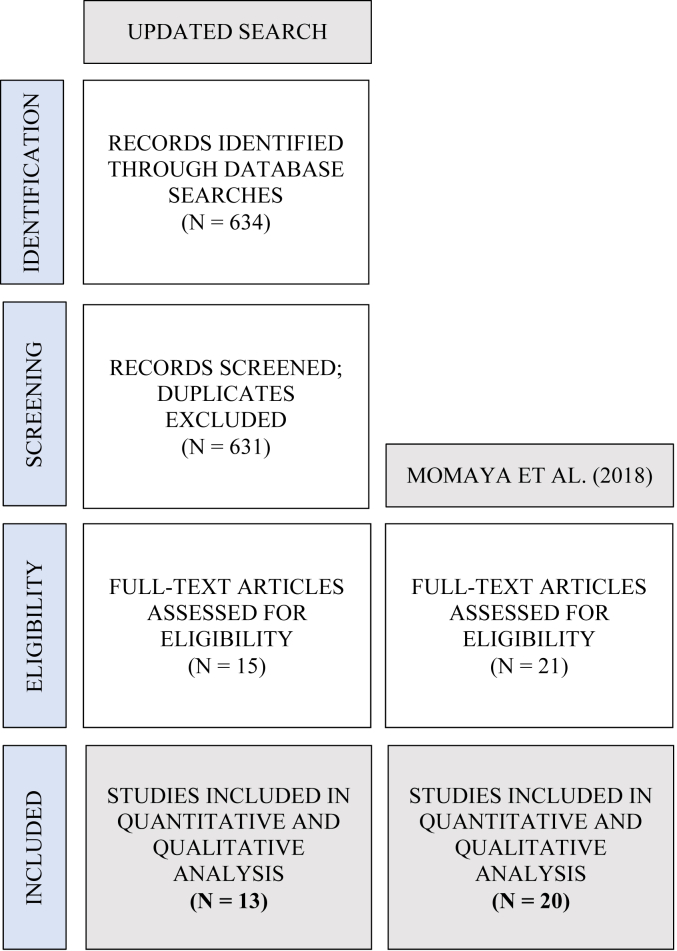
Methods: To conduct this updated systematic review, a search of PubMed (MEDLINE) for relevant studies published prior to January 21, 2023 was conducted. Outcomes including patient-reported clinical outcomes, return to sport, preoperative and postoperative electrodiagnostic testing, and adverse events were collected and pooled for assessment. Studies were eligible for inclusion if they met Momaya et al's inclusion criteria and/or reported outcomes following SSND at either the suprascapular notch or spinoglenoid notch.
Results: In total, 730 patients from 33 studies were eligible for inclusion. All patient-reported outcome measure scores including American Shoulder Elbow Surgeon Standardized Shoulder Assessment; Constant-Murley score; Disabilities of the Arm, Shoulder, and Hand; Subjective Shoulder Value; University of California-Los Angeles shoulder; and visual analog scale pain scores improved significantly postoperatively, with improvements ranging from 53.5% to 102.6% of preoperative values. Ultimately, 98% (n = 90/92) of patients returned to sport or military duty and 96% of these patients returned at their previous level of activity (n = 48/50) without heterogeneity among rates between studies (P = .176, P = .238, respectively). Preoperative electrodiagnostic testing was conducted in 93% of patients, and 90% had associated abnormal findings. Continued symptoms were noted among 12% of patients (n = 39/322) with significantly different rates observed between studies. Complications from operative management not limited to SSND occurred in 11% of patients (n = 64/576) and reoperations occurred in 3.3% of patients (n = 15/455).
Conclusion: Suprascapular neuropathy treated with SSND significantly improves patient-reported outcomes and is noninferior to similar procedures without SSND. Appropriate clinical diagnosis of suprascapular neuropathy is required as opposed to a routine adjunct procedure with other arthroscopic shoulder surgery. Ultimately, SSND is associated with high rates of return to sport and relatively low rates of adverse events; however, the risk of continued symptoms and electrodiagnostic test-related complications is an important point on preoperative counseling.
Keywords: Rotator cuff; Shoulder arthroscopy; Spinoglenoid notch; Suprascapular nerve; Suprascapular neuropathy; Suprascapular notch.
© 2024 The Authors.
References
-
- Bilsel K., Erdil M., Elmadag M., Ozden V.E., Celik D., Tuncay I. The effect of infraspinatus hypotrophy and weakness on the arthroscopic treatment of spinoglenoid notch cyst associated with superior labrum anterior-to-posterior lesions. Knee Surg Sports Traumatol Arthrosc. 2014;22:2209–2215. doi: 10.1007/s00167-013-2469-0. - DOI - PubMed
Publication types
LinkOut - more resources
Full Text Sources
Miscellaneous
