


Ligand presentation controls collective MSC response to matrix stress relaxation in hybrid PEG-HA hydrogels
- PMID: 39474314
- PMCID: PMC11513683
- DOI: 10.1016/j.bioactmat.2024.10.007
Ligand presentation controls collective MSC response to matrix stress relaxation in hybrid PEG-HA hydrogels
Abstract
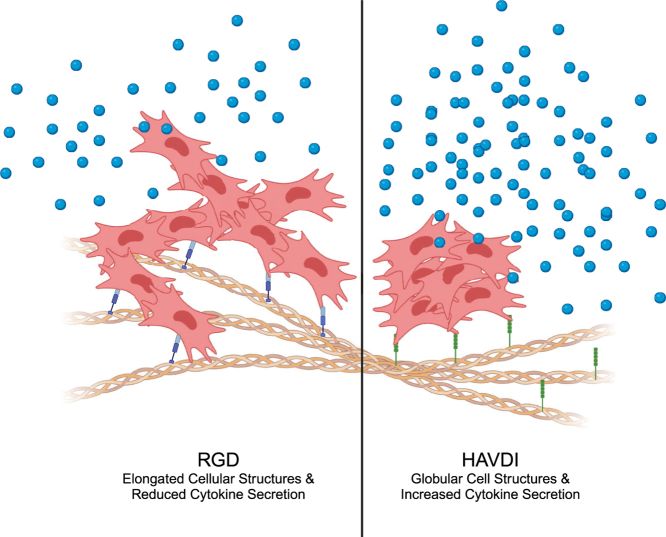
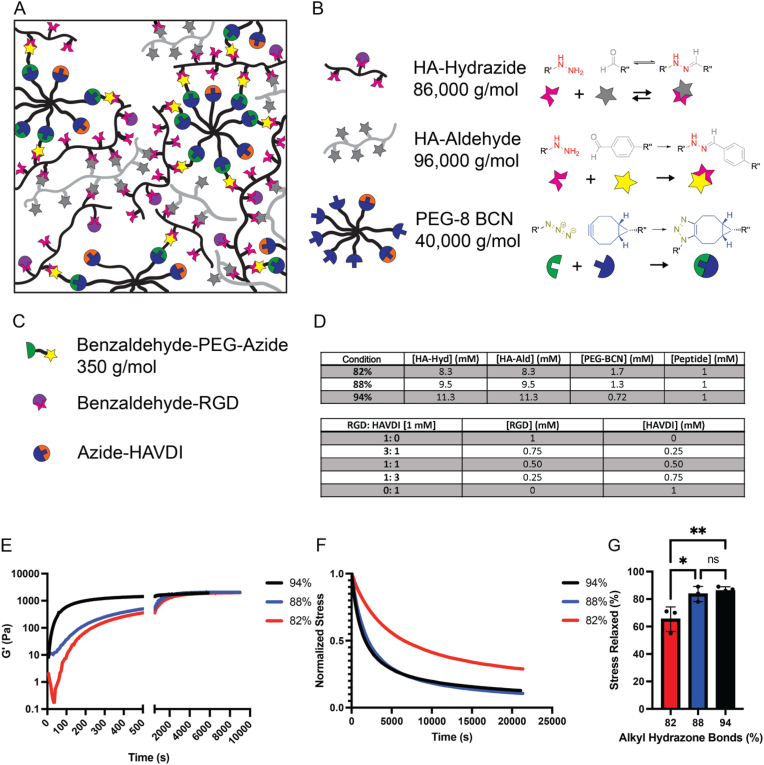
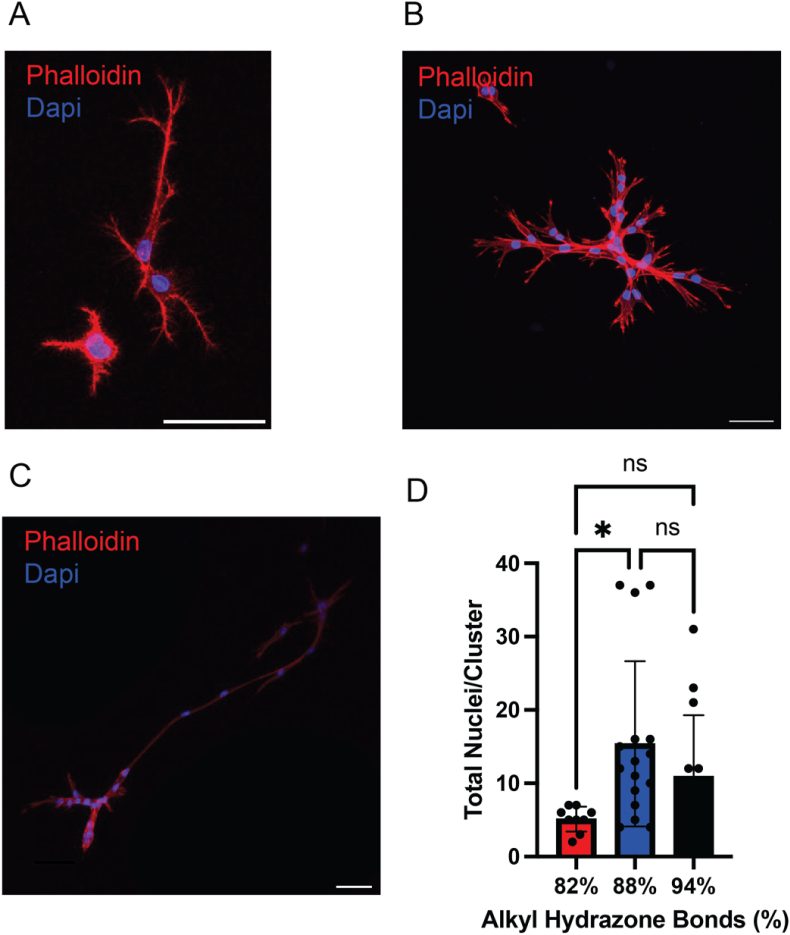
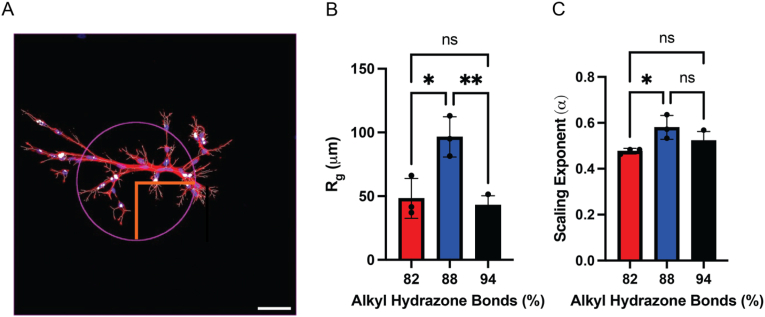
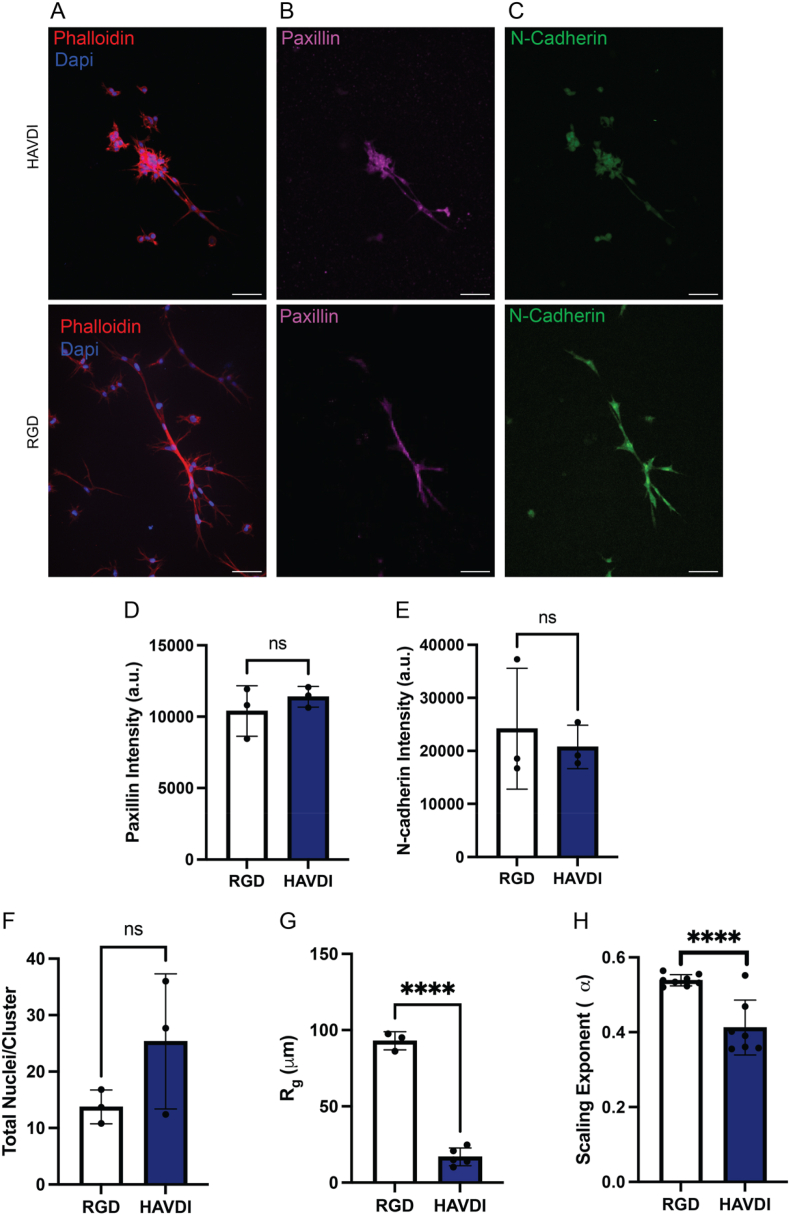
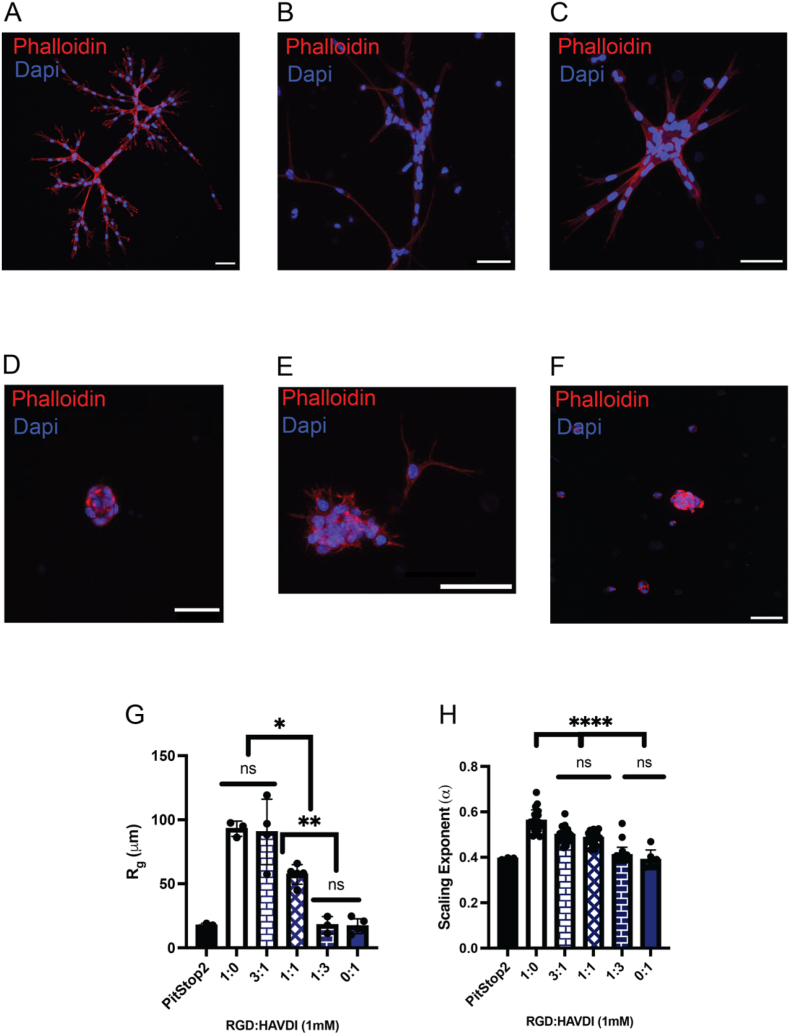
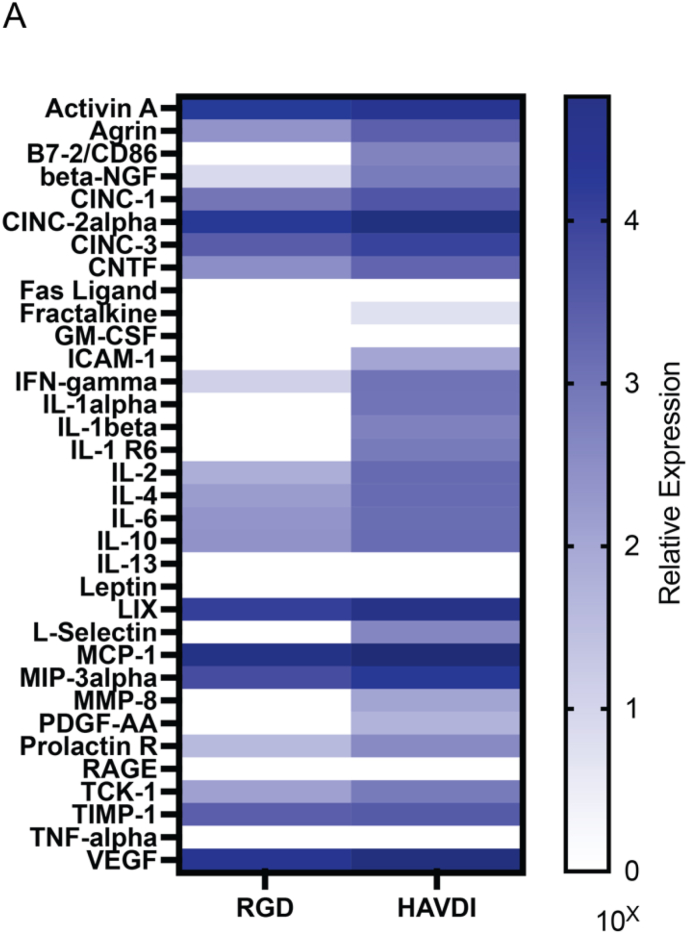
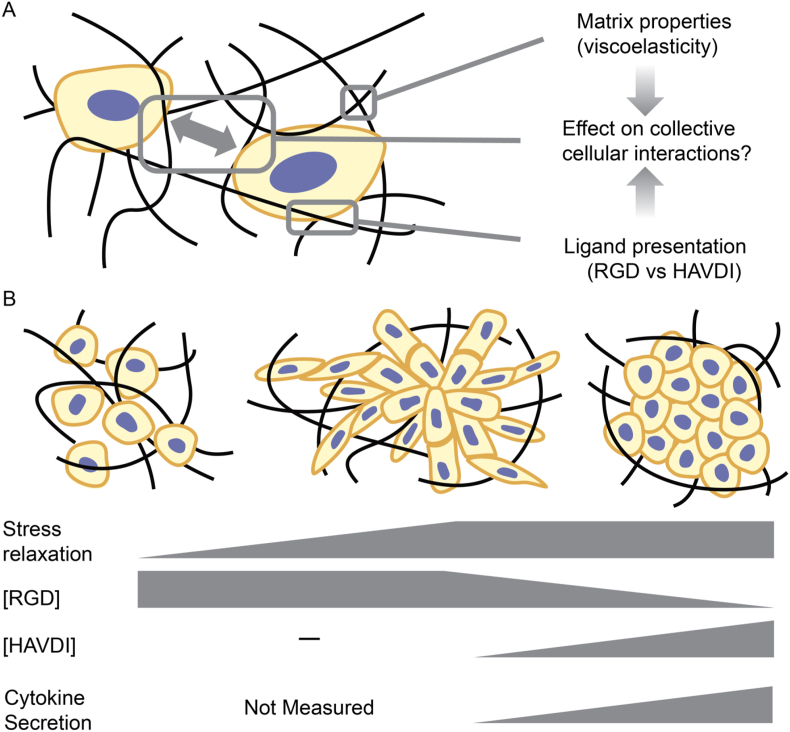
Cell interactions with the extracellular matrix (ECM) influence intracellular signaling pathways related to proliferation, differentiation, and secretion, amongst other functions. Herein, bone-marrow derived mesenchymal stromal cells (MSCs) are encapsulated in a hydrazone crosslinked hyaluronic acid (HA) hydrogel, and the extent of stress relaxation is controlled by systemic introduction of irreversible triazole crosslinks. MSCs form elongated multicellular structures within hydrogels containing RGD peptide and formulated with elastic composition slightly higher than the hydrogel percolation threshold (12 % triazole, 88 % hydrazone). A scaling analysis is presented ( ∼Nα) to quantify cell-material interactions within these structures with the scaling exponent (α) describing either elongated (0.66) or globular (0.33) structures. Cellular interactions with the material were controlled through peptides to present integrin binding ECM cues (RGD) or cadherin binding cell-cell cues (HAVDI) and MSCs were observed to form highly elongated structures in RGD containing hydrogels ( ), whereases collapsed structures were observed within HAVDI containing hydrogels ( ). Finally, cytokine secretion was investigated, and a global increase in secreted cytokines was observed for collapsed structures compared to elongated. Taken together, this study presents a novel method to characterize cellular interactions within a stress relaxing hydrogel where altered cluster morphology imparts changes to cluster secretory profiles.
Keywords: Hydrogels; Ligand interactions; Mesenchymal stromal cells; Stress relaxation.
© 2024 The Authors.
Conflict of interest statement
The authors declare the following financial interests/personal relationships which may be considered as potential competing interests: Kristi Anseth has patent compositions and methods for making and using hybrid network hydrogels pending to the University of Colorado. Alexandra Borelli has patent compositions and methods for making and using hybrid network hydrogels pending to The University of Colorado. Mark Young has patent compositions and methods for making and using hybrid network hydrogels pending to The University of Colorado. Other authors declare that they have no known competing financial interests or personal relationships that could have appeared to influence the work reported in this paper.
Figures
References
Grants and funding
LinkOut - more resources
Full Text Sources
