


Differences in Toxicokinetics and Maternal Transfer between Lipophilic and Proteinophilic Halogenated Organic Pollutants in Laying Hens
- PMID: 39474435
- PMCID: PMC11503964
- DOI: 10.1021/envhealth.4c00053
Differences in Toxicokinetics and Maternal Transfer between Lipophilic and Proteinophilic Halogenated Organic Pollutants in Laying Hens
Abstract
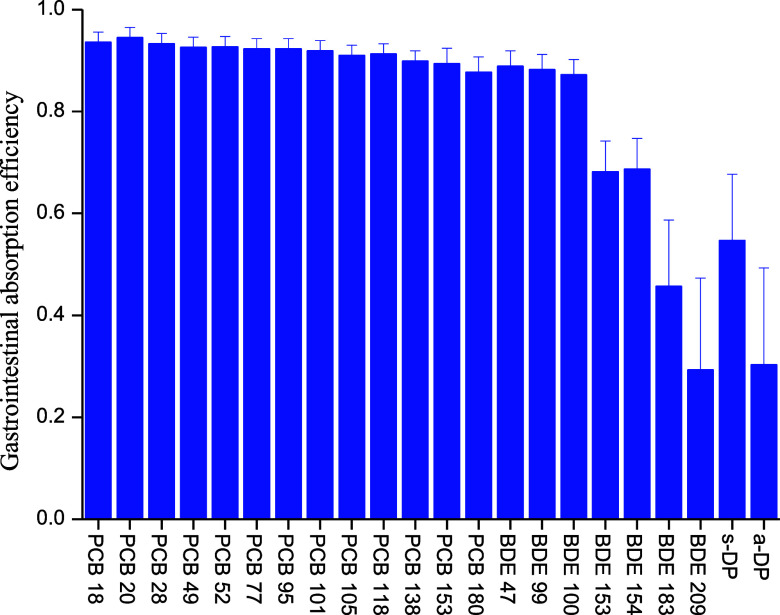
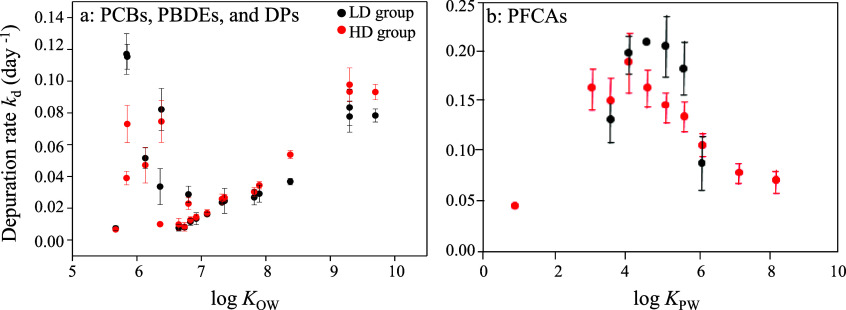
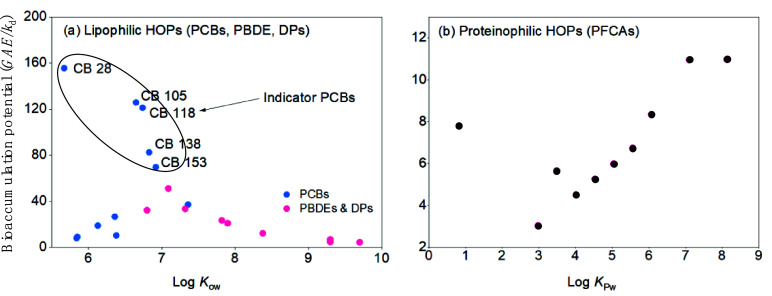
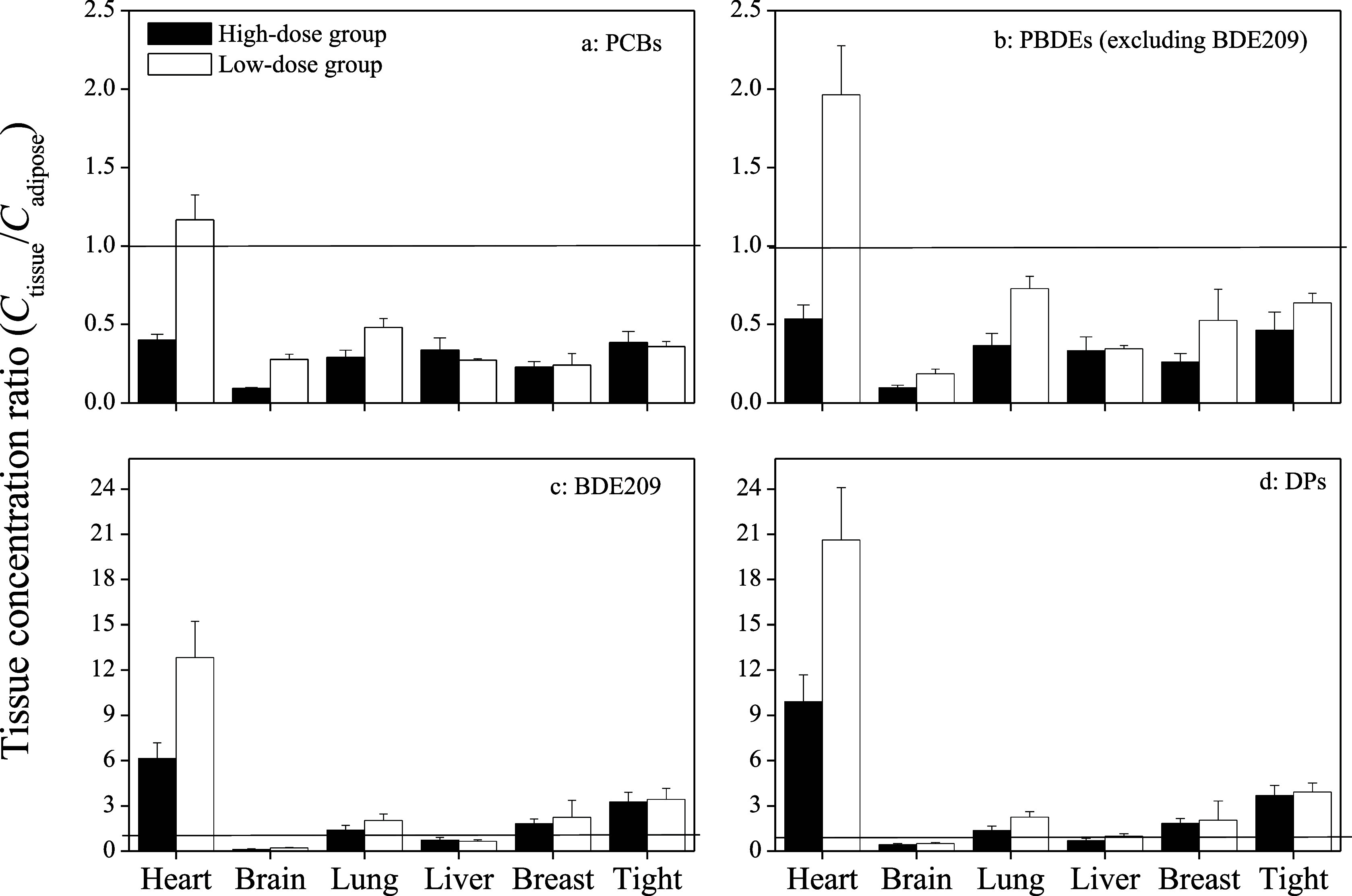
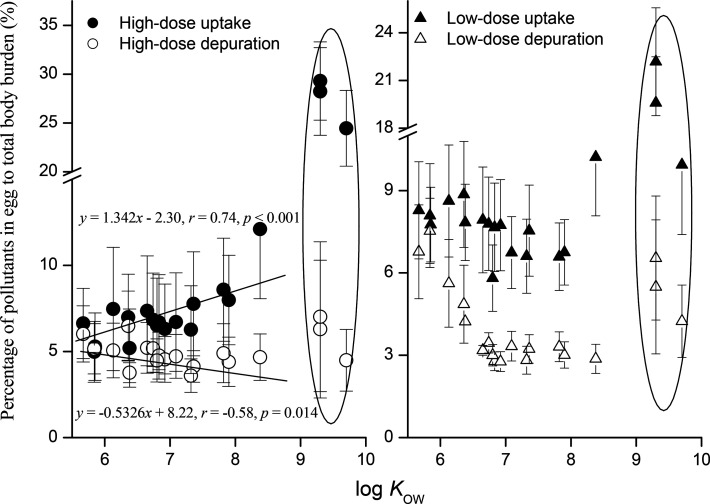
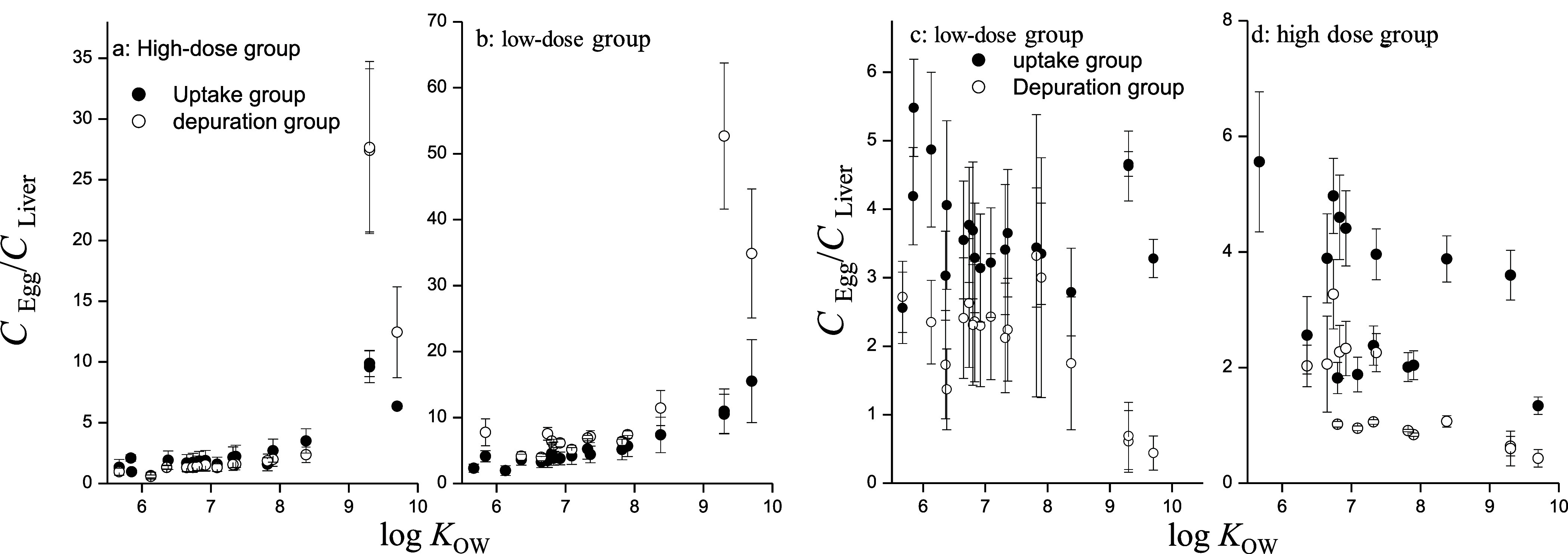
In this study, we conducted exposure experiments on egg-laying hens to explore the toxicokinetics and maternal transfer characteristics of lipophilic and proteinophilic halogenated organic pollutants (HOPs). The lipophilic HOPs included polychlorinated biphenyls (PCBs), polybrominated diphenyl ethers (PBDEs), and dechlorane plus (DPs), while the proteinophilic HOPs included perfluorocarboxylic acids (PFCAs). The results revealed that most of lipophilic HOPs exhibit lower depuration rate (k d) than PFCAs. The k d of lipophilic HOPs correlated with the octanol-water partition coefficient (log K OW) values in a V-shaped curve, whereas that of PFCAs correlated with the protein-water partition coefficient (log K PW) values in an inverted V-shaped curve. The depuration rate, rather than the uptake rate, was a leading factor in determining the bioaccumulation potential of HOPs in hens. Although the dominant factors determining the tissue distribution of the two types of compounds were explicit (fats vs phospholipids), chemical-specific tissue distribution was still observed. The egg-maternal concentration ratio was dependent on the exposure status, concentration, and maternal tissue choice. Using a single maternal tissue may not be an appropriate method for assessing chemical maternal transfer potential. PFCAs have a greater maternal transfer potential (>80% of the total body burden) than lipophilic HOPs (approximately 30% for BDE209 and DPs, and less than 10% for the others). Their lipophilic and partly proteinophilic nature makes the toxicokinetics and maternal transfer characteristics of BDE209 and DPs different from those of other lipophilic HOPs. These findings are crucial for enhancing our understanding of the behavior and fate of HOPs in egg-laying hens.
© 2024 The Authors. Co-published by Research Center for Eco-Environmental Sciences, Chinese Academy of Sciences, and American Chemical Society.
Conflict of interest statement
The authors declare no competing financial interest.
Figures
References
LinkOut - more resources
Full Text Sources