


Sex-related differences in vitamin D testing in the Veneto Region, Italy: a retrospective analysis from 2005 to 2016
- PMID: 39477860
- PMCID: PMC11525240
- DOI: 10.1007/s11657-024-01460-w
Sex-related differences in vitamin D testing in the Veneto Region, Italy: a retrospective analysis from 2005 to 2016
Abstract
A retrospective analysis was performed to evaluate the frequency of vitamin D blood testing in individuals from the Padua province, Veneto, Italy from 2005 to 2016. A significant increase in the frequency of vitamin D blood tests, particularly in females was observed and in individuals with severe vitamin D deficiency (Class I).
Purpose: Vitamin D deficiency has been linked to negative health outcomes that extend beyond bone-related conditions. The frequency of vitamin D blood testing in residents from the Padua province, (Veneto, Italy) from 2005 to 2016 was evaluated.
Methods: Data were retrospectively retrieved from blood test databases (Laboratory Medicine Unit, Padua University Hospital) and information on number of vitamin D blood tests performed on residents from 2005 to 2016 was collected. Data were stratified by sex and ten birth cohorts from 1901 to 2016. Blood tests were classified into five vitamin D classes: I < 50 nmol/L, II 50-74.9 nmol/L, III 75-149 nmol/L, IV 150-250 nmol/L, and V > 250-1000 nmol/L. Blood test trends were analyzed as blood test rate and vitamin D class rate/resident population. Population analysis was analyzed by incidence rates and stratified by vitamin D class.
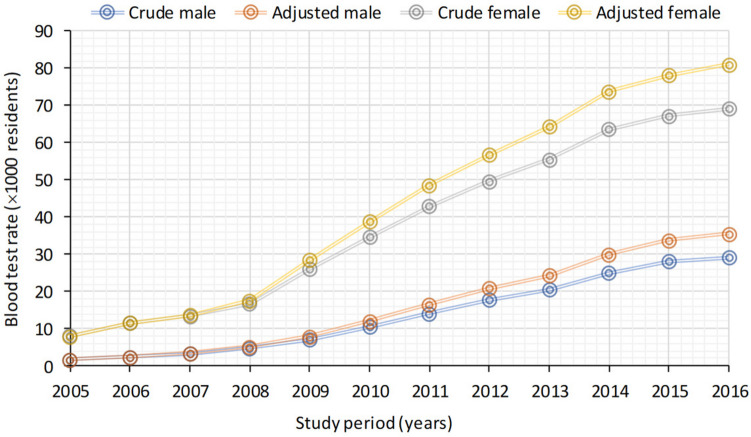
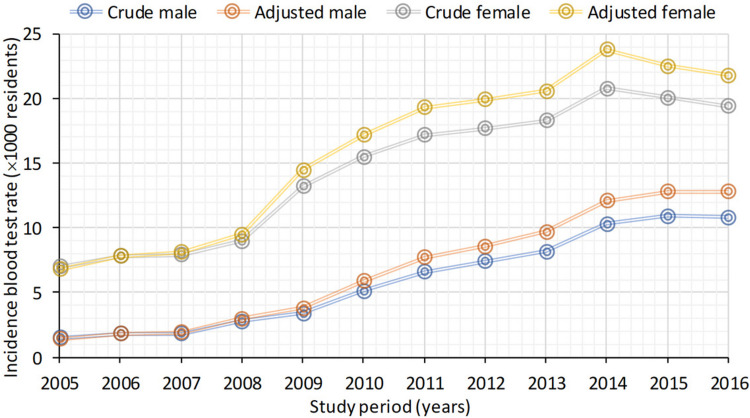
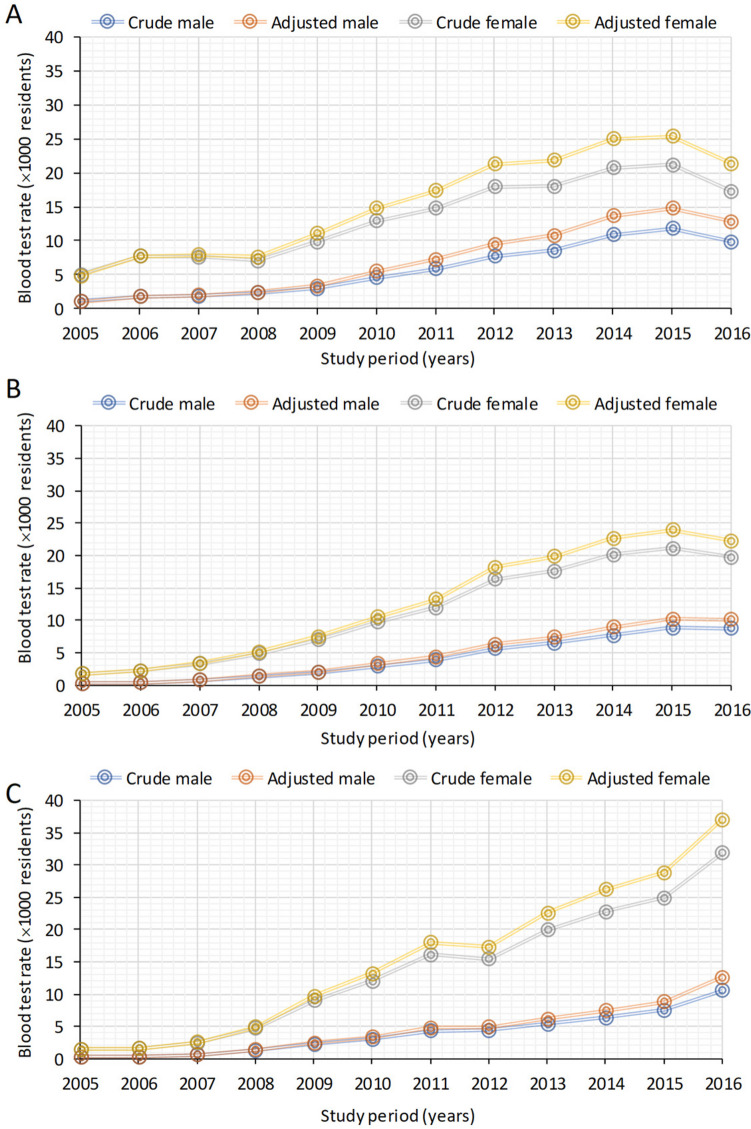
Results: 293,013 vitamin D blood tests were conducted between 2005 and 2016 across 10 birth cohorts. Females accounted for 75% of tests and fewer were conducted in the youngest and oldest birth cohorts. Sex differences in vitamin D blood test frequency were observed; adjusted rates ranging from 1.7 to 35.6% for males and 8 to 81% for females from 2005 to 2016. Crude incidence rates (per 1000 from 2005 to 2016) varied from 1.5 to 10.8‰ for males and 7 to 19.4‰ for females. Crude blood test rates for vitamin D deficiency (Class I) increased from 1.1 to 9.9‰ in 2016 for males and 5 to 17.3‰ for females. Crude incidence rates (from 2005 to 2016) for Class I were 9.7-57.1‰ in males and 43.6-92.4‰ in females.
Conclusions: These findings highlight sex-related differences in vitamin D testing, providing valuable insight for healthcare planning.
Keywords: Osteoporosis; Sex; Supplementation; Vitamin D.
© 2024. The Author(s).
Conflict of interest statement
None.
Figures

References
-
- Aoun A, Maalouf J, Fahed M, El Jabbour F (2020) When and how to diagnose and treat vitamin D deficiency in adults: a practical and clinical update. J Diet Suppl 17:336–354. 10.1080/19390211.2019.1577935 - PubMed
-
- DeLuca HF (2016) Chapter one - vitamin D: historical overview. In: Litwack G (ed) Vitamins & Hormones. Academic Press, pp 1–20 - PubMed
MeSH terms
Substances
LinkOut - more resources
Full Text Sources
Medical
