


Methods of behavioral testing in dogs: a scoping review and analysis of test stimuli
- PMID: 39479206
- PMCID: PMC11521878
- DOI: 10.3389/fvets.2024.1455574
Methods of behavioral testing in dogs: a scoping review and analysis of test stimuli
Abstract
Background: Behavioral testing is widely used to measure individual differences in behavior and cognition among dogs and predict underlying psychological traits. However, the diverse applications, methodological variability, and lack of standardization in canine behavioral testing has posed challenges for researchers and practitioners seeking to use these tests. To address these complexities, this review sought to synthesize and describe behavioral testing methods by creating a framework that uses a "dog-centric" perspective to categorize the test stimuli used to elicit responses from dogs.
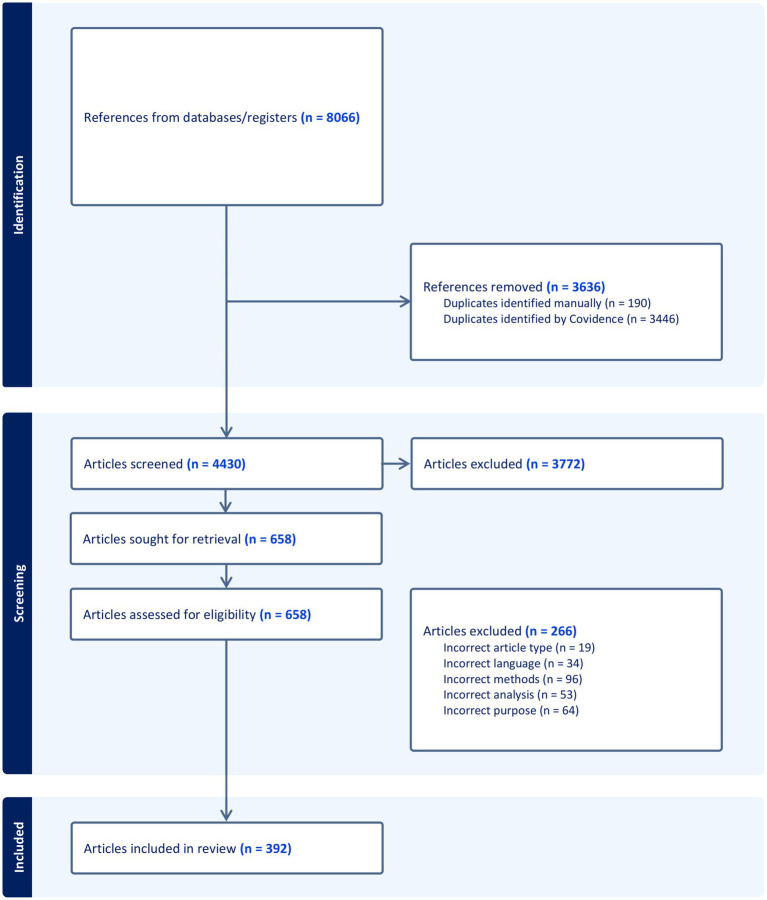
Methods: A scoping review was conducted to identify scientific literature that has reported behavioral testing to assess psychological traits in dogs. Five online databases were systematically searched. Following this, an inductive content analysis was conducted to evaluate and summarize the behavioral testing methods in the literature.
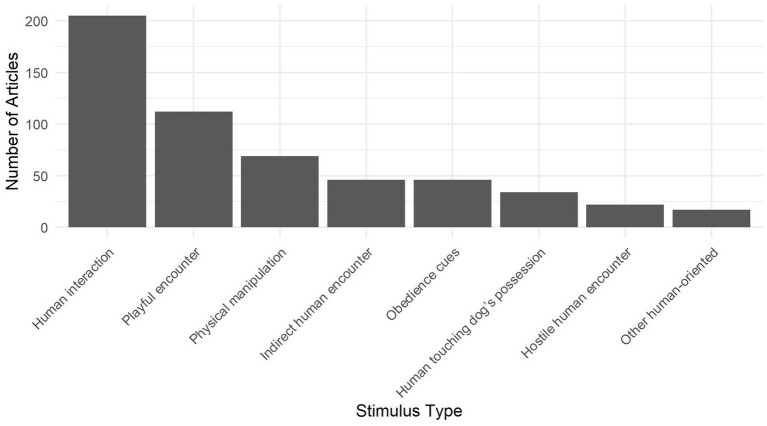
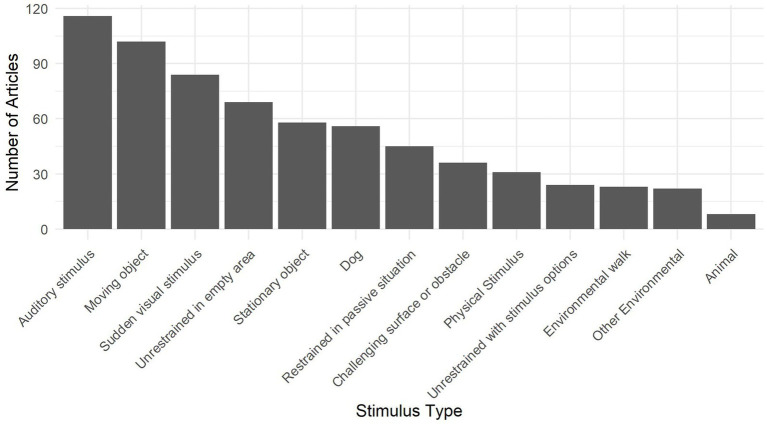
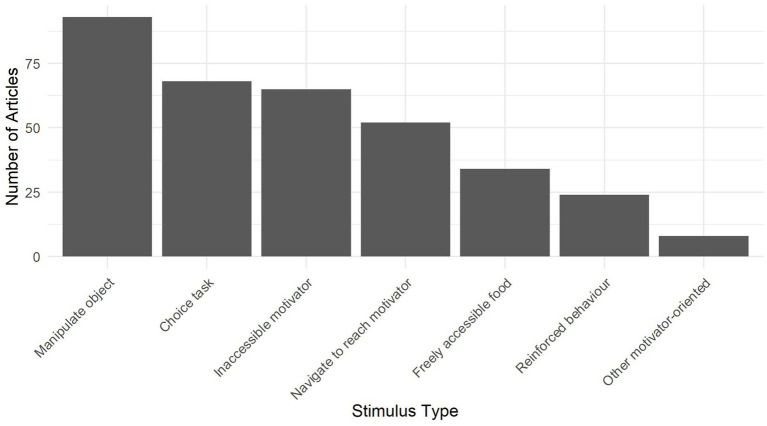
Results: A total of 392 publications met the selection criteria and were included in the analysis, collectively reporting 2,362 behavioral tests. These tests were individually evaluated and categorized. Our content analysis distinguished 29 subcategories of behavioral testing stimuli that have been used, grouped into three major categories: human-oriented stimuli; environmental stimuli; and motivator-oriented stimuli.
Conclusion: Despite the methodological heterogeneity observed across behavioral testing methods, our study identified commonalities in many of the stimuli used in test protocols. The resulting framework provides a practical overview of published behavioral tests and their applications, which may assist researchers in selecting and designing appropriate tests for their purposes.
Keywords: behavioral assessment; behavioral testing; canine; dog cognition; dog personality; qualitative analysis; scoping review; temperament testing.
Copyright © 2024 Moser, Welch, Brown, McGreevy and Bennett.
Conflict of interest statement
The authors declare that the research was conducted in the absence of any commercial or financial relationships that could be construed as a potential conflict of interest.
Figures
References
-
- Nielsen B. Asking animals: an introduction to animal behaviour testing CABI. CABI publishing; (2020).
-
- Diederich C, Giffroy J-M. Behavioural testing in dogs: a review of methodology in search for standardisation. Appl Anim Behav Sci. (2006) 97:51–72. doi: 10.1016/j.applanim.2005.11.018 - DOI
-
- Rayment DJ, De Groef B, Peters RA, Marston LC. Applied personality assessment in domestic dogs: limitations and caveats. Appl Anim Behav Sci. (2015) 163:1–18. doi: 10.1016/j.applanim.2014.11.020 - DOI
Publication types
LinkOut - more resources
Full Text Sources
Miscellaneous
