


Uncovering the therapeutic potential of green pea waste in breast cancer: a multi-target approach utilizing LC-MS/MS metabolomics, molecular networking, and network pharmacology
- PMID: 39482666
- PMCID: PMC11526710
- DOI: 10.1186/s12906-024-04669-x
Uncovering the therapeutic potential of green pea waste in breast cancer: a multi-target approach utilizing LC-MS/MS metabolomics, molecular networking, and network pharmacology
Abstract
BACKGROUND PISUM SATIVUM: (PS) is a universal legume plant utilized for both human and animal consumption, particularly its seeds, known as green peas. The processing of PS in food industries and households produces a significant amount of waste that needs to be valorized.
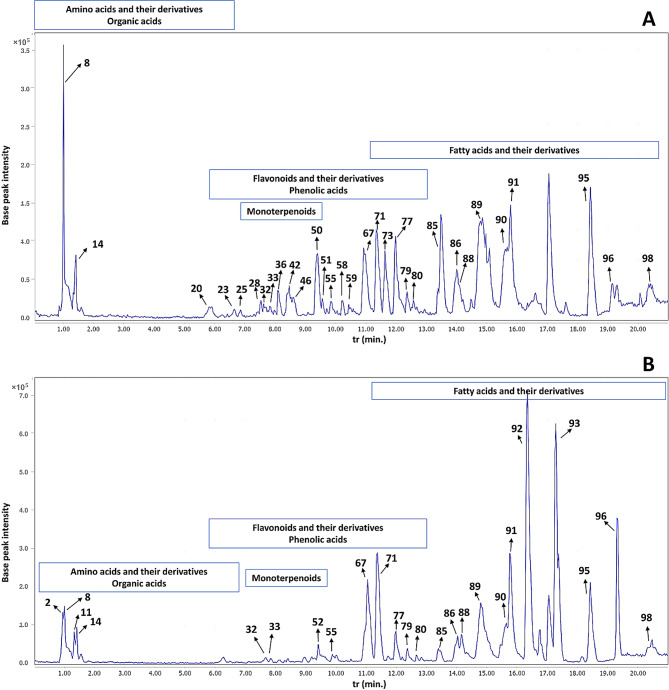
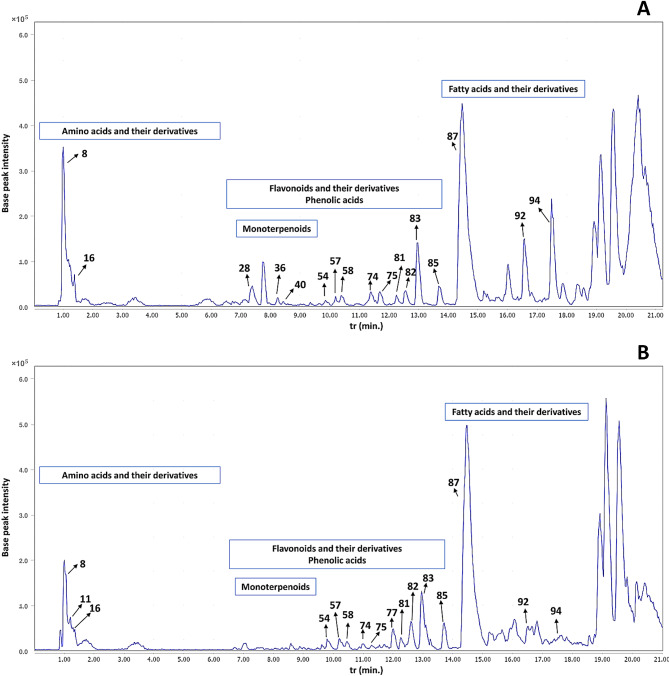
Methods: In this study, the metabolite profiles of the 70% ethanolic extracts of PS wastes, namely peels (PSP) and a combination of leaves and stems (PSLS), were investigated by liquid chromatography-electrospray ionization-quadrupole time-of-flight tandem mass spectrometry (LC-ESI-QTOF-MS/MS) followed by molecular networking.
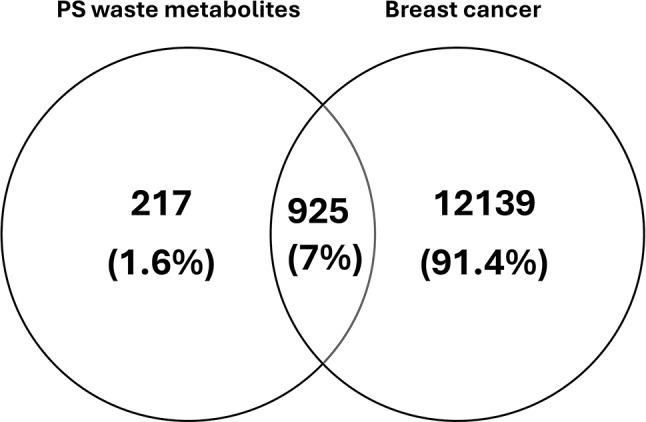
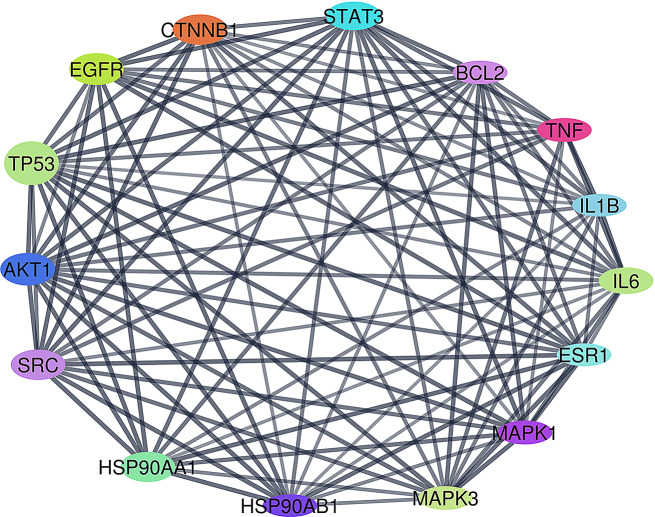
Results: Different classes of metabolites were identified, being flavonoids and their derivatives, along with phenolic acids, the most abundant categories. Additionally, a comprehensive network pharmacology strategy was applied to elucidate potentially active metabolites, key targets, and the pathways involved in cytotoxic activity against breast cancer. This cytotoxic activity was investigated in MCF-7 and MCF-10a cell lines. Results revealed that PSLS extract exhibited a potent cytotoxic activity with a good selectivity index (IC50 = 17.67 and selectivity index of 3.51), compared to the reference drug doxorubicin (IC50 = 2.69 µg/mL and selectivity index of 5.28). Whereas PSP extract appeared to be less potent and selective (IC50 = 32.92 µg/mL and selectivity index of 1.62). A similar performance was also observed for several polyphenolics isolated from the PSLS extract, including methyl cis p-coumarate, trans p-coumaric acid, and liquiritigenin/ 7-methyl liquiritigenin mixture. Methyl cis p-coumarate showed the most potent cytotoxic activity against MCF-7 cell line and the highest selectivity (IC50 = 1.18 µg/mL (6.91 µM) and selectivity index of 27.42). The network pharmacology study revealed that the isolated compounds could interact with several breast cancer-associated protein targets including carbonic anhydrases 1, 2, 4, 9, and 12, as well as aldo-keto reductase family 1 member B1, adenosine A3 receptor, protein tyrosine phosphatase non-receptor type 1, and estrogen receptor 2.
Conclusion: The uncovered therapeutic potential of PSLS and its metabolite constituents pave the way for an efficient and mindful PS waste valorization, calling for further in-vitro and in-vivo research.
Keywords: Breast cancer; Green pea; LC-MS/MS metabolomics; Molecular networking; Network pharmacology; Waste valorization.
© 2024. The Author(s).
Conflict of interest statement
The authors declare no competing interests.
Figures



References
-
- Zhang SJ, Hu TT, Chen YY, Wang S, Kang YF. Analysis of the polysaccharide fractions isolated from pea (Pisum sativum L.) at different levels of purification. J Food Biochem. 2020;44:1–11. - PubMed
-
- Dahl WJ, Foster LM, Tyler RT. Review of the health benefits of peas (Pisum sativum L.). Br J Nutr. 2012;108 SUPPL. 1. - PubMed
-
- Kumari T, Deka SC. Potential health benefits of garden pea seeds and pods: a review. Legum Sci. 2021;3:1–13. - DOI
-
- Dong X, Guo S, Wang H, Wang Z, Gao X. Physicochemical characteristics and FTIR-derived structural parameters of hydrochar produced by hydrothermal carbonisation of pea pod (Pisum sativum Linn.) Waste. Biomass Convers Biorefinery. 2019;9:531–40. - DOI
MeSH terms
Substances
LinkOut - more resources
Full Text Sources
Medical
Research Materials
Miscellaneous
