


Cost-effectiveness of an online supervised group physical and mental health rehabilitation programme for adults with post-COVID-19 condition after hospitalisation for COVID-19: the REGAIN RCT
- PMID: 39482691
- PMCID: PMC11528998
- DOI: 10.1186/s12913-024-11679-5
Cost-effectiveness of an online supervised group physical and mental health rehabilitation programme for adults with post-COVID-19 condition after hospitalisation for COVID-19: the REGAIN RCT
Abstract
Background: Following the COVID-19 pandemic, millions of people continue to experience ongoing physical and mental health sequelae after recovery from acute infection. There is currently no specific treatment for the diverse symptoms associated with post-COVID-19 condition. Physical and mental health rehabilitation may help improve quality of life in such patients. This study reports the cost-effectiveness of a programme of physical and mental health rehabilitation compared to best practice usual care in people with post-COVID-19 condition who were previously hospitalised.
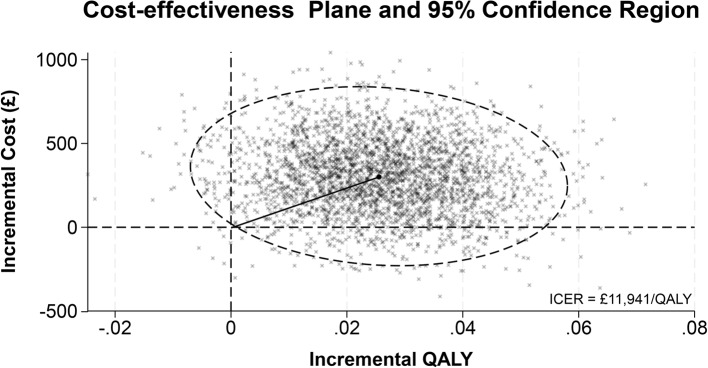
Methods: We conducted an economic evaluation within a randomised controlled trial from the perspective of the UK national health service (NHS) and personnel social services perspective (PSS). Resource used and health-related quality of life were collected using bespoke questionnaire and the EQ-5D-5 L questionnaire at three, six, and 12 months. Incremental costs and quality adjusted life years accrued over the follow-up period were estimated and reported as the incremental cost-effectiveness ratio. Estimate uncertainty was managed by multiple imputation and bootstrapping cost-effectiveness estimates; and displayed graphically on the cost-effectiveness plane.
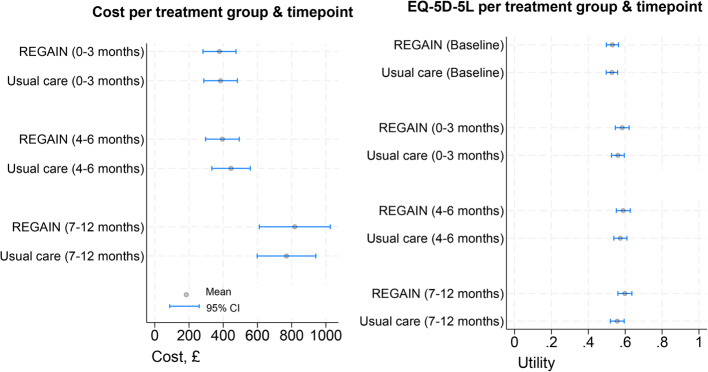
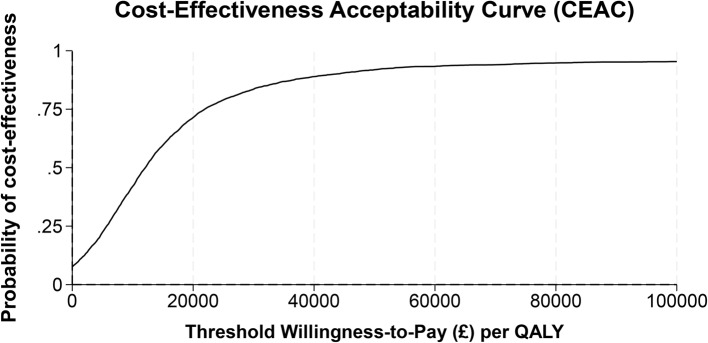
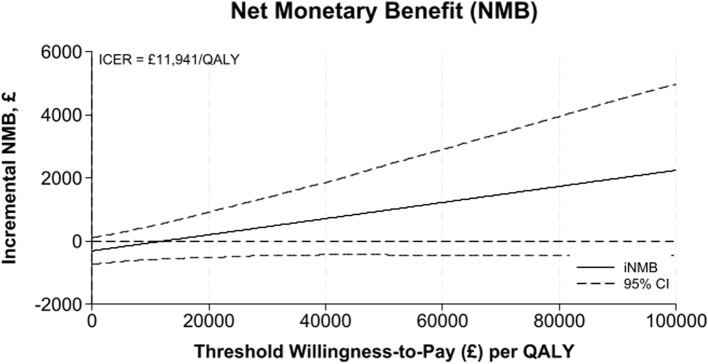
Results: Over a 12-month time horizon, incremental costs and QALYs were £305 (95% CI: -123 to 732) and 0.026 (95% CI: -0.005 to 0.052) respectively. The ICER was £11,941 per QALY indicating cost-effective care. Sensitivity analyses supported the base case findings. The probability of the intervention being cost-effective at a £30,000 per QALY willingness-to-pay threshold was 84%.
Conclusion: The within-trial economic evaluation suggested that people with post-COVID-19 condition after hospitalisation should be offered a programme of physical and mental health rehabilitation as it likely reflects a cost-effective use of NHS resources. Hospitalisation for COVID-19 has become less commonplace: further evaluation in non-hospitalised patients may be worthwhile.
Trial registration: ISRCTN registry ISRCTN11466448 23rd November 2020.
Keywords: COVID-19; Cost-effectiveness analysis; Cost-utility analysis; Long COVID; Mental health rehabilitation; Physical rehabilitation; Post-COVID-19 condition; RCT; Randomised controlled trials; Rehabilitation.
© 2024. The Author(s).
Conflict of interest statement
The authors declare no competing interests.
Figures
References
-
- Office for National Statistics. Prevalence of ongoing symptoms following coronavirus (COVID-19) infection in the UK: 30 March 2023. 2023 [cited 2024 14/02]; https://www.ons.gov.uk/peoplepopulationandcommunity/healthandsocialcare/....
-
- UK Health Security Agency. COVID-19 Hospital Activity. 2024. [cited 2024 05/09]. Available from: https://ukhsa-dashboard.data.gov.uk/topics/covid-19.
Publication types
MeSH terms
Grants and funding
LinkOut - more resources
Full Text Sources
Medical
