


Sex-Specific Effects of Birth Weight on Longitudinal Behavioral Outcomes: A Mendelian Randomization Approach Using Polygenic Scores
- PMID: 39483322
- PMCID: PMC11526082
- DOI: 10.1016/j.bpsgos.2024.100387
Sex-Specific Effects of Birth Weight on Longitudinal Behavioral Outcomes: A Mendelian Randomization Approach Using Polygenic Scores
Abstract
Background: It is unclear whether sex differences in behavior arising from birth weight (BW) are genuine because of the cross-sectional nature and potential confounding in previous studies. We aimed to test whether sex differences associated with BW phenotype were reproducible using a Mendelian randomization approach, i.e., association between polygenic score (PGS) for BW and behavior outcomes across childhood and adolescence.
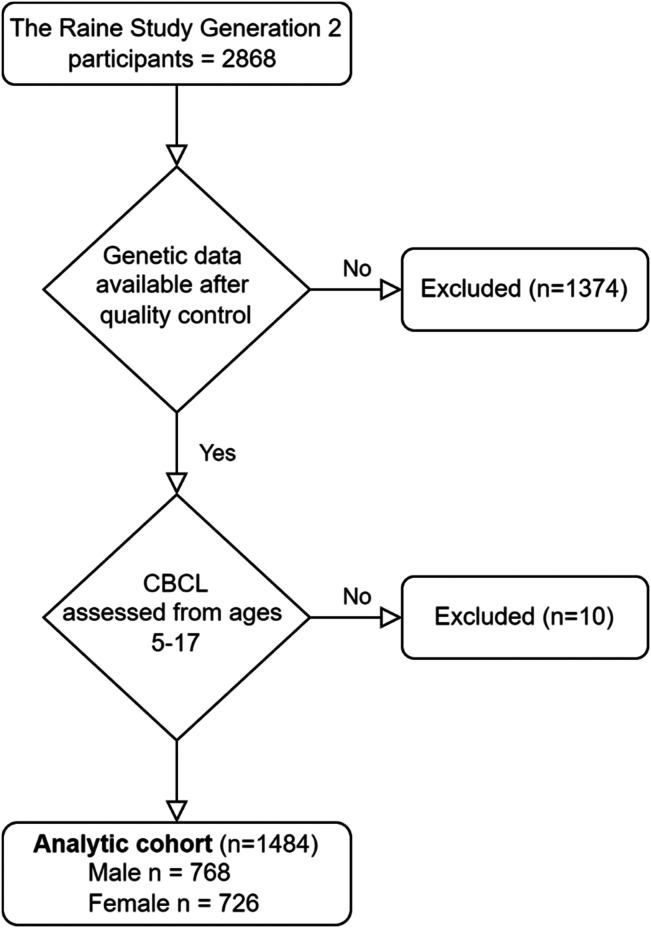
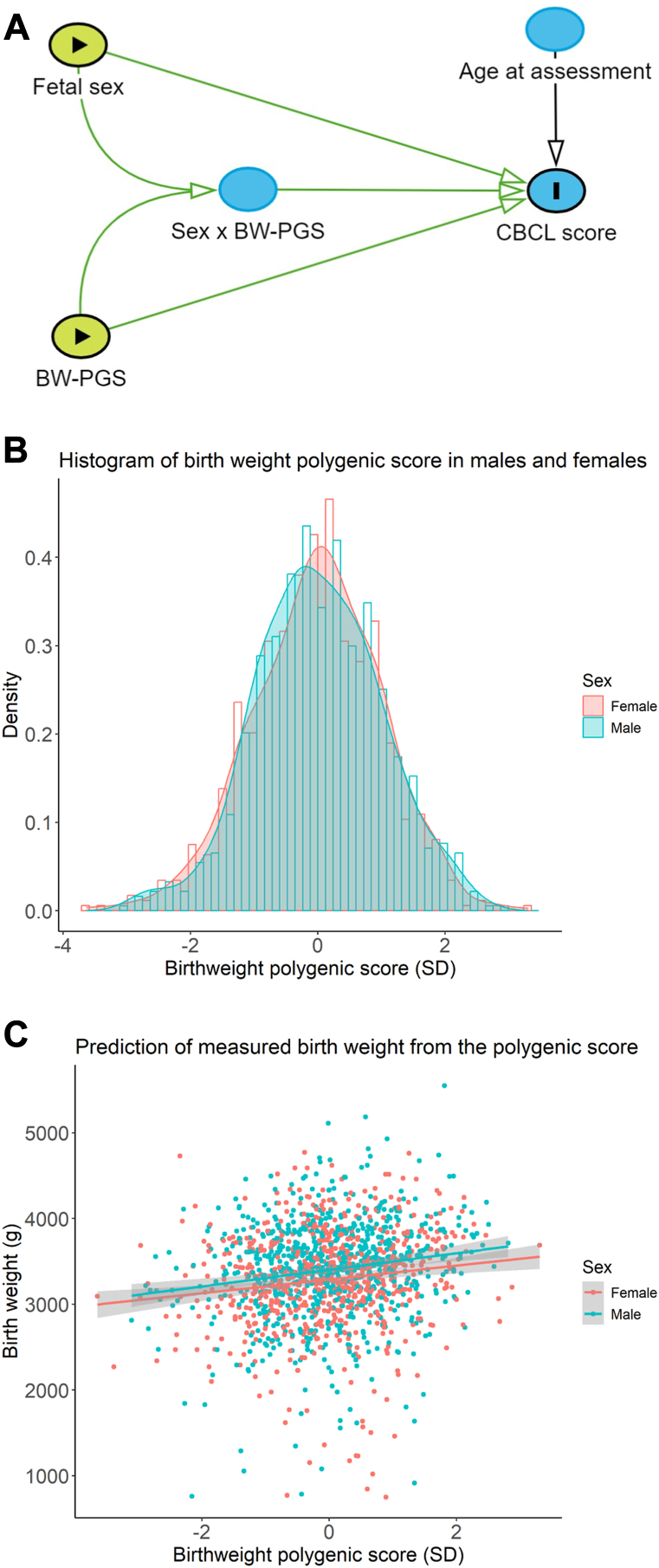
Methods: Using data from the Raine Study, we had 1484 genotyped participants with a total of 6446 Child Behavior Checklist assessments from ages 5 to 17 years. We used BW-PGSs in linear mixed-effect models to predict parentally assessed attention, aggression, and social problems scales; we also derived estimates and significance for a sex-by-genotype interaction. We used a Bonferroni-corrected significance threshold and tested robustness of the results with teacher assessments of behavior and a second PGS.
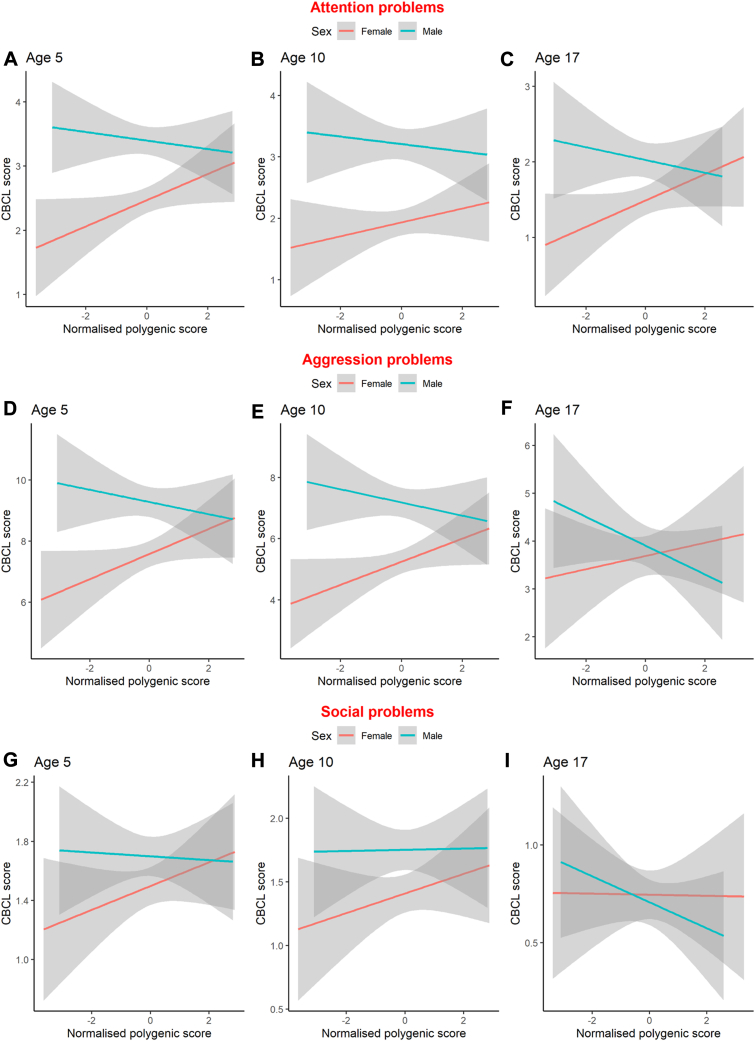
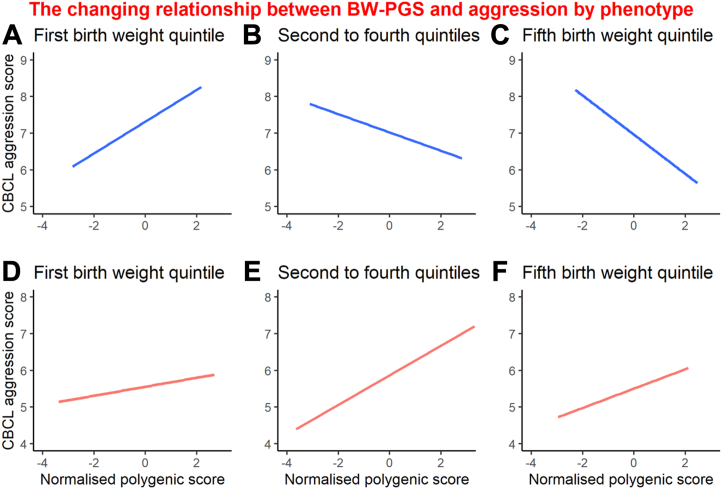
Results: We found a sex-by-genotype interaction with lower BW-PGSs associated with increased aggression in males compared with females. These findings were consistent across various analyses, including teacher assessments. Surprisingly, a lower BW-PGS showed protective effects in females, while a lower BW phenotype had detrimental effects in males with evidence of a genotype-phenotype mismatch increasing aggression problems in males only.
Conclusions: This study underscores the genuine nature of behavioral sex differences arising from low BW and highlights the sex-dependent and diverging effects of environmental and genetic BW determinants.
Keywords: Aggression; Birth weight; Child Behavior Checklist; Children and adolescents; Developmental programming; Gene-environment interactions.
Plain language summary
Previous studies have suggested a link between low birth weight and poor behavioral outcomes in children and adolescents, but it is unclear if these effects differ between males and females. We demonstrated that genes influencing birth weight had different effects on aggressive behavior in males and females with effects throughout childhood and adolescence; furthermore, our study suggests that birth weight environment and birth weight genes have different effects on behavior. In males, a mismatch between the genetically determined birth weight and the measured birth weight resulted in more aggressive behavior.
© 2024 The Authors.
Figures
References
-
- Loret de Mola C., de França G.V.A., Quevedo Lde A., Horta B.L. Low birth weight, preterm birth and small for gestational age association with adult depression: Systematic review and meta-analysis. Br J Psychiatry. 2014;205:340–347. - PubMed
-
- Sømhovd M.J., Hansen B.M., Brok J., Esbjørn B.H., Greisen G. Anxiety in adolescents born preterm or with very low birthweight: A meta-analysis of case-control studies. Dev Med Child Neurol. 2012;54:988–994. - PubMed
-
- Franz A.P., Bolat G.U., Bolat H., Matijasevich A., Santos I.S., Silveira R.C., et al. Attention-deficit/hyperactivity disorder and very preterm/very low birth weight: A meta-analysis. Pediatrics. 2018;141 - PubMed
-
- Orri M., Pingault J.B., Turecki G., Nuyt A.M., Tremblay R.E., Côté S.M., Geoffroy M.C. Contribution of birth weight to mental health, cognitive and socioeconomic outcomes: Two-sample Mendelian randomisation. Br J Psychiatry. 2021;219:507–514. - PubMed
LinkOut - more resources
Full Text Sources
