


Association between fecal incontinence and cardiovascular disease in adult Americans: evidence from NHANES 2005-2010
- PMID: 39484014
- PMCID: PMC11524900
- DOI: 10.3389/fcvm.2024.1447913
Association between fecal incontinence and cardiovascular disease in adult Americans: evidence from NHANES 2005-2010
Abstract
Objectives: There is limited amount of research on the association between fecal incontinence (FI) and cardiovascular disease (CVD). This study aims to evaluate whether there is a relationship between FI and CVD among adults in the United States.
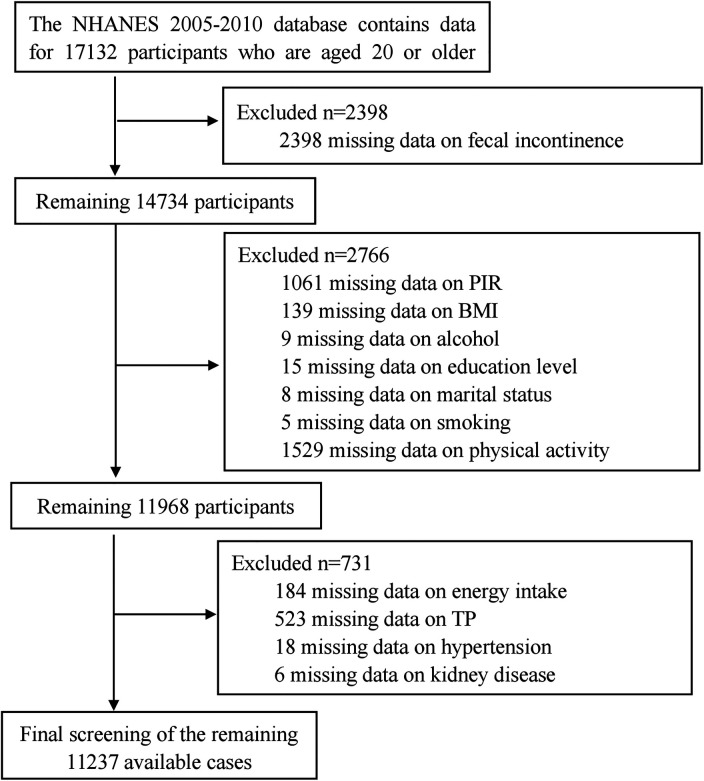
Methods: This study employed a cross-sectional design, encompassing 11,237 adults aged 20 years and older, drawn from the National Health and Nutrition Survey conducted from 2005 to 2010. FI was defined as the involuntary monthly leakage of solid, liquid, or mucus stool. The presence of CVD was evaluated through a questionnaire. Adjusted odds ratios (OR) were computed utilizing a multivariate logistic regression model. Subgroup analyses were conducted to ascertain the stability of the results.
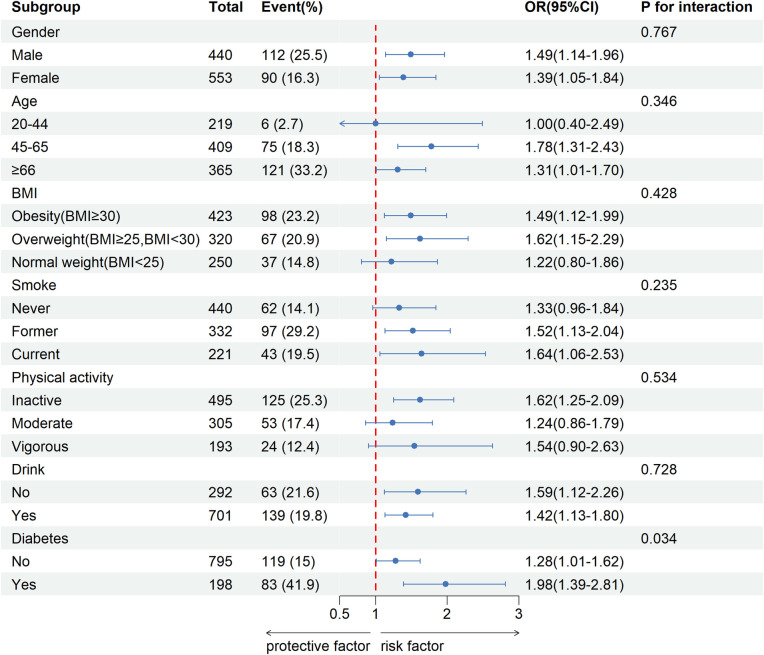
Results: Following adjustments for population characteristics, lifestyle habits, laboratory tests, and comorbidities, a significant association was observed between FI and elevated CVD risk (OR: 1.47, 95% CI: 1.21-1.79, P < 0.001). Subgroup analysis uncovered a strong correlation between FI and CVD among participants aged 45-65 years (OR: 1.78, 95%CI: 1.31-2.43). In the participants to aged 66 and above, this correlation persisted (OR: 1.31, 95% CI: 1.01-1.70).
Conclusions: This study reveals a significant positive correlation between FI and CVD. Middle-aged and older adults are considered high-risk population for developing CVD, thus emphasizing the importance of screening and timely intervention.
Keywords: Americans; NHANES; cardiovascular disease; cross-sectional study; fecal incontinence.
© 2024 Xu, Song, Lan, Wang, Wang and Lu.
Conflict of interest statement
The authors declare that the research was conducted in the absence of any commercial or financial relationships that could be construed as a potential conflict of interest.
Figures
References
LinkOut - more resources
Full Text Sources
