The Relationship between Negative Emotions and Atrial Fibrillation: A Mendelian Randomization Study
- PMID: 39484114
- PMCID: PMC11522760
- DOI: 10.31083/j.rcm2510356
The Relationship between Negative Emotions and Atrial Fibrillation: A Mendelian Randomization Study
Abstract
Background: The relationship between negative emotions and atrial fibrillation (AF) has garnered significant attention, yet observational studies have yielded contradictory findings regarding the causal associations between the two. Our study sought to provide genetic evidence for a causal relationship between negative emotions and AF through Mendelian randomization (MR) study.
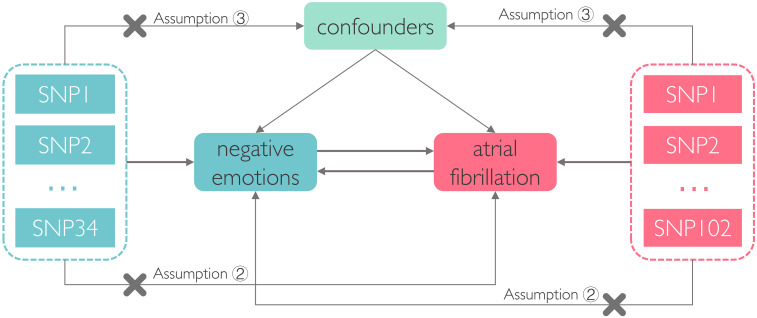
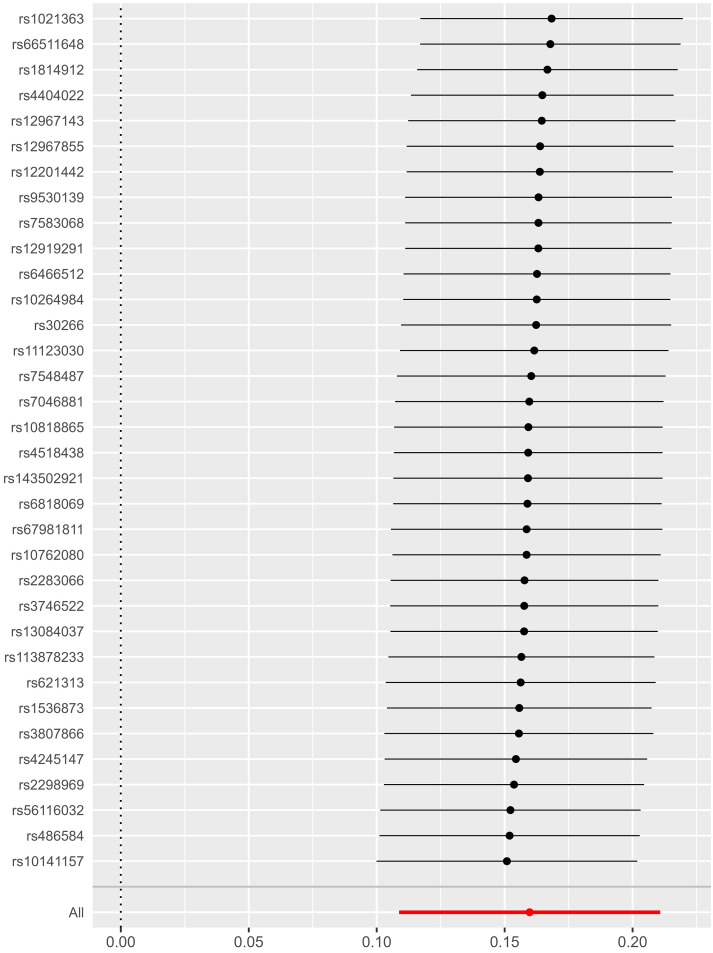
Methods: Utilizing genetic variations associated with negative emotions and AF as instrumental variables (IVs), a two-sample MR study was implemented. The potential causality between the two was initially assessed by using negative emotions as exposure and AF as outcome. Subsequently, potential reverse causality was evaluated by using AF as exposure and negative emotions as outcome. The inverse variance weighted (IVW) method served as the primary analysis for the two-sample MR, supplemented by weighted median method, MR-Egger regression, Simple mode method, and Weighted mode method. Sensitivity analyses were performed using the MR pleiotropy residual sum and outlier test (MR-PRESSO), Cochran Q test, and leave-one-out analysis to ensure the robustness of the results.
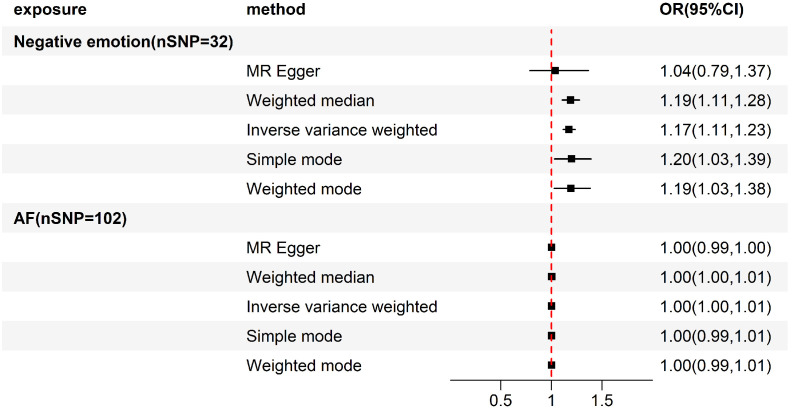
Results: The two-sample MR analyses revealed that genetic susceptibility to AF had no potential causal effect on negative emotions (p > 0.05). Conversely, genetic susceptibility to negative emotions was positively correlated with an increased relative risk of AF [odds ratio (OR), 1.173, 95% confidence interval (CI): 1.115-1.235, p = 8.475 × 10⁻¹⁰]. Furthermore, neither horizontal pleiotropy nor heterogeneity was detected in the analysis.
Conclusions: Genetic evidence from the study supports a potential causal link between negative emotions and AF. The study suggests that negative emotions may elevate the risk of AF, and the escalation of negative emotions in AF patients is more likely attributable to modifiable factors rather than genetically related factors.
Keywords: Mendelian randomization; atrial fibrillation; negative emotions.
Copyright: © 2024 The Author(s). Published by IMR Press.
Conflict of interest statement
The authors declare no conflict of interest.
Figures
References
-
- Craske MG, Stein MB. Anxiety. Lancet (London, England) . 2016;388:3048–3059. - PubMed
-
- GBD 2017 Disease and Injury Incidence and Prevalence Collaborators GBD 2017 Disease and Injury Incidence and Prevalence Collaborators. Global, regional, and national incidence, prevalence, and years lived with disability for 354 diseases and injuries for 195 countries and territories, 1990-2017: a systematic analysis for the Global Burden of Disease Study 2017. Lancet (London, England) . 2018;392:1789–1858. - PMC - PubMed
-
- Batelaan NM, Seldenrijk A, Bot M, van Balkom AJLM, Penninx BWJH. Anxiety and new onset of cardiovascular disease: critical review and meta-analysis. The British Journal of Psychiatry: the Journal of Mental Science . 2016;208:223–231. - PubMed
LinkOut - more resources
Full Text Sources