[Preprint]. 2024 Oct 26:2024.10.24.620039.
doi: 10.1101/2024.10.24.620039.

Drosophila Trus, the orthologue of mammalian PDCD2L, is required for proper cell proliferation, larval developmental timing, and oogenesis

Affiliations

Drosophila Trus, the orthologue of mammalian PDCD2L, is required for proper cell proliferation, larval developmental timing, and oogenesis

Saeko Takada et al. bioRxiv. .

Update in

Abstract

Toys are us (Trus) is the Drosophila melanogaster ortholog of mammalian Programmed Cell Death 2-Like (PDCD2L), a protein that has been implicated in ribosome biogenesis, cell cycle regulation, and oncogenesis. In this study, we examined the function of Trus during Drosophila development. CRISPR/Cas9 generated null mutations in trus lead to partial embryonic lethality, significant larval developmental delay, and complete pre-pupal lethality. In mutant larvae, we found decreased cell proliferation and growth defects in the brain and imaginal discs. Mapping relevant tissues for Trus function using trus RNAi and trus mutant rescue experiments revealed that imaginal disc defects are primarily responsible for the developmental delay, while the pre-pupal lethality is likely associated with faulty central nervous system (CNS) development. Examination of the molecular mechanism behind the developmental delay phenotype revealed that trus mutations induce the Xrp1-Dilp8 ribosomal stress-response in growth-impaired imaginal discs, and this signaling pathway attenuates production of the hormone ecdysone in the prothoracic gland. Additional Tap-tagging and mass spectrometry of components in Trus complexes isolated from Drosophila Kc cells identified Ribosomal protein subunit 2 (RpS2), which is coded by string of pearls (sop) in Drosophila, and Eukaryotic translation elongation factor 1 alpha 1 (eEF1α1) as interacting factors. We discuss the implication of these findings with respect to the similarity and differences in trus genetic null mutant phenotypes compared to the haplo-insufficiency phenotypes produced by heterozygosity for mutants in Minute genes and other genes involved in ribosome biogenesis.


Figures
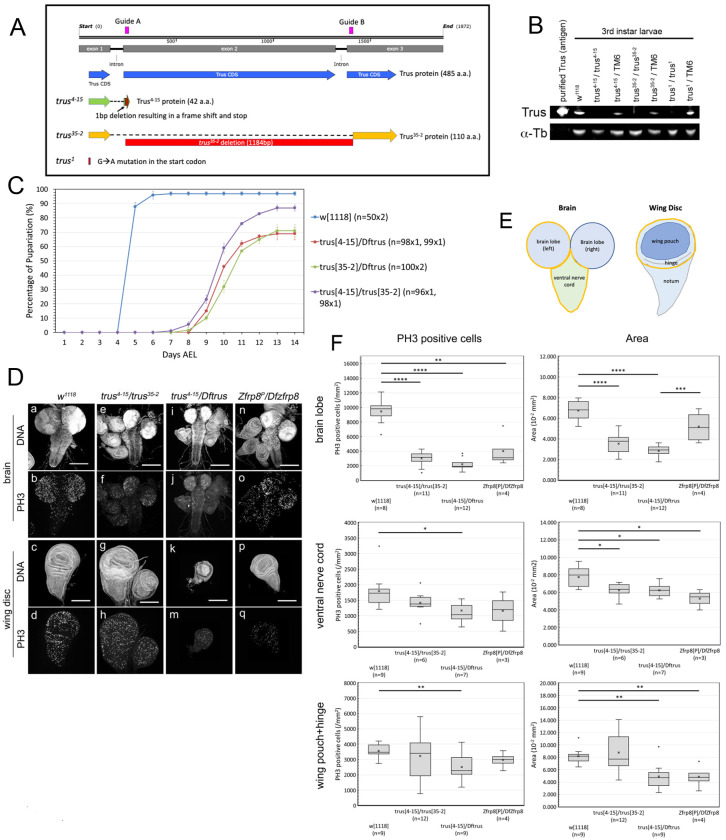
Fig. 1
Fig. 1. CRISPR/Cas9 induced trus mutations cause developmental delay and defects in tissue growth and cell proliferation during the larval stage.
(A) A diagram showing trus genomic region and trus mutant alleles that are used in this study. (Blue) Trus CDS, (Magenta) two guide RNAs designed for CRISPR/Cas9 mutagenesis, (Red) trus mutations and deletion. (Green) trus4-15 allele coding 42 a.a. fragment. (Orange) trus35-2 allele including 1184 bp in-frame deletion and coding 110 a.a. Trus fragment. (B) Western-blot analysis of 3rd instar larval lysate of trus homozygotes and heterozygotes over a balancer chromosome (TM6B P[Dfd-GMR-nvYPF] Sb). Purified full length recombinant Trus protein used as antigen for the anti-Trus antibody production is shown on the far left. (Trus) affinity-purified anti-Trus antibody produced in this study. (α-Tb) mouse anti-α–Tubulin monoclonal antibody (DM1A) (Sigma-Aldrich T9026). (C) Pupariation timing of trus mutant and w1118. Each data point on the graph indicates an average pupariation percentage of two separate plates. The vertical line on each data point indicates the standard deviation. Numbers of 1st instar larvae picked at 1 Day AEL are shown in parentheses after the genotype. Percentage of pupariation at 14 days AEL were 97%, 87%, 69%, 71% for w1118, trus4-15 /trus35-2, trus4-15/Dftrus, and trus35-2/Dftrus, respectively. After pupariation, none of the trus mutant larvae developed further and eventually died (pre-pupal lethal). More than 95% of the w1118 animals eclosed as adults. (D) Representative images of brains and wing discs that were dissected from 3rd instar wandering larvae. Genotypes indicated at the top of the panels. DNA was stained with DAPI and mitotic cells are detected with anti-phospho-HistoneH3 (PH3) antibody. Scale bar: 200μm. (E) Diagrams showing the larval brain and wing-disc. The areas surrounded by yellow lines indicates brain lobe, ventral nerve cord, and wing pouch plus hinge areas that are quantified in F. (F) Box-and-whisker plots of PH3 positive cells/mm2 (left column) and area in mm2 (right column) for brain lobe, ventral nerve cord, and [wing pouch + hinge] are shown. Genotypes and number of tissues measured for each genotype are indicated in parenthesis under the graphs. The x in the boxes indicates the mean value and the line inside the box indicates the median. Two samples t-tests for each genotype pair were performed using Microsoft Excel (Redmond, WA). When the p-value indicates that the pair variance is statistically significant, it is shown as a horizontal line across the genotypes with * (P<=0.05), ** (P<=0.01), *** (P<=0.001), or **** (P<=0.0001).
Fig.2
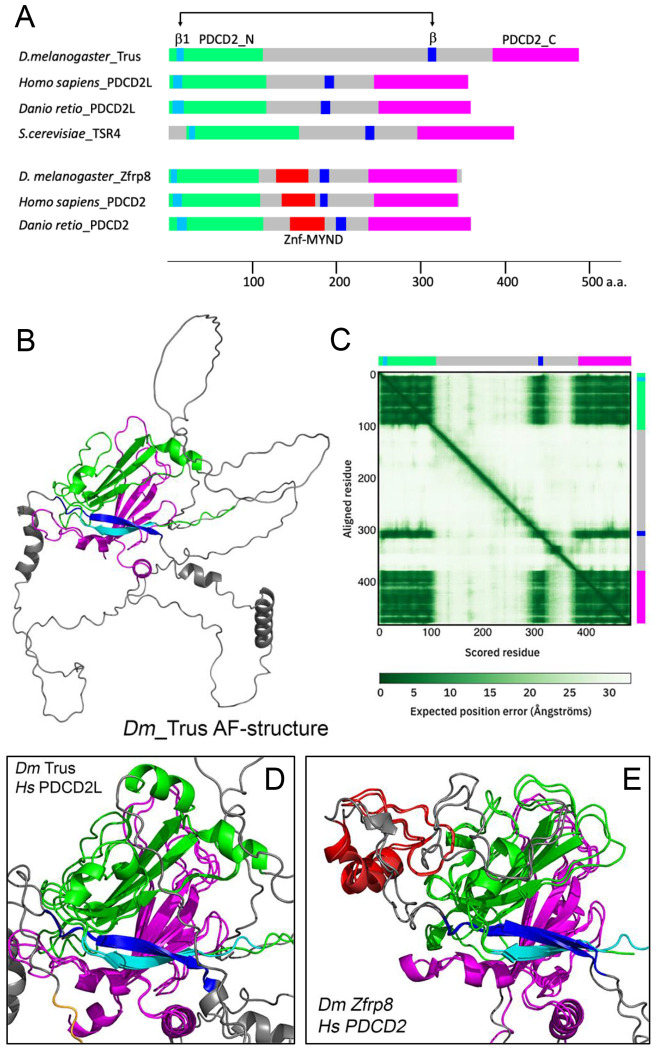
Fig.2. Predicted 3D Structure of Trus and its paralog Zfrp8 share a core module that is conserved through evolution.
(A) Domain structure comparison of Drosophila Trus, its paralog Zfrp8, and their orthologs from different organisms. D. melanogaster Trus (Accession number: Q9VG62; Dmel\CG5333), Homo sapiens_PDCD2L (Q9BRP1), Danio retio_PDCD2L (Q5RGB3), S. cerevisiae_Tsr4 (P87156), D. melanogaster_Zfrp8 (Q9W1A3), Homo sapiens_PDCD2 (Q16342), and Danio retio_PDCD2 (Q1MTH6) are shown. (Green) PDCD2_N, (magenta) PDCD2_C, (red) MYND-type zinc finger domain (Znf-MYND), (light blue) first b-strand in PDCD2_N domain, (blue) b-strand that is predicted to interact with the first b-strand. (B) D. melanogaster Trus protein 3D structure predicted by AlphaFold (https://alphafold.ebi.ac.uk/). Color-coding of domains in the 3D structures are same as shown in A. (C) Predicted Aligned Error (PAE) of Drosophila Trus 3-D structure calculated by the AlphaFold. Color-coded bars representing the Trus protein shown in B are placed on upper and right sides of the panel. (D) Alignment of the core module of Dm Trus and Hs PDCD2L. (E) Alignment of the core module of Dm Zfrp9 and Hs PDCD2. 3-D structural alignments between orthologs were performed with PyMOL (Schrödinger LLC., NY).
Fig.3
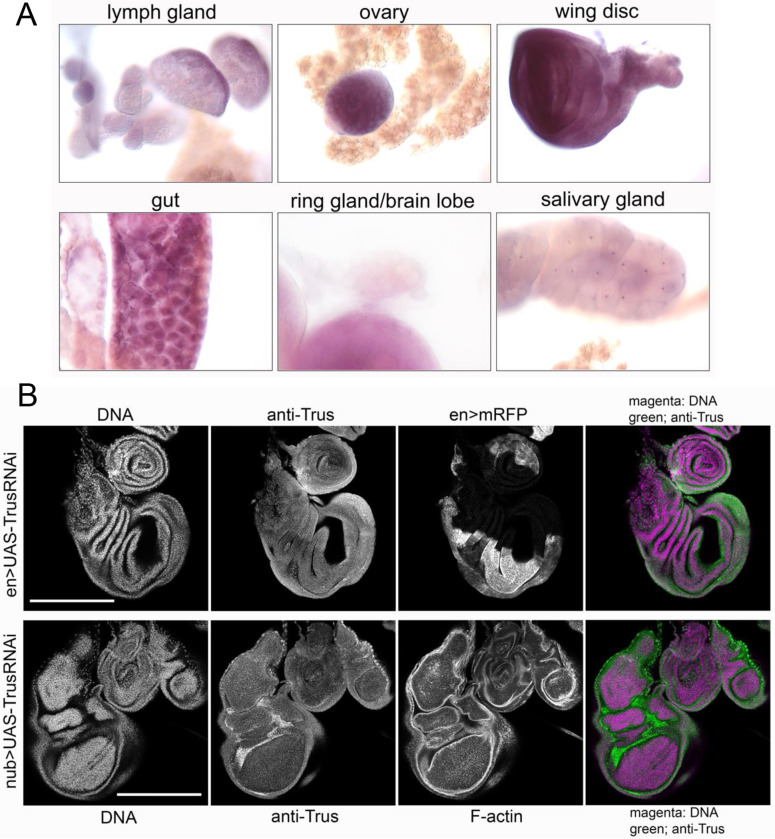
Fig.3. Trus expresses in mitotic tissues.
(A) In situ hybridization with anti-sense RNA that hybridizes with trus mRNA reveals high level expression of trus in larval lymph gland, ovary, wing disc, gut, and brain lobe. Low expression is detected in ring and salivary glands. (B) anti-Trus antibody staining of tissues dissected from 3rd instar wandering larvae of en-GAL4>UAS-TrusRNAi or nub-GAL4>UAS-TrusRNAi larvae. Trus protein expression is detected in the entire wing, leg and haltere discs. The signals are reduced in the posterior half of the wing and leg discs (en>UAS-TrusRNAi) and in the pouch area of wing and haltere discs (nub>UAS-TrusRNAi), where TrusRNAi was induced.
Fig.4
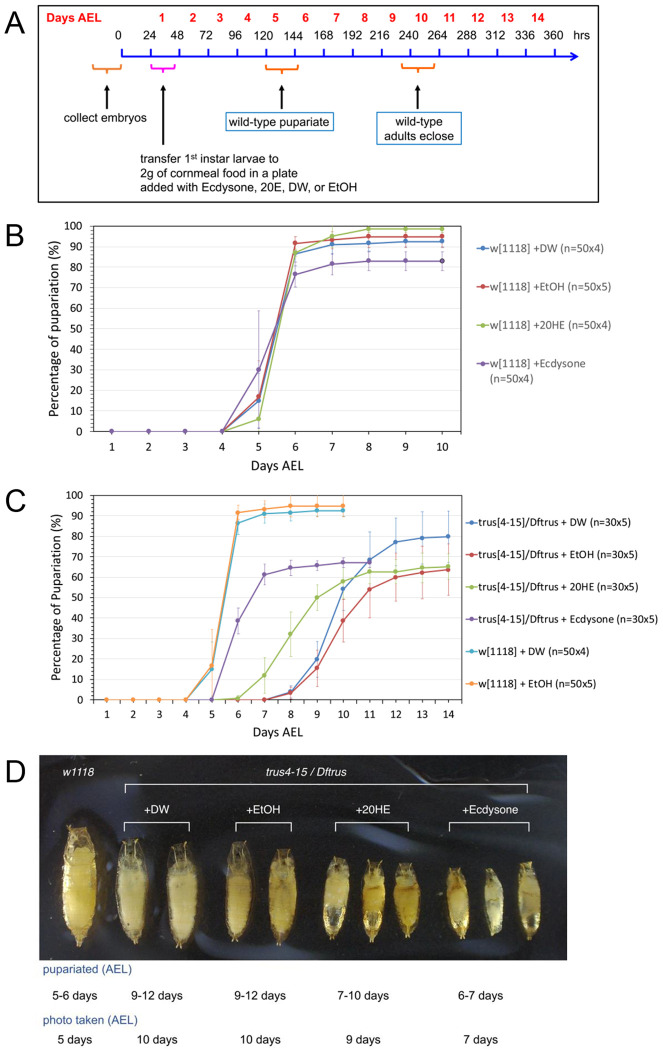
Fig.4. Ecdysone feeding to trus mutant larvae accelerates pupariation timing but causes precocious pupariation and does not rescue the pre-pupal lethality.
(A) Schedule of the ecdysone-feeding experiment. (B) Pupariation timing of w1118 larvae fed cornmeal fly food mixed with either ecdysone (purple), 20-hydroxyecdysone (20HE) (green), dH2O (blue), or ethanol (red). Each circle represents the average percentage of pupariated larvae from multiple dishes of the same genotype. Pupariated larvae were counted every 24 hours. Standard deviations are shown as vertical lines for each data point. (C) Pupariation timing of trus4-15/Dftrus larvae fed cornmeal food mixed with either ecdysone (purple), 20HE (green), dH2O (blue), or ethanol (red). Pupariation timing of w1118 fed cornmeal food mixed with dH2O (light blue) or ethanol (orange) are shown as controls. (D) Pre-pupae that were fed cornmeal food mixed with either dH2O, ethanol, 20HE, or ecdysone with the time of pupariation indicated below. w1118 pupa is shown on the left for size comparison.
Fig.5
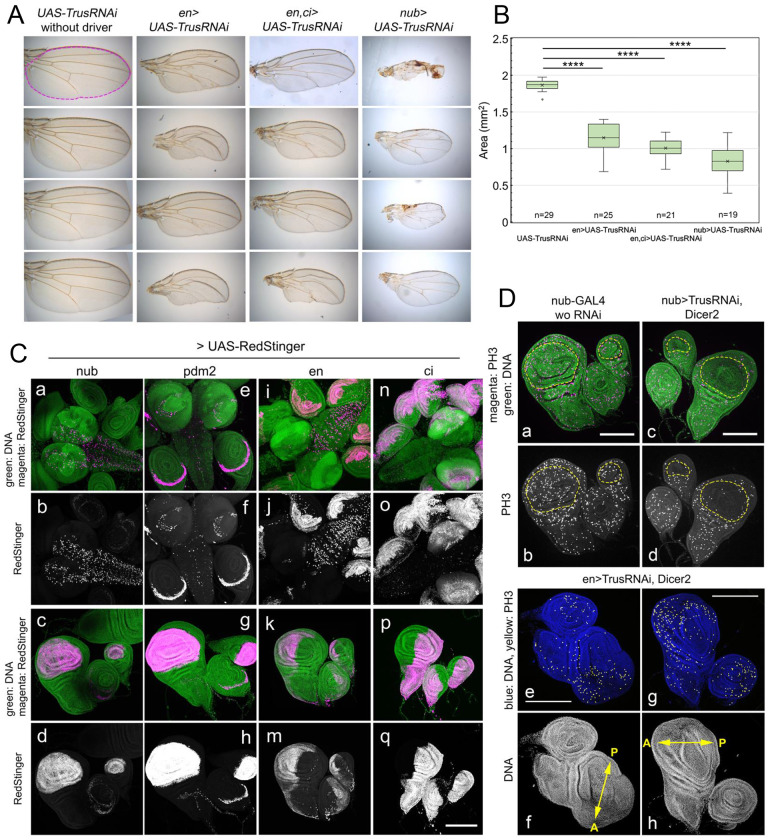
Fig.5. Trus RNAi induced with various wing disc drivers affects wing size and morphology and cellular proliferation.
(A) Representative images of wings from female adult flies that had TrusRNAi induced with wing disc drivers. Adult wings from flies carrying UAS-TrusRNAi without any driver, en-GAL4 driven UAS-TrusRNAi, en and ci-GAL4 driven UAS-TrusRNAi, or nub-GAL4 driven UAS-TrusRNAi are shown. (B) Quantification of wing area calculated in mm2. An example area is represented as magenta dotted outline in the top-left panel in A. ImageJ/Fiji (https://imagej.net) was used for area measurement. Box-and-whisker plots were generated, and two sample t-tests were performed using Microsoft Excel (Redmond, WA). The x in the boxes indicates the mean value and the line inside the box indicates the median. Sample numbers are indicated at the bottom of the graph (ex. n=29 for UAS-TrusRNAi). **** indicates P value <=0.0001. (C) UAS-RedStinger (shown in magenta) was induced with either nub-GAL4 (a-d), pdm2-GAL4 (e-h), en-GAL4 (i-m) or ci-GAL4 (n-q). DNA (DAPI, green) and RedStinger (magenta) staining are shown in first (a, e, i, n) and third (c, g, k, q) rows of images. RedStinger staining (white) is displayed in the second (b, f, j, o) and fourth (d, h, m, q) rows. Scale bar: 200μm. (D) Reduction of anti-PH3 stained foci is observed in the pouch area of wing and haltere discs in nub>TrusRNAi, UAS-Dicer2 larvae (a-d) and the posterior half of wing discs and one half of the leg disc in en>TrusRNAi, UAS-dicer2 larvae (e-h). In a and c, green: DAPI and magenta: anti-phospho-HistoneH3 (PH3) staining. Yellow dashed lines indicate wing and haltere pouch. In e and g, blue: DAPI and yellow: anti-PH3 staining. Arrows in f and h indicate the anterior- posterior axis of wing discs. Bar: 200μm.
Fig.6
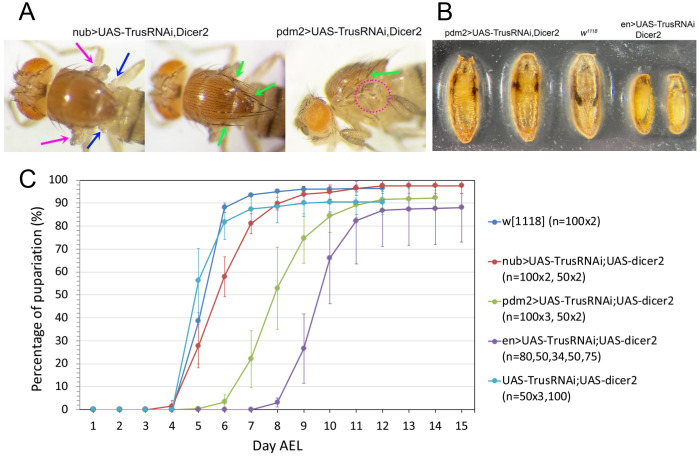
Fig.6. TrusRNAi induced with wing disc drivers delay pupariation timing.
(A) TrusRNAi flies induced with either nub-GAL4 or pdm2-GAL4 in the presence of UAS-Dicer2 show a complete loss of wing blade (magenta arrows), morphological defects in halteres (yellow arrows), and extra/disorganized bristles (green arrows). (B) (left) pdm2>TrusRNAi pupae are pharate with wing defects. (right) en>TrusRNAi larvae pupariate precociously resulting in smaller pre-pupae that never become pupae. (middle) w1118 wild type pupa given for comparison. (C) Pupariation timing of TrusRNAi larvae induced with nub-GAL4 (red), pdm2-GAL4 (green), or en-GAL4 (purple). Pupariation timing of w1118 larvae (blue) and larvae carrying UAS-TrusRNAi and UAS-Dicer2 alone (light blue) are shown as controls. Each data point represents an average pupariation percentage from multiple plates. The vertical line on each data point indicates the standard deviation. Numbers of 1st instar larvae picked at 1 Day AEL are shown in parentheses after the genotype.
Fig.7
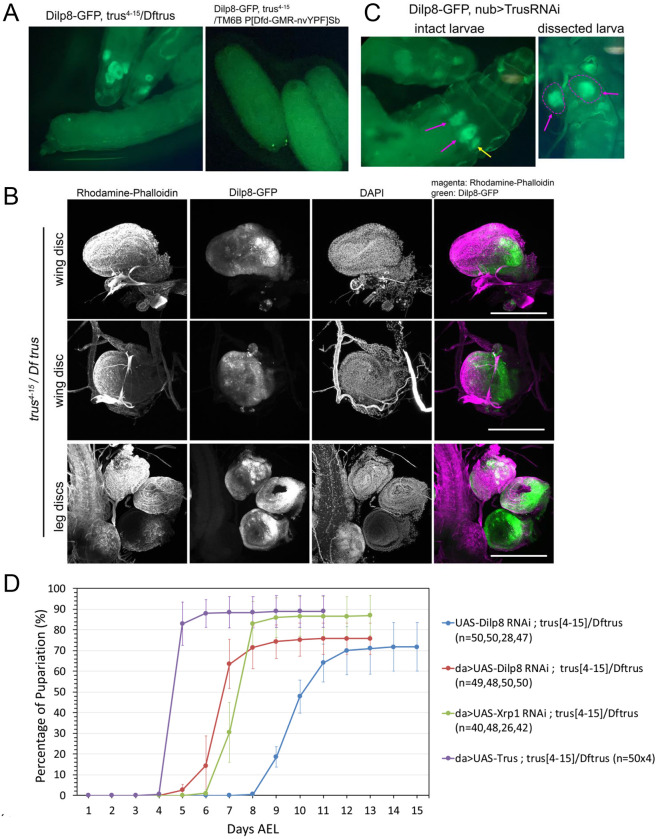
Fig.7. Xrp1-Dilp8 pathway is activated leading to developmental delay in trus mutants.
(A) (left) Dilp8-GFP expression in 3rd instar wandering trus 4-15/ Dftrus larvae. (right) Dilp8-GFP expression in 3rd instar wandering trus4-15/ TM6B P[Dfd-GMR-nvYPF]Sb or Dftrus/TM6B P[Dfd-GMR-nvYPF]Sb larvae. Two bright GFP dots are Dfd-GMR-nvYFP signals on eyes. (B) Fixed and dissected wing (first and second rows) and leg (bottom row) discs from trus 4-15/Dftrus 3rd instar wandering larvae show Dilp8-GFP expression (green). Rhodamine-Phalloidin and DAPI stainings reveal significant reduction in size and abnormal morphologies of the discs. Scale bar: 200μm. (C) Expression of Dilp8-GFP in the pouch region of the wing disc (magenta arrows) and haltere disc (yellow arrow) from nub> TrusRNAi larvae. In the dissected larval image (right), wing discs are marked with a magenta dotted line and show GFP fluorescence in the middle area of the wing discs (wing pouch). (D) Developmental timing curves show that da>Dilp8RNAi (red) or da>Xrp1RNAi (green) significantly rescue the developmental delay of trus4-15/Dftrus larvae. Exogenous Trus expression from a da>UAS-trus transgene in trus4-15/Dftrus larvae rescues the developmental delay and lethality of the trus mutant (shown here in purple). trus4-15/Dftrus larvae with the UAS-Dilp8RNAi transgene alone serve as the negative control (blue).
Fig.8
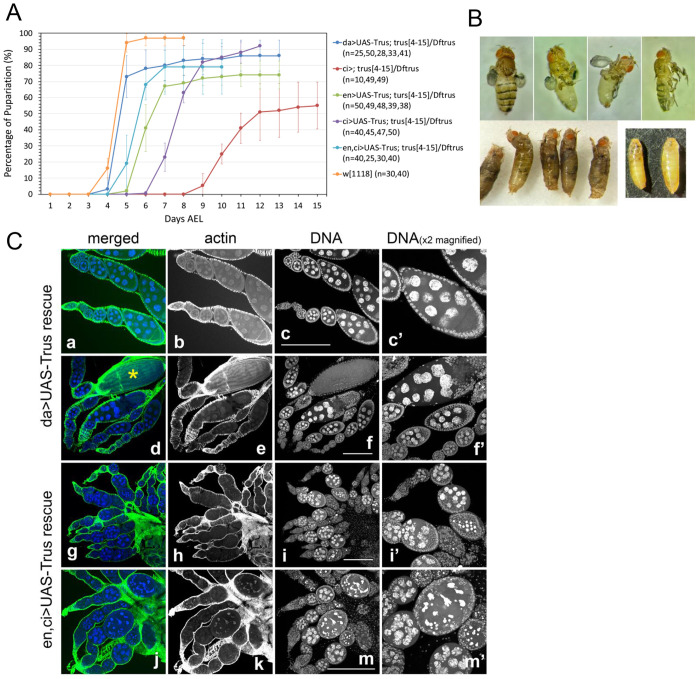
Fig.8. Rescue of lethality and developmental delay of the trus mutant can be achieved by Trus expression induced with specific drivers.
(A) Developmental timing of trus mutants (trus4-15/Dftrus) with trus expression driven by various drivers display varying degrees of rescue. Compared to the w1118 control (orange), da-Gal4 (dark blue) rescues the best, with en-Gal4,ci-Gal4 (aqua), en-Gal4 (green), and ci-Gal4 (purple) showing progressively lower degrees of rescue. ci-Gal4 without UAS-Trus (red) serves as the negative control. (B) Adult and pupal phenotypes of rescued lines. ci>UAS-Trus rescued trus4-15/Dftrus pre-pupal lethality with significant defects in wings, halteres, legs, and bristles (upper panels). Many flies eclose only half-way from the pupal case and die (lower left). trus4-15/Dftrus mutants without the UAS-Trus transgene arrest and die during the pre-pupal stage (lower right). (C) Ovariole phenotypes of rescued lines confirms that da>UAS-Trus rescue of trus4-15/Dftrus mutant females are fertile and show no defects in oogenesis (a-f, c’, f’). The yellow star indicates a mature egg produced (d). However, en,ci>trus in combination with trus4-15/Dftrus mutants, while being able to rescue mutant lethality, give rise to females that are sterile. Their ovarioles produce no mature eggs because egg chambers degrade at mid-oogenesis (g-m, i’, m’). (green) Rhodamine-Phalloidin (blue) DAPI. Scale bar: 200μm.
Fig.9
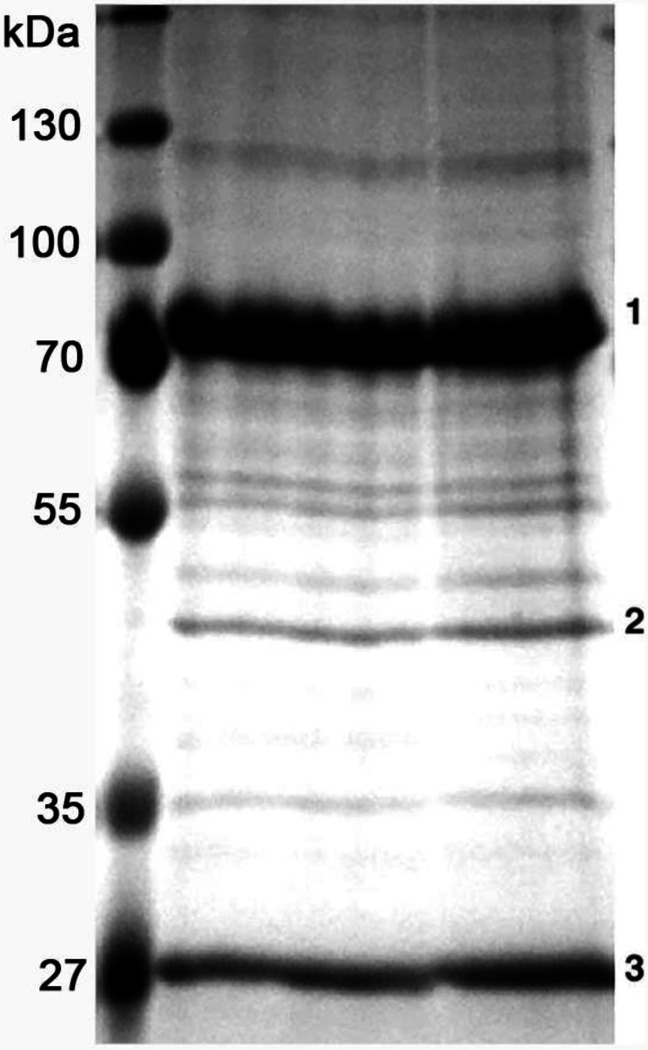
Fig.9. Tap-tagging reveals stable binding of Trus with Sop/RpS2 (String of pearls) and eEF1α1.
Coomassie Blue staining of an SDS-PAGE gel a}er Tap-tagging with Trus. Three dominant bands are seen: (1) Trus (2) eEF1α1 and (3) Sop. Identifications were made using MALDI-Mass spectrometry. To limit false positives, bands selected for mass spectrometry were unique when compared with proteins pulled down with a tag only construct (data not shown). Size marker in the left lane.

References

    1. Parker MD, Karbstein K. Quality control ensures fidelity in ribosome assembly and cellular health. J Cell Biol. 2023;222(4). Epub 20230215. doi: 10.1083/jcb.202209115. - DOI - PMC - PubMed
    1. Ni C, Buszczak M. Ribosome biogenesis and function in development and disease. Development. 2023;150(5). Epub 20230307. doi: 10.1242/dev.201187. - DOI - PMC - PubMed
    1. Bridges C, Morgan T. The third-chromosome group of mutant characters of Drosophila melanogaster: The Carnegie Institute of Washington Publication; 1923.
    1. Kongsuwan K, Yu Q, Vincent A, Frisardi MC, Rosbash M, Lengyel JA, et al. A Drosophila Minute gene encodes a ribosomal protein. Nature. 1985;317(6037):555–8. doi: 10.1038/317555a0. - DOI - PubMed
    1. Andersson S, Saebøe-Larssen S, Lambertsson A, Merriam J, Jacobs-Lorena M. A Drosophila third chromosome Minute locus encodes a ribosomal protein. Genetics. 1994;137(2):513–20. doi: 10.1093/genetics/137.2.513. - DOI - PMC - PubMed

Publication types

LinkOut - more resources