


SARS-CoV-2 seroprevalence among people living with HIV in the German HIV-1 Seroconverter Cohort, 2020-2022
- PMID: 39487409
- PMCID: PMC11529177
- DOI: 10.1186/s12879-024-10119-3
SARS-CoV-2 seroprevalence among people living with HIV in the German HIV-1 Seroconverter Cohort, 2020-2022
Abstract
Objectives: People living with HIV (PLWH) are a risk group for severe symptoms and higher mortality during COVID-19. We analyzed the dynamic rise of SARS-CoV-2 seroprevalence induced by coinfections and vaccinations in PLWH in the first three years of the pandemic in Germany and compared it with corresponding data available for the general population.
Methods: Each month on average 93 blood samples from the German HIV-1 Seroconverter Cohort, a prospective longitudinal multicenter study that includes PLWH whose date of seroconversion is well defined, were received. The samples from 1569 PLWH were tested for the presence of anti-S1 and if positive, also for anti-N antibodies.
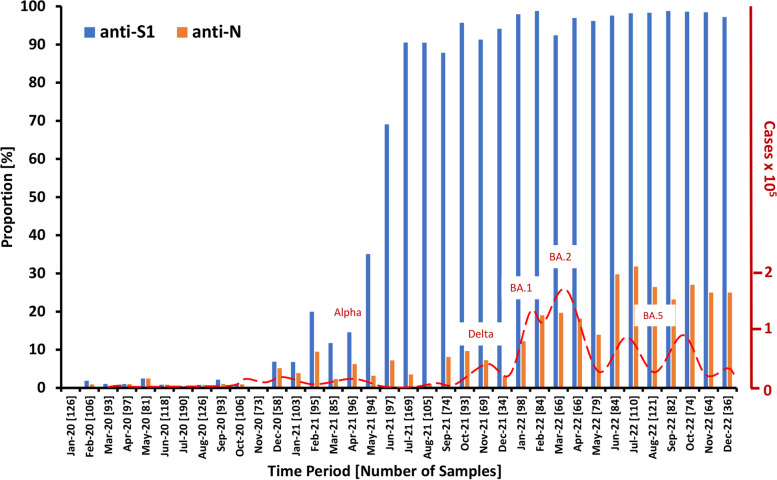
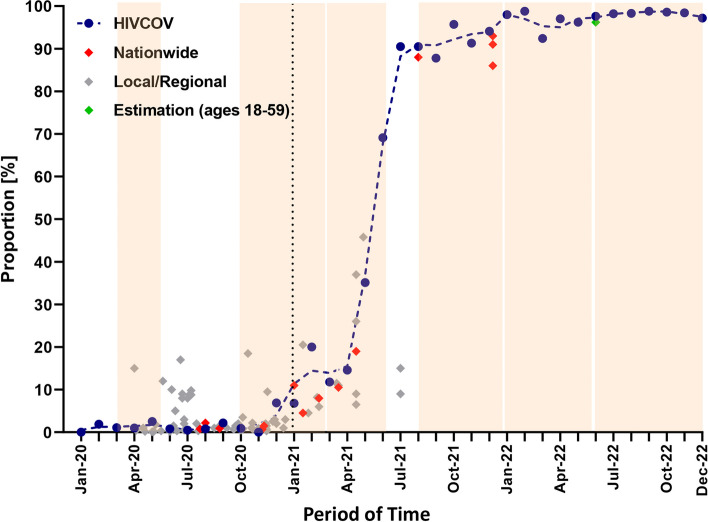
Results: In 2020 the number of anti-S1 positive cases/month was between 0.0 and 6.9% (average 1.6%). Since then the anti-S1 prevalence increased reaching already 35% (33/94) in May 2021. At that time 3.2% of the cases were also anti-N positive. In 2022 the average anti-S1 seroprevalence reached 97.5%. In the vaccination era a positive anti-N response was associated with a younger age and females were overrepresented among anti-S1/anti-N negative samples (assuming no vaccination or infection).
Conclusions: The average 1.6% anti-S1 seroprevalence in the cohort in 2020 was comparable to that in the general population (1.3%). The increase in anti-S1 seroprevalence in the first half of 2021 occurred slightly earlier. This increase was likely caused by the prioritization of PLWH at the early stage of the vaccination campaign and by infections during the third wave of the pandemic.
Keywords: Cohort; HIV; SARS-CoV-2; Seroprevalence; Vaccination.
© 2024. The Author(s).
Conflict of interest statement
UK owns ‘Exchange-traded fund’ (ETF) shares, which includes stocks of companies that are involved in health care.
Figures
References
-
- https://www.who.int/emergencies/diseases/novel-coronavirus-2019/technica.... Accessed 10.03.20.
Publication types
MeSH terms
Substances
LinkOut - more resources
Full Text Sources
Medical
Miscellaneous
