


Zéro allergie research clinic: a clinical and research initiative in oral immunotherapy for managing IgE-mediated food allergy
- PMID: 39488713
- PMCID: PMC11531141
- DOI: 10.1186/s13223-024-00921-8
Zéro allergie research clinic: a clinical and research initiative in oral immunotherapy for managing IgE-mediated food allergy
Abstract
Background and methods: The Zéro allergie research clinic (Saguenay, Canada) is a clinical and research initiative in oral immunotherapy (OIT) for managing IgE-mediated food allergy (FA). A total of 183 children with FA and 27 non-allergic siblings were recruited to date in the Zéro allergie cohort (ZAC) to better understand biological mechanisms underlying FA and OIT prognosis. The primary aims are to (a) better understand the genetic, epigenetic, transcriptomic, metabolomic, and microbial diversity associated with FA; (b) establish the multi-omics and microbial diversity profiles of children following OIT to identify predictive prognosis biomarkers, (c) make OIT more accessible to the population of the Saguenay-Lac-Saint-Jean region, and (d) build a biobank of data and biological material.
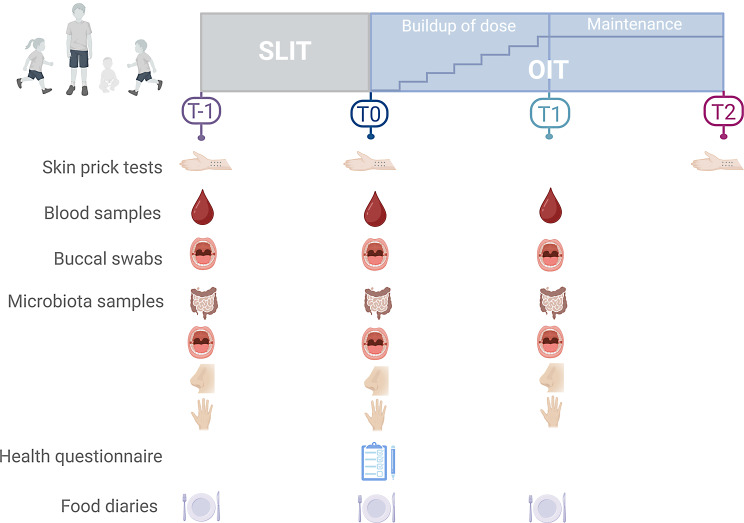
Results: The ZAC constitutes a unique and rich biobank of biological samples (blood, buccal swabs, microbiota samples [intestinal, buccal, nasal, and cutaneous]) combined with clinical data and more than 75 phenotypic characteristics.
Conclusions: This represents an innovative interdisciplinary initiative by researchers, allergists, and paediatricians to make FA care accessible to a greater number of children with IgE-mediated FA. Ultimately, it will contribute to provide more accessible treatment options with greater chances of success through a better understanding of the biological nature of FA and OIT.
Keywords: Asthma Desensitization; Epigenetics; Food allergy; Gene expression; Genetics; Metabolomics; Microbiota; Oral immunotherapy Public Health.
© 2024. The Author(s).
Conflict of interest statement
The authors declare no competing interests.
Figures

References
-
- Clarke AE, Elliott SJ, St Pierre Y, Soller L, La Vieille S, Ben-Shoshan M. Temporal trends in prevalence of food allergy in Canada. J Allergy Clin Immunol Pract. 2020;8(4):1428–30. e5. - PubMed
Grants and funding
LinkOut - more resources
Full Text Sources
